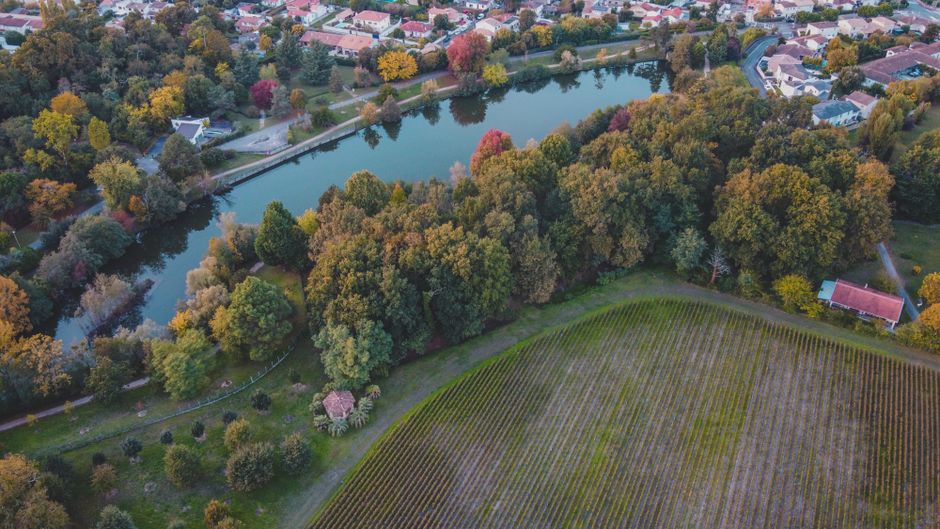
There is a moment on the road north of Margaux when the pine-lined cycle path opens up to reveal row after row of Cabernet Sauvignon vines stretching toward the Gironde estuary. The morning mist still clings to the lower trellises. Your ebike hums quietly beneath you. And you realize that 42 kilometers of France’s most hallowed wine country lies ahead, entirely within your reach. This is not a route reserved for elite cyclists with carbon-fiber race bikes and recovery shakes. This is a route made for the eBike rider who wants to taste the Médoc and Libournais without the punishment.
Route Overview: What You Are Signing Up For
The Bordeaux Wine Country route is a 42.0-kilometer eastward traverse from Bordeaux city center to Libourne station, cutting through three of the world’s most celebrated wine appellations. With only 180 meters of total elevation gain, this is not a mountain challenge. It is a stamina test and a sensory journey. On a conventional road bike, the distance would leave most casual riders fatigued before they ever reached Saint-Émilion’s limestone cliffs. On an eBike, it becomes a day of effortless exploration.
| Parameter | Detail |
|---|---|
| Total Distance | 42.0 km |
| Elevation Gain | 180 m |
| Estimated eBike Time | 3.5 – 4.5 hours (with stops) |
| Difficulty | Moderate (distance, not terrain) |
| Surface | Paved roads, dedicated cycle paths, compact gravel vineyard tracks |
| Best eBike Type | Trekking/hybrid with 500Wh+ battery |
Waypoint-by-Waypoint Guide: From City to Cellar
Waypoint 1: Bordeaux Centre — The Urban Departure
You begin not in countryside serenity but in the controlled chaos of Bordeaux. The Place de la Bourse reflects the 18th-century stock exchange in its mirror fountain; tourists cluster for photographs. Your eBike advantage starts here, immediately. The tram tracks on Cours de l’Intendance, the delivery vans double-parked on Rue Sainte-Catherine, the roundabouts that swallow nervous cyclists whole—on an eBike, you accelerate from traffic lights with the torque to claim your lane. No white-knuckle sprinting to stay ahead of buses. No arriving at the city limits already drained.
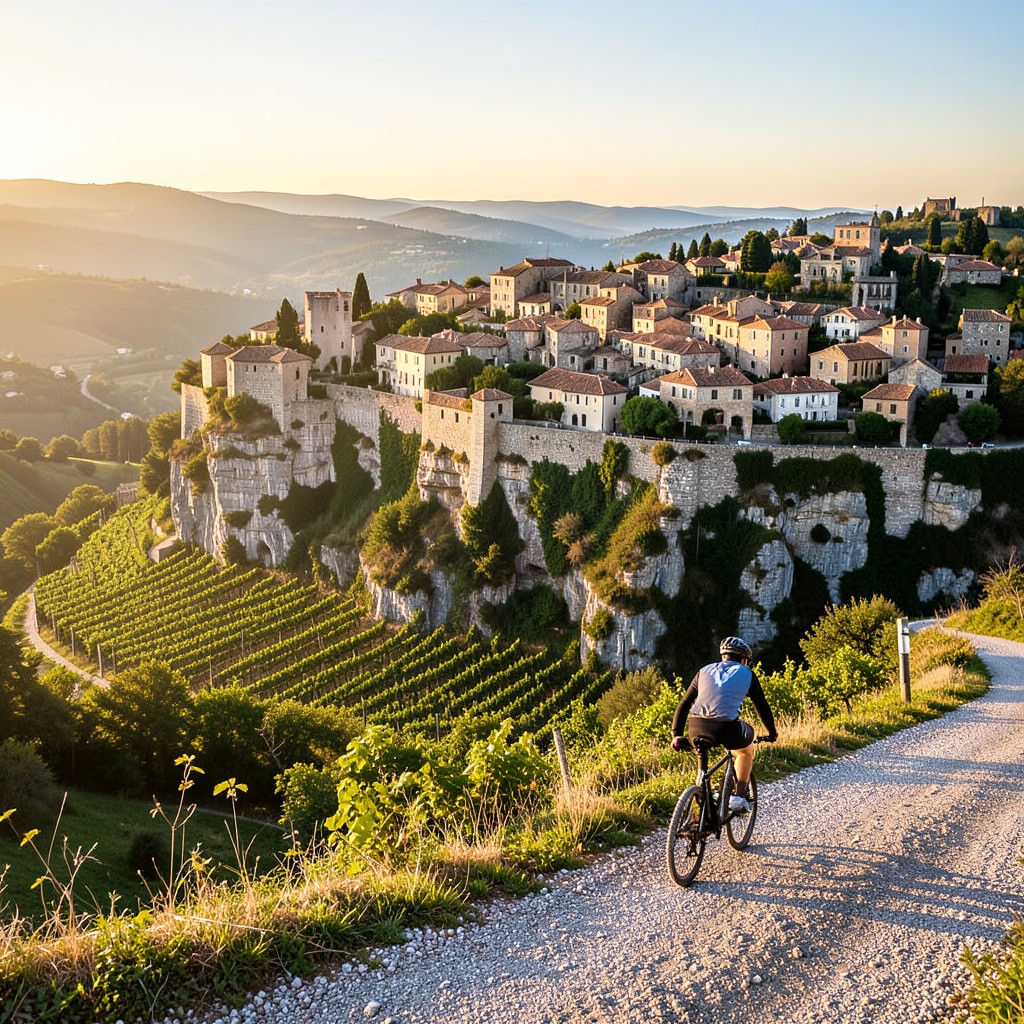
eBike Tip: Keep assist in Eco or Tour mode for the first 8 kilometers through Bordeaux and its suburbs. You want to conserve battery for the longer stretches ahead, and urban riding with frequent stops does not demand much power.
The route follows the Garonne riverfront eastward before cutting north toward the Médoc peninsula. By kilometer 10, the apartment blocks thin out. The air carries pine resin and something else—the faint, mineral scent of estuary mudflats that signals you are entering wine country proper.
Waypoint 2: Château Margaux — The First Growth Encounter
At approximately kilometer 18, you reach the commune of Margaux. This is not a casual wine stop. Château Margaux is one of only five estates awarded First Growth status in the 1855 Bordeaux Classification, a ranking that has never been amended. The neoclassical mansion, designed by Louis Combes in the early 19th century, sits behind immaculate gravel courts. The vineyard itself covers 262 hectares, though only 82 hectares are planted to the grand vin.
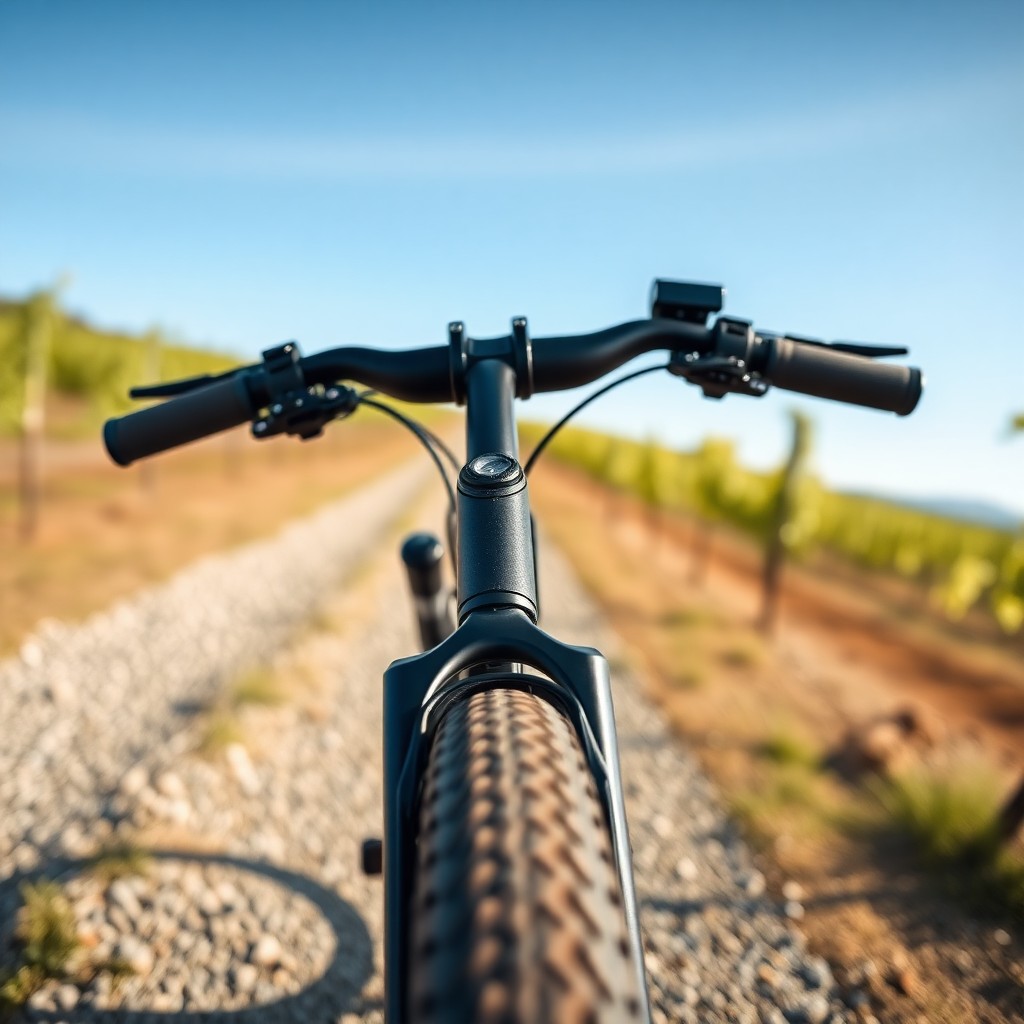
The riding surface here shifts to compacted limestone tracks between the vineyard blocks. On a traditional bike, the loose gravel sections would demand constant attention, rattling your wrists and demanding lower tire pressure. The eBike’s additional weight—often cited as a drawback—actually stabilizes you here. The mass carries momentum through soft patches. The wider tires typical of trekking eBikes (42mm to 50mm) float where narrower race tires would sink.
eBike Tip: This is your first real photo opportunity and potential tasting stop. If you plan to visit the château (reservation required, often days in advance), switch your battery to a lower assist setting or remove it entirely and bring it inside. Most châteaux will not allow battery storage in tasting rooms, but the battery itself is valuable enough that you do not want to leave it on an unattended bike.
The climb from the D2 road up to the château entrance is barely 15 meters of elevation, but it comes after 18 kilometers of flat riding. On a conventional bike, your legs might already feel the distance. On the eBike, you simply increase assist to Sport or Turbo, crest the rise, and arrive at the gate without having broken a sweat worth mentioning.
Waypoint 3: Saint-Émilion Village — The Limestone Citadel
Kilometer 29 brings you to the dramatic approach to Saint-Émilion. The village erupts from the surrounding plain like a limestone ship run aground, its bell tower climbing above the vineyards. This is where the eBike transforms from convenience to enabler.
The direct route into the village center demands a 12% gradient climb on Rue de la Porte Brunet, followed by cobbled streets that pitch up to 15% near the Monolithic Church. On a standard road bike, this is a grind in your lowest gear, heart rate spiking, no pleasure in it at all. Many cyclists simply walk their bikes. On an eBike with a mid-drive motor—Bosch Performance Line CX, Shimano EP8, or equivalent—you select Turbo assist and climb seated, pedaling at a comfortable 70-80 RPM. The motor delivers 85 Nm of torque and you feel it as pure, implacable forward motion.
I have watched conventional cyclists dismount and push at the base of Rue de la Porte Brunet. I have ridden past them, still seated, still breathing normally, carrying enough energy to actually explore the village once I arrive. That is the eBike advantage in Saint-Émilion: conquering the climb, but arriving with reserves to climb the 196 steps of the bell tower, to descend into the underground church, to engage with the place rather than recover from reaching it.
eBike Tip: Saint-Émilion is strictly pedestrian in its upper reaches. Lock your eBike at the parking area on Place du Marché (bring a lock—high tourist traffic attracts theft) and explore on foot. The village rewards wandering: the medieval street plan has no straight lines, and every dead-end reveals another wine shop, another tasting room, another view across the Dordogne valley.
If you are timing this for lunch, the restaurants on Place du Clocher serve regional specialties—duck confit, entrecôte à la bordelaise—but book ahead in peak season. The village receives over a million visitors annually.
Waypoint 4: Pomerol Vineyards — The Quiet Stretch
Leaving Saint-Émilion, the route turns northwest through the Pomerol appellation. This is the least celebrated of the three major stops, which makes it the most pleasant to ride through. Pomerol has no grand château architecture, no tourist buses, no tasting-room theatrics. It is small farm plots, gravel tracks between Merlot-dominated vines, and an almost eerie quiet after the bustle of Saint-Émilion.
The riding here is flat to gently rolling. The 180 meters of total elevation gain on this route are distributed in small lumps across this section—none individually remarkable, but cumulative fatigue would set in on an unassisted bike after the earlier efforts. On the eBike, you maintain 22-25 km/h on the gravelly farm tracks without particular strain. The motor fills in the gaps where your legs might otherwise flag.
eBike Tip: This is your battery management stretch. If you have ridden aggressively to this point—Turbo mode, high speeds—you may be down to 40% charge. Pomerol’s flat terrain allows you to drop to Eco or even zero assist, letting your legs do the work while the battery recovers slightly through regenerative braking (if equipped) or simply conserves charge for the final push. At 42 kilometers total, range anxiety should not be severe with a modern 500Wh or 625Wh battery, but prudent management here ensures you reach Libourne with power to spare.
The surface quality in Pomerol varies. Some tracks are well-maintained compacted gravel; others deteriorate to rutted dirt after rain. The wider tires and more relaxed geometry of a trekking eBike handle this variability better than a road-oriented machine. If you have suspension fork or seatpost suspension, engage it here.
Waypoint 5: Libourne Station — The Arrival
The final 6 kilometers drop you from the vineyard plateau into the town of Libourne, a working market town on the confluence of the Dordogne and Isle rivers. Unlike the manicured wine estates, Libourne is unpretentious: a Friday market that has operated since 1275, a riverside quay where barges once loaded casks, a train station with direct TER service back to Bordeaux Saint-Jean.
This is where the eBike’s range advantage fully reveals itself. A conventional cyclist reaching Libourne after 42 kilometers, much of it on variable surfaces, would face a choice: collapse onto the first train seat, or face the prospect of riding back. The eBike rider has options. You could ride back to Bordeaux (another 42 km, entirely feasible with remaining battery). You could explore Libourne’s old town without the hobbled walk of sore quadriceps. You could even, if the mood struck, extend east toward Bergerac.
eBike Tip: Libourne station has no dedicated bike storage, but the staff will generally permit you to bring your eBike onto the TER regional trains. Check the SNCF bicycle policy before traveling—some peak services restrict bikes. The train journey back to Bordeaux takes approximately 30 minutes, giving you time to review photographs and note which châteaux to book for your return visit.
eBike Setup for This Route
Recommended Assist Strategy
| Segment | Distance | Recommended Assist | Rationale |
|---|---|---|---|
| Bordeaux to Margaux | ~18 km | Eco / Tour | Flat, urban exit, conserve battery |
| Margaux climb | ~1 km | Sport / Turbo | Short elevation, minimal drain |
| Margaux to Saint-Émilion | ~11 km | Tour / Sport | Rolling terrain, maintain pace |
| Saint-Émilion climb | ~0.5 km | Turbo | 15% gradient, seated climb essential |
| Pomerol flat | ~8 km | Eco / Off | Recovery, battery conservation |
| Pomerol to Libourne | ~6 km | Tour | Descent, controlled speed |
Battery Management
With 180 meters of gain over 42 kilometers, this route is not technically demanding for battery capacity. A 500Wh battery should deliver 80-100 km in mixed assist use, giving you comfortable margin. However, several factors specific to this route increase consumption:
- Wind exposure: The Médoc peninsula and Dordogne valley can generate significant crosswinds, especially afternoon. Headwinds increase motor demand disproportionately.
- Surface resistance: Gravel vineyard tracks add rolling resistance versus smooth asphalt. Expect 10-15% higher consumption on these sections.
- Weight: If you are carrying wine purchases, pannier weight increases consumption on climbs and accelerations.
My recommendation: start with 100% charge, use the assist strategy above, and you should reach Libourne with 30-40% remaining. This gives you the option to extend, to ride back partially, or simply to not worry about finding a charging point.
Practical Information
Best Season
Spring (April-May) and autumn (September-October) offer ideal conditions. September brings the harvest (vendange), with grape-laden trucks on rural roads and a palpable energy in the cellars. However, vineyard traffic increases, and some tracks may be closed for harvest equipment. Summer mornings are pleasant, but afternoon temperatures regularly exceed 30°C—start early and carry twice your usual water. Winter riding is feasible but gray; many châteaux reduce tasting hours.
Charging Stops
Public charging infrastructure for eBikes remains limited in rural Bordeaux wine country. Your best options:
- Bordeaux Centre: Multiple bike shops with charging facilities; ask at Vélo-Cité rental locations
- Margaux: Some châteaux with EV charging may permit eBike charging on request; do not rely on this
- Saint-Émilion: Tourist office on Place du Marché has basic electrical outlets; bring your charger and adapter
- Libourne: Train station vicinity has cafés where staff may permit charging with purchase
The practical reality: with proper battery management, you should not need to charge mid-route. Carry your charger as insurance, not necessity.
Rental Options
If you are not bringing your own eBike, Bordeaux has several rental providers:
- Vélo-Cité Bordeaux: City-wide network with eBike options; reserve online for multi-day use
- Bordeaux Cycling: Guided and self-guided tour packages including eBikes, sometimes with luggage transfer
- Local operators in Saint-Émilion: Single-day rental for local exploration, but limited range for the full route
Confirm battery capacity when renting. Some budget eBikes carry 400Wh or smaller batteries that would make this route stressful rather than enjoyable.
FAQ: Bordeaux Wine Country eBike Route
Is 42 kilometers too far for a beginner eBike rider?
No. The 180 meters of elevation gain is modest, and the motor assistance means you are never forced to sustain uncomfortable effort levels. A rider comfortable with 90 minutes of casual cycling can complete this route in 4 hours with breaks. The eBike does the work of a fit cyclist’s fitness; you provide the steering and moderate pedaling.
Can I visit châteaux for tastings during the ride?
Yes, but planning is essential. First Growth estates like Margaux require advance reservation, often weeks ahead in peak season. Smaller châteaux in Pomerol may accept walk-ins but have irregular hours. The eBike advantage is that you arrive fresh enough to engage with the tasting experience rather than craving only water and a chair. Never ride after significant alcohol consumption—arrange your return transport accordingly.
What happens if my battery dies in the vineyards?
A fully depleted battery on a modern eBike does not immobilize you; the bike simply becomes heavy, with additional 7-10 kg of motor and battery versus a conventional bicycle. The flat terrain around Pomerol and Libourne means you can pedal home unassisted, though more slowly. Prevention is better: monitor battery percentage, use Eco mode on flat sections, and carry your charger. There are no dangerous remote sections on this route; you are never more than a few kilometers from a village or road.
Are the gravel vineyard tracks suitable for road eBikes with narrow tires?
Marginally. The compacted limestone tracks are generally firm in dry conditions, but 28mm road tires will find the soft spots, and pinch flats are a risk. I recommend minimum 32mm tires, preferably 38-42mm with some tread. The eBike’s weight helps stability, but cannot overcome insufficient tire volume. If your eBike has only road-oriented tires, stick to the paved D roads and accept a slightly longer, less scenic route.
Is it better to ride this route as a loop or one-way to Libourne?
The one-way to Libourne station is strongly preferred. It allows you to ride at a relaxed pace, extend stops at châteaux or Saint-Émilion without clock-watching, and arrive at a train station for easy return. A loop back to Bordeaux would add another 42 km and demand significantly more battery management. The one-way also lets you ride the most scenic direction—west to east, with the morning sun behind you and the Saint-Émilion cliffs as a dramatic mid-route climax.
Final Word
The Bordeaux Wine Country route is not the most challenging ride in France. It does not demand the alpine fitness of Mont Ventoux or the technical skill of Pyrenean descents. What it offers is something rarer: the chance to traverse one of the world’s great wine regions at human speed, with human effort adjusted to human comfort by the eBike’s quiet assistance. You will remember the taste of a 2015 Margaux tasted at the source. You will remember the view from Saint-Émilion’s belvedere. You will not remember suffering to get there. That is the point.
Part of our complete guide to the 25+ best eBike routes in Europe.
FAQ
Is Bordeaux bike friendly?
Yes, Bordeaux is highly bike-friendly with over 200 km of dedicated cycling lanes and a well-developed bike-sharing system. The flat terrain and scenic riverfront paths make it ideal for eBike touring through the city and surrounding wine regions.
How long does it take to cycle through Bordeaux wine country?
A typical eBike route through Bordeaux wine country spans 40 to 60 kilometers and takes 4 to 6 hours at a leisurely pace, including winery stops. Multi-day itineraries covering Saint-Émilion, Médoc, and Sauternes usually range from 2 to 5 days.
Do you need a license to ride an electric bike in France?
No license is required for standard eBikes with pedal assistance up to 25 km/h and motors rated at 250 watts or below in France. Faster speed-pedelecs exceeding these limits require registration, insurance, and a valid moped license.
What is the best time of year to visit Bordeaux wine region?
The best time to visit Bordeaux wine country by eBike is from May to June or September to October, when temperatures are mild and vineyards are most active. Harvest season in September offers unique winery experiences, while spring brings blooming s and fewer crowds.
FTC Disclosure: DOMI eBike Guide participates in affiliate marketing programs. If you purchase products or book services through links on this page, we may earn a commission at no additional cost to you. All route recommendations are editorially independent. We do not accept payment for placement in our guides.
