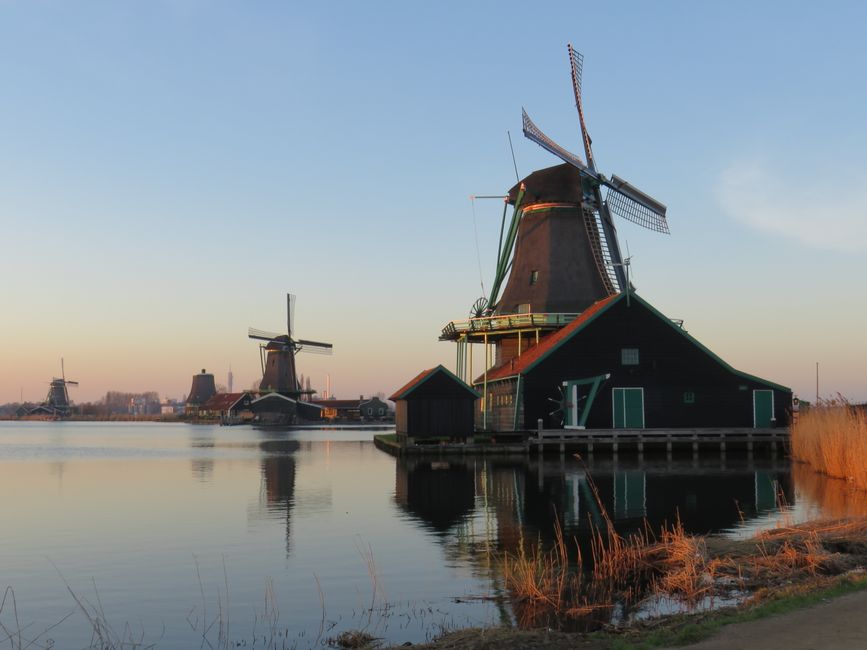
There is a particular magic to leaving Amsterdam’s canal ring behind and watching the city dissolve into open polder landscape, the kind of foldable eBike for train travel, expansive Dutch countryside that has barely changed in four centuries. I rode the Amsterdam Windmill Loop on a mid-drive eBike last autumn, and the experience crystallized why electric assist and Dutch cycling culture are a perfect match. This 25-kilometer circuit delivers windmill-dotted horizons, working cheese farms, and reed-lined waterways without demanding Tour de France fitness. The route is flat enough for any cyclist, yet the eBike advantage becomes clear when you realize how much ground you can cover while still stopping frequently for photographs, tastings, and impromptu detours. You are not racing; you are collecting experiences, and the motor ensures you return to Amsterdam Centraal with energy to spare for an evening stroll.
Route Overview: The Numbers
| Distance | 25.0 km |
| Elevation Gain | 15 m |
| Difficulty | Easy |
| Estimated eBike Time | 2.5 – 3.5 hours (with stops) |
| Surface | Paved cycle paths, best commuting eBikes, some gravel farm tracks |
| Best For | Culture, photography, food, relaxed pace |
The elevation gain of 15 meters across 25 kilometers tells the essential story: this is Dutch topography at its most forgiving. Yet do not mistake flat for boring. The subtle undulations of polder roads, the occasional bridge over a waterway, and the persistent North Sea wind create enough variety to keep the riding engaging. On an eBike, these minor variables become invisible. You maintain a consistent, comfortable cadence regardless of headwinds or the slight rises approaching bridge crossings. The 25-kilometer distance sits in a sweet spot: substantial enough to feel like a proper outing, yet well within a single battery charge for virtually any eBike on the market.
Waypoint-by-Waypoint Guide
Amsterdam Centraal: The Urban Departure Point
Starting at Amsterdam Centraal station places you at the throat of Dutch cycling infrastructure. The immediate challenge is not physical but navigational: threading through dense pedestrian and bicycle traffic until you clear the city center. Here is where the eBike’s acceleration from stops becomes genuinely useful. At traffic lights and junctions, you can match the pace of experienced Dutch cyclists and clear intersections confidently. The route follows the IJ river briefly before turning north toward Zaandam, and the cycle path along the water offers your first taste of open sky after the canal shadows.
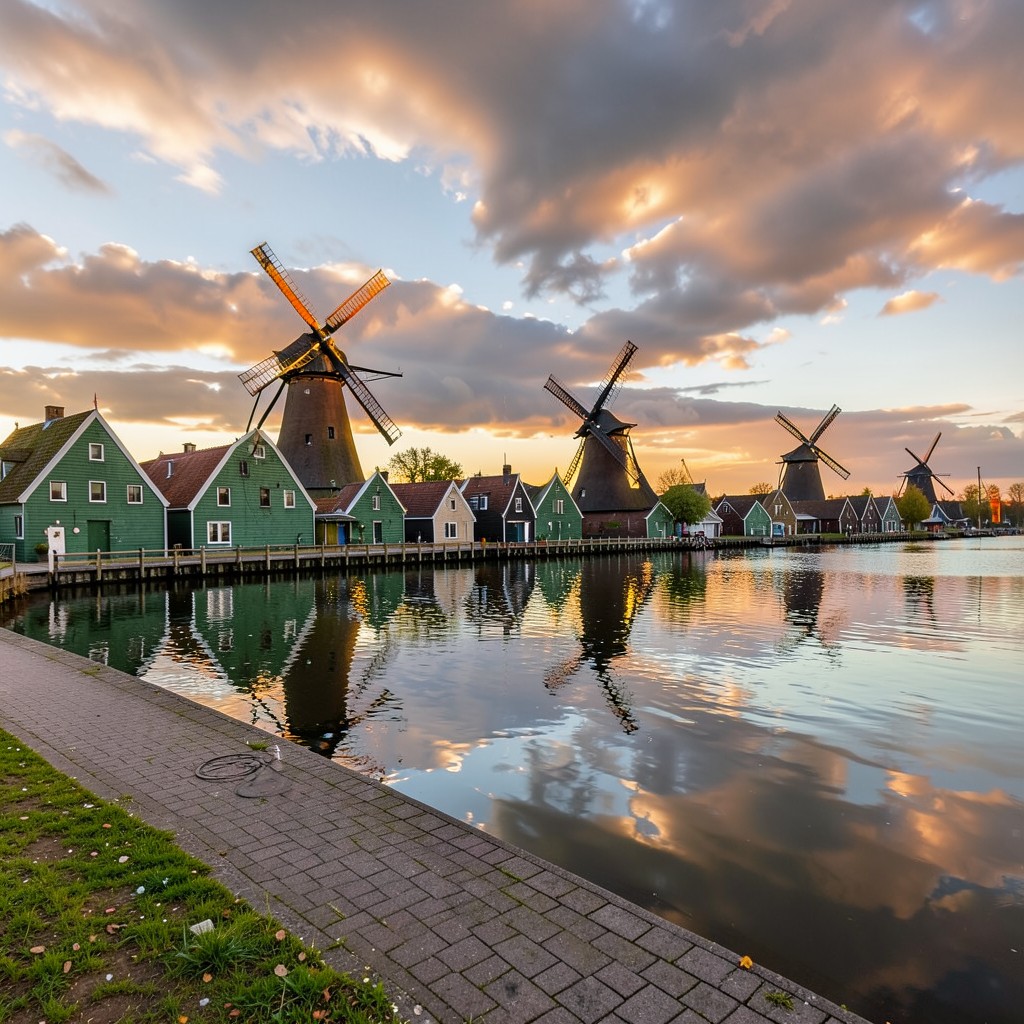
eBike tip: Keep assist in Eco or Tour mode through the city. Stop-and-go riding drains battery faster than steady cruising, and you will want full power reserved for the open stretches ahead. The 6-kilometer urban segment to the city edge consumes minimal charge at low assist.
Zaanse Schans: Living Open-Air Museum
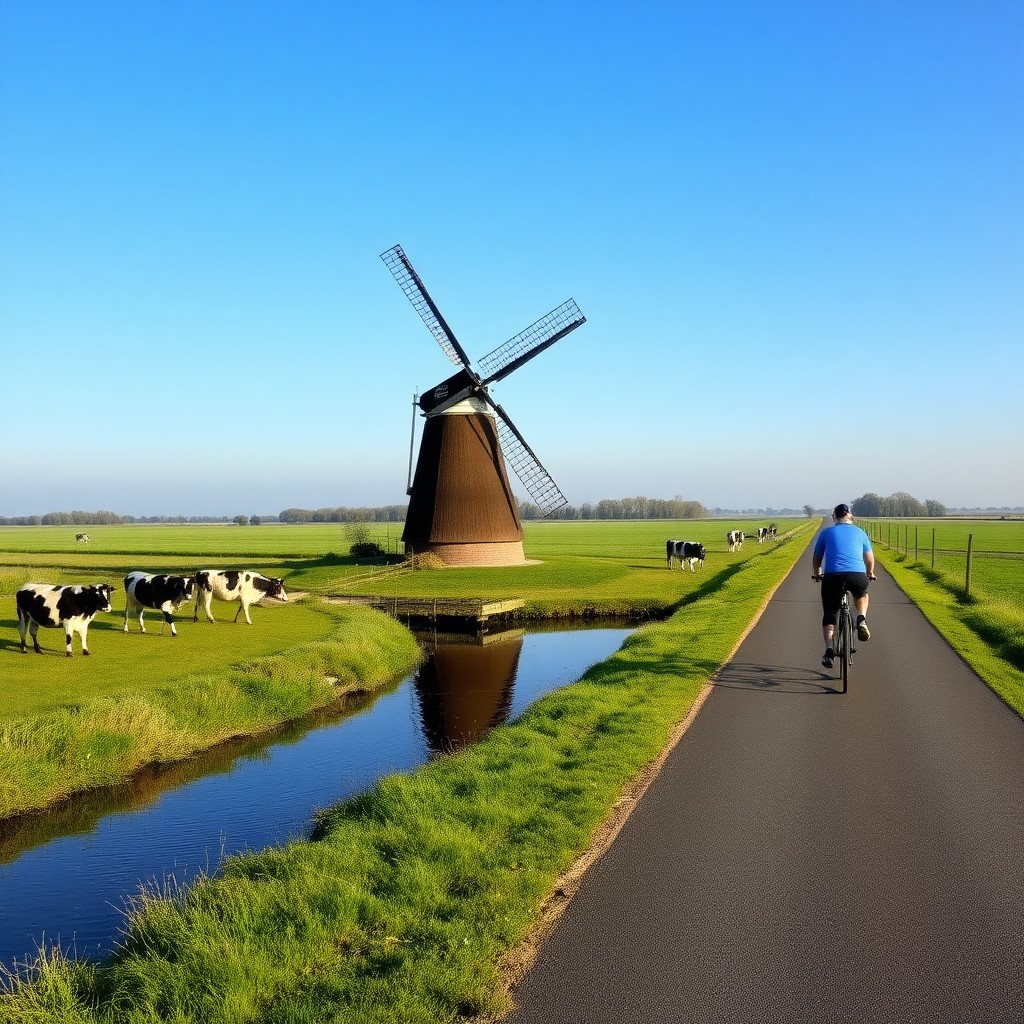
The Zaanse Schans appears suddenly after you cross the Zaan river, a cluster of green-painted wooden houses and working windmills that looks more like a film set than a functioning industrial heritage site. This is the postcard image of the Netherlands that most visitors carry in their minds, and the reality does not disappoint. The De Gekroonde Poelenburg sawmill, the De Zoeker oil mill, and the Verdronken Oorlogsmolen are all operational, their sails turning when wind permits. The cycle path runs directly through the site, meaning you can glide past these structures at bicycle pace, slower than a tour bus, faster and more flexible than a walking group.
The eBike advantage at Zaanse Schans is spatial flexibility. Tour buses discharge crowds at designated parking areas; you can lock your bike at any of several racks and explore on foot, then relocate to a less crowded angle for photographs. The site spans roughly 2 kilometers along the Zaan, and having motorized wheels means you can scout the full length before deciding where to spend your time. I recommend cycling to the northern end first, where the Zaans Museum offers context on the region’s industrial history, then working back toward the most photographed windmills as the tour groups thin out toward late afternoon.
eBike tip: There are charging points at the Zaans Museum and some cafés in the area, though for a 25-kilometer route they are unnecessary. More valuable is the ability to cover the 15-kilometer distance from Amsterdam at a relaxed 20 km/h average, arriving fresh rather than slightly fatigued from a conventional bike effort.
Windmill De Kat: The Paint Mill in Action
Windmill De Kat stands slightly apart from the main Zaanse Schans cluster, and this relative isolation makes it worth the short detour. It is a working paint mill, grinding pigments for traditional Dutch paints using wind power, and the interior visit reveals a wooden mechanism of astonishing complexity. The smell of linseed oil and the sound of granite millstones turning create an immersive sensory experience that static displays cannot replicate.
The approach to De Kat follows a narrow polder road with water on both sides, the classic Dutch cycling image of straight asphalt between mirror-still ditches. On an eBike, you can maintain enough speed to feel the rhythm of this landscape without working hard enough to distract from it. The 15-meter elevation gain mentioned in the route statistics is concentrated in moments like the slight rise onto the bridge near De Kat, invisible to motor power but enough to make a conventional cyclist shift gears and increase effort. With pedal assist, you simply continue the same cadence.
eBike tip: The gravel path directly adjacent to De Kat is loose in wet conditions. Drop to a lower assist level and let the motor provide steady torque rather than surging, which can cause rear-wheel slip on unstable surfaces.
Kaasboerderij Catharina Hoeve: Cheese Farm Stop
No Dutch cycling route is complete without a cheese interlude, and Kaasboerderij Catharina Hoeve delivers an authentic farm experience rather than a tourist-shop approximation. The Hoeve produces Gouda and Edam varieties on site, and the viewing window into the cheese-making room lets you watch the curd-cutting and pressing process. Tastings are generous, and the farm shop sells wedges at prices below Amsterdam retail.
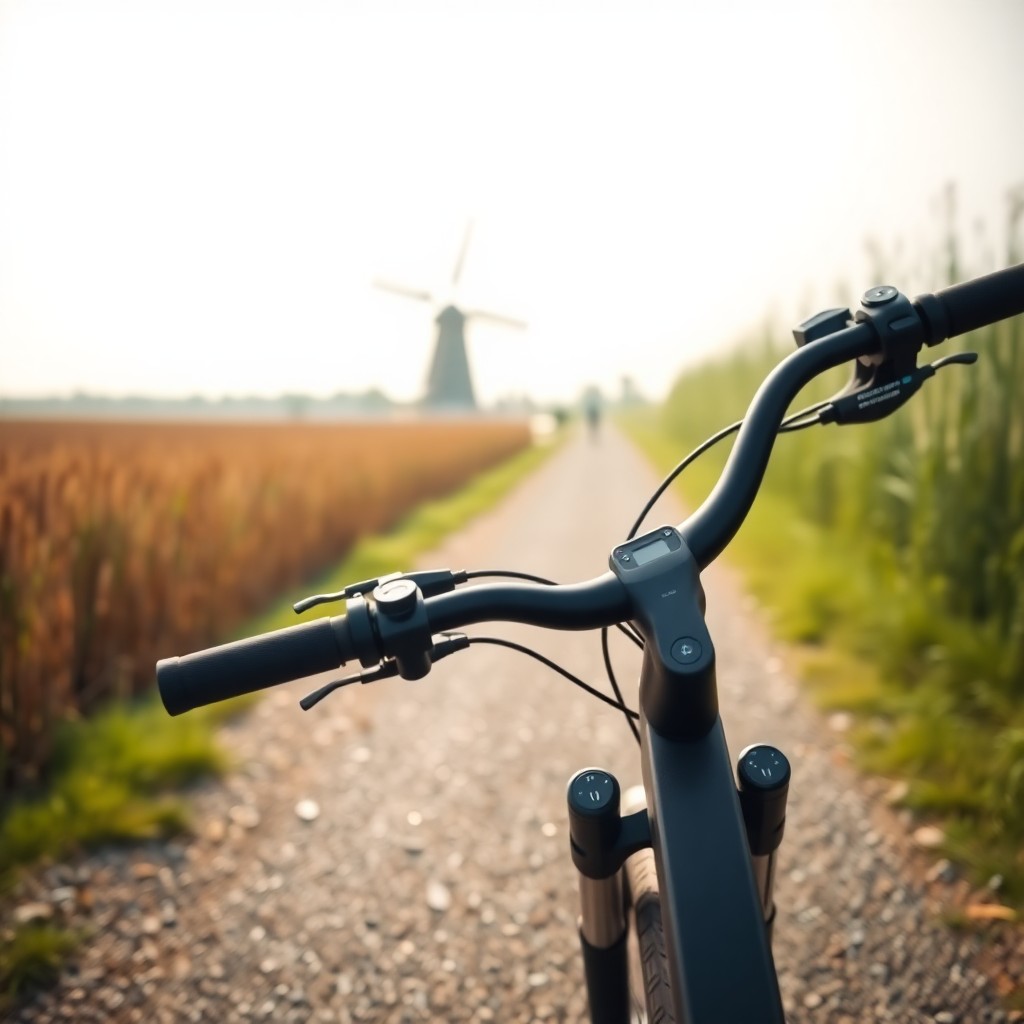
The cycling approach to Catharina Hoeve transitions from industrial heritage to working agricultural landscape. You pass fields of grazing cattle, the distinctive black-and-white Frisian Holsteins that dominate Dutch dairy farming, and the air carries the clean, slightly sweet smell of grass silage. The farm sits at roughly the halfway point of the route, making it a natural rest stop. On an eBike, you arrive without the appetite-suppressing fatigue that hard cycling can produce, meaning you actually want to sample cheese rather than merely tolerate a tasting.
eBike tip: This is your battery checkpoint. Even with generous assist use, you should have 60-70% charge remaining. If you are running a smaller battery or have been using Sport or Turbo mode consistently, consider switching to Eco for the return leg. The route back to Amsterdam is slightly more exposed to prevailing westerly winds, which can increase power consumption.
Het Twiske: Nature Reserve Finale
The final waypoint before returning to Amsterdam is Het Twiske, a 650-hectare nature reserve of woods, heathland, and lakes that serves as the city’s northern green lung. The cycling paths here are wider and more varied than the polder roads, threading through birch forest and along reed-edged water where herons stand motionless. It is a landscape of subtle transitions, and the slower pace of bicycle travel suits it perfectly.
Het Twiske represents the eBike advantage in its most refined form. After 20 kilometers of riding, a conventional cyclist might push through this final section focused on reaching the endpoint. The eBike rider, with fresh legs and consistent energy, can actually appreciate the reserve’s details: the sound of woodpeckers in the pine stand, the view across Twiske Lake, the way afternoon light filters through the birch canopy. You are not managing fatigue; you are managing attention, and that is a qualitatively different experience.
eBike tip: The reserve has several path options. The main cycle route is well-marked and paved, but smaller trails invite exploration. These secondary paths can be sandy after dry weather; keep assist moderate to maintain traction, and do not be afraid to walk short sections if conditions deteriorate. The motor’s torque can dig a rear wheel into soft ground more aggressively than human power alone.
eBike Setup Tips for the Amsterdam Windmill Loop
Assist Level Strategy
For this route, I recommend a three-phase approach to assist management. From Amsterdam Centraal to the city edge, use Eco or equivalent (typically 50-100% of your own power output). This preserves battery for the segments where you will actually want it. From the city boundary through Zaanse Schans and the rural polder roads, switch to Tour or Normal mode (150-200% assistance). This provides enough boost to maintain 20-22 km/h comfortably against wind, without the speed of Sport or Turbo modes that can feel rushed when you are sightseeing. Return to Eco or lower for Het Twiske if you want to extend range, or maintain Tour if you have charge to spare and want to push the pace slightly.
Battery Management
At 25 kilometers with 15 meters of climbing, even a modest 400Wh battery will handle this route twice over at moderate assist. The relevant calculation is not whether you will run out of power, but how much reserve you want for wrong turns, extended stops with lights on, or the psychological comfort of knowing you have margin. In practice, a 500Wh battery used at mixed assist levels will consume roughly 30-40% of its capacity on this route. The only scenario where range becomes a genuine concern is if you combine this with additional Amsterdam urban riding before or after, or if you run a very small 300Wh battery at maximum assist throughout.
Recommended Gear
Bring a compact cable lock for the Zaanse Schans and Catharina Hoeve stops; a heavy U-lock is unnecessary weight for this route. A handlebar bag or frame bag accommodates camera, rain layer, and cheese purchases. Dutch weather changes rapidly, and the open polder offers no shelter from sudden showers. Fenders are advisable even in summer, as road spray from recent rain is common.
Practical Information
Best Season
May through September offers the most reliable weather, though Dutch summers are never guaranteed. April brings tulip fields in the broader region if you extend the route. September and October provide golden afternoon light and thinning crowds. Winter riding is possible but bleak; the windmills are less photographed under gray skies, and the wind across flat polder can be penetratingly cold.
Charging Stops
- Zaans Museum: Charging available for e-bikes at designated stations
- Catharina Hoeve: No dedicated charging, but staff accommodating if you ask politely
- Het Twiske Visitor Center: Limited charging options
In practice, charging during the ride is unnecessary for standard eBikes. Plan charging for overnight at your accommodation.
Bike best budget commuter eBike Near Amsterdam Centraal
- MacBike Amsterdam Centraal: Multiple locations, e-bike fleet includes city and eBike touring comfort guide models
- A-Bike: Near station, offers day rentals with pre-planned route suggestions
- Donkey Republic: App-based rental, bikes located throughout the city
Reserve e-bikes in advance during peak season (June-August). The demand exceeds supply on favorable weekends.
FAQ: Amsterdam Windmill Loop eBike Route
Is the route suitable for beginners?
Yes. The 25-kilometer distance and minimal elevation make this accessible to any cyclist with basic fitness. The eBike further reduces physical demands, though familiarity with Dutch cycling traffic rules is essential for the Amsterdam departure and return segments.
Can I complete the route on a standard bicycle instead of an eBike?
Absolutely, and many do. The eBike advantage here is comfort and flexibility rather than necessity. You will arrive at stops slightly more fatigued and may feel time pressure if daylight is limited. The return into Amsterdam against a headwind is where motor assistance is most appreciated.
Are the paths suitable for e-bikes with road tires?
Yes, with caution. The primary route is paved throughout. The gravel sections near De Kat and some Het Twiske trails are firm enough for 28mm road tires in dry conditions. Avoid the secondary trails after heavy rain.
How much time should I allocate for stops?
Plan 3.5 to 4 hours total for a leisurely pace with meaningful stops. Zaanse Schans deserves 45-60 minutes minimum. Catharina Hoeve requires 20-30 minutes for tasting and purchase. Het Twiske rewards 30 minutes of wandering. Pure cycling time is under 90 minutes.
Is the route safe for solo riders?
Yes. The route follows well-traveled cycle paths with frequent other cyclists, particularly through Zaanse Schans. The rural sections are open and visible, with no isolated stretches. Standard precautions for bike locking at stops apply.
Conclusion: Why This Route Defines Dutch eBike Tourism
The Amsterdam Windmill Loop distills what makes the Netherlands exceptional for cycling: infrastructure that respects the bicycle as primary transport, landscapes that reward slow travel, and cultural sites integrated into daily routes rather than isolated tourist destinations. The eBike does not merely make this route easier; it changes the quality of attention you can bring to it. You are not counting kilometers or monitoring fatigue. You are watching a heron lift from a drainage ditch, smelling windmill-ground pigment, tasting cheese minutes from where it was made. The motor handles the distance. You handle the experience.
Part of our complete guide to the 25+ best eBike routes in Europe.
FAQ
How long is the Amsterdam Windmill Loop eBike route?
The Amsterdam Windmill Loop eBike route typically spans 35-45 kilometers depending on the exact path chosen. Most cyclists complete the loop in 3 to 4 hours including stops for photos and rest breaks.
Which windmills can you see on the Amsterdam Windmill Loop eBike route?
The route passes several historic windmills including De Gooyer in the east and the iconic mills at Zaanse Schans just north of Amsterdam. Some variations also include the Rembrandtpark windmill and De Bloem along the Haarlemmerweg.
Is the Amsterdam Windmill Loop eBike route suitable for beginners?
Yes, the route follows mostly flat dedicated bike paths with minimal traffic making it accessible for riders of all skill levels. Amsterdam and its surrounding areas have excellent cycling infrastructure with clear signage throughout.
Where can you rent an eBike for the Amsterdam Windmill Loop?
Numerous rental shops operate in central Amsterdam near Central Station and Leidseplein with daily rates starting around €25-35. Popular providers include MacBike, A-Bike, and Yellow Bike, all offering electric models with reservation recommended during peak tourist season.
More eBike Guides
FTC Disclosure: DOMI eBike Guide participates in affiliate programs. Some links in this article may generate commission at no additional cost to you. All route recommendations are editorially independent and based on direct riding experience. This article contains no sponsored content.
