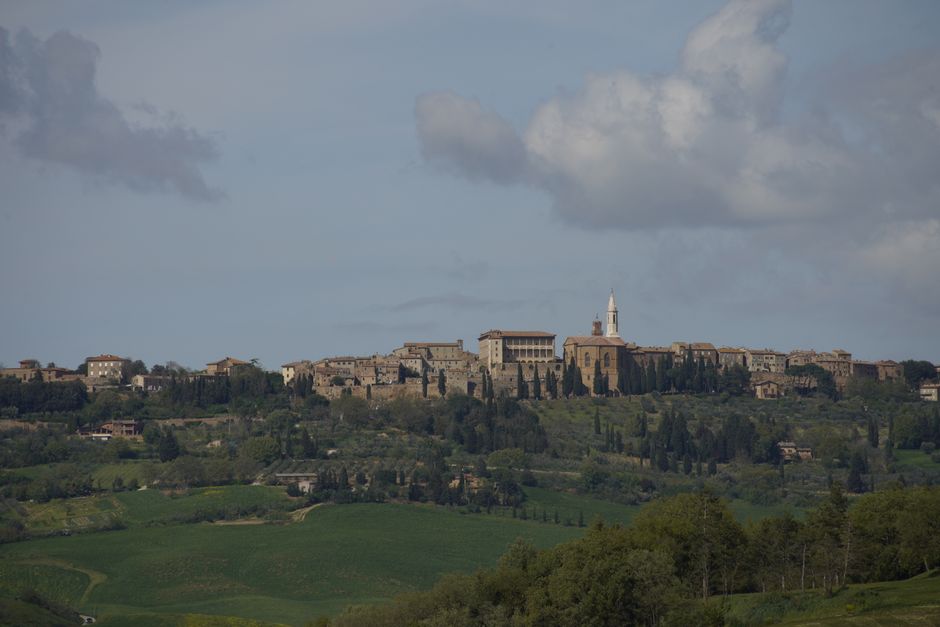
There is a stretch of road south of Pienza where the Val d’Orcia unfolds like a Renaissance painting brought to life—rows of cypress trees stand sentinel over golden wheat fields, medieval hill towns crown every ridge, and the scent of wild herbs rises from the verges as you pedal past. I rode this loop on an eBike in late spring, and I can tell you with absolute certainty: an electric motor is the secret weapon that transforms a grueling Tuscan grind into one of the most rewarding day rides in Italy. The 460 meters of elevation gain spread across 38 kilometers would punish a standard road bike, but with pedal assist, you float through the climbs and save your legs for the experiences that matter—exploring thermal springs, tasting Brunello in Montalcino, and absorbing the silence of Sant’Antimo Abbey.
Route Overview
| Distance | 38.0 km |
| Elevation Gain | 460 m |
| Difficulty (Traditional Bike) | Moderate to Challenging |
| Difficulty (eBike) | Easy to Moderate |
| Estimated Time (eBike) | 3.5 – 4.5 hours (with stops) |
| Surface | Paved rural roads (Strade Provinciali), some gravel farm tracks |
| Best eBike Type | Gravel eBike or touring eBike with 28mm+ tires |
| Optimal Assist Level | Eco/Tour for flats, Sport/Turbo for climbs |
The magic number here is 38 kilometers. On a traditional bicycle, that distance combined with 460 meters of climbing would leave most recreational riders depleted by Montalcino, too tired to appreciate the town or the abbey beyond it. On an eBike, you arrive at each waypoint with energy to spare. The loop structure means you return to Pienza without needing a shuttle or train, and the clockwise direction—Pienza to San Quirico first, then south to Montalcino before looping back west—puts the steepest sustained climb on your fresh morning legs.
Waypoint-by-Waypoint Guide
1. Pienza: The Ideal Renaissance Starting Point
Pienza is the logical and spiritual beginning of this ride. Pope Pius II rebuilt this town in the 15th century as his ideal city, and the result is a perfectly proportioned hill town that feels almost too harmonious to be real. I started at the Belvedere overlooking the Val d’Orcia at 8:30 AM, the morning mist still clinging to the valley floor.
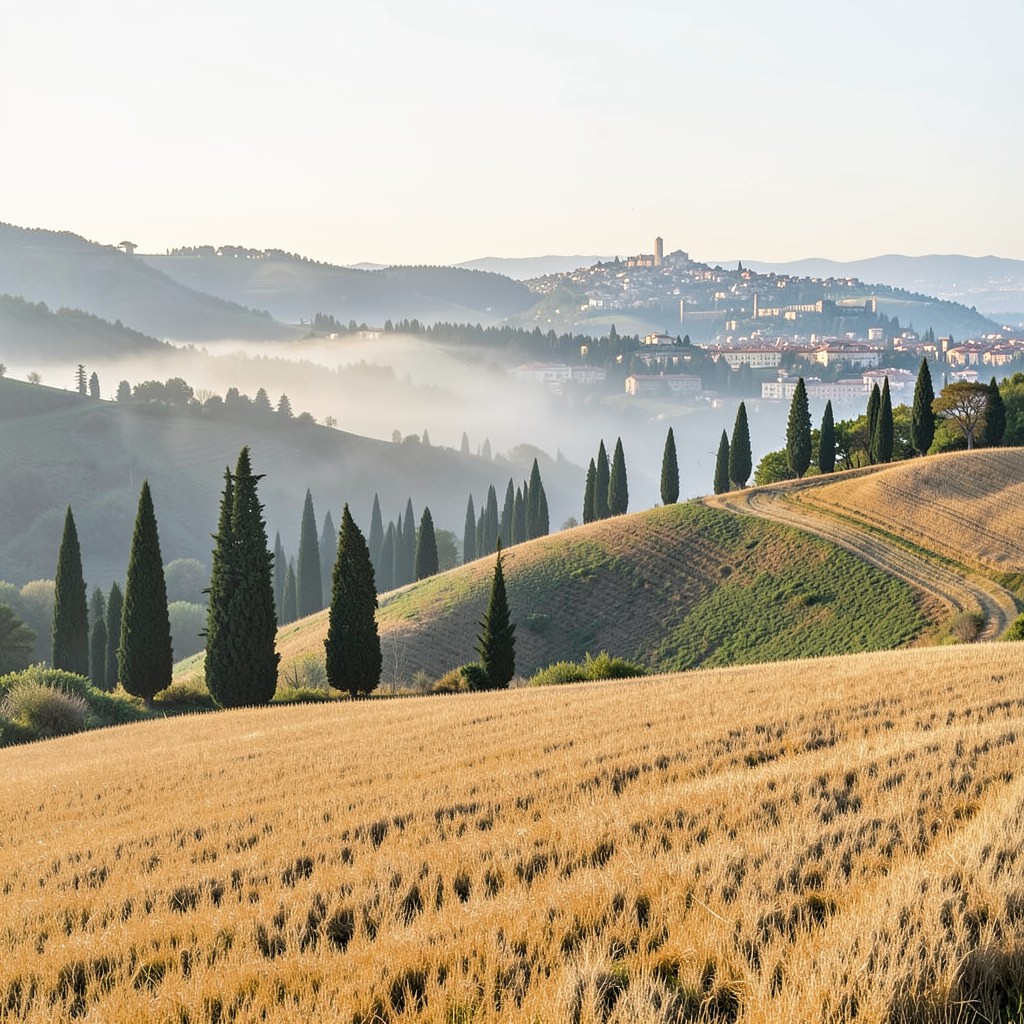
The Riding Experience: From Pienza, you descend immediately on SP18 toward San Quirico. The road is narrow, paved, and bordered by dry stone walls and wild fennel. Resist the temptation to bomb downhill—save your battery and let gravity do the work. I kept my motor off for the first 3 kilometers, coasting at 30-35 km/h and warming my legs.
eBike Tip: Pienza’s historic center is pedestrianized and steeply cobbled. Lock your bike at the parking area below the walls (GPS: 43.0769, 11.6784) and walk up. Attempting to ride the cobbles with a loaded eBike is unnecessary strain on your wrists and your drivetrain.
2. San Quirico d’Orcia: The Cypress-Lined Approach
The approach to San Quirico is where this route enters postcard territory. About 6 kilometers from Pienza, you encounter the iconic cluster of cypress trees that photographers pilgrimage to capture. I stopped here for ten minutes, not for the photo (though I took it), but because the silence at 9:00 AM was absolute—no traffic, no chatter, just the hum of bees in the hedgerow.
San Quirico itself is a walled town with a 12th-century collegiate church and immaculate gardens. The Horti Leonini geometric garden is free to enter and makes an ideal second breakfast spot.
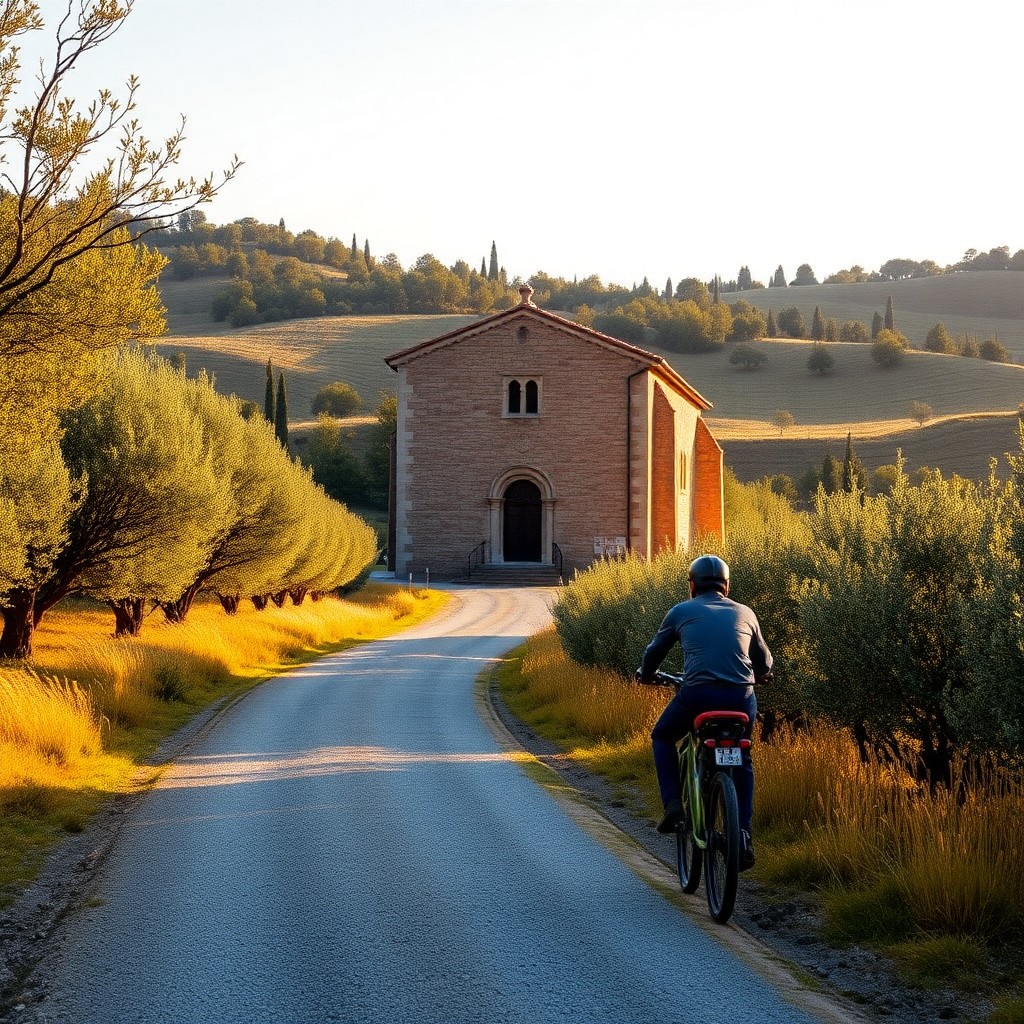
The Riding Experience: The road between Pienza and San Quirico is predominantly flat to gently rolling. I maintained 22-25 km/h on Eco assist, pedaling with moderate effort. The surface is excellent provincial asphalt with occasional patched sections.
eBike Tip: This is your last reliable opportunity to check battery percentage before the more demanding southern half. I was at 94% when I left San Quirico—ideal.
3. Bagno Vignoni Thermal Springs: The Hidden Reward
The stretch from San Quirico to Bagno Vignoni is where the eBike advantage becomes undeniable. The road climbs gradually through oak woodlands and opens suddenly onto a plateau where Bagno Vignoni sits—a village built around a massive 16th-century thermal pool that occupies its entire central square. Steam rises from the water even on warm days, and the sulfur smell is unmistakable.
I locked my eBike and walked the stone path around the pool’s edge. The contrast between the medieval architecture and the primal geology of the hot springs creates a genuinely uncanny atmosphere.
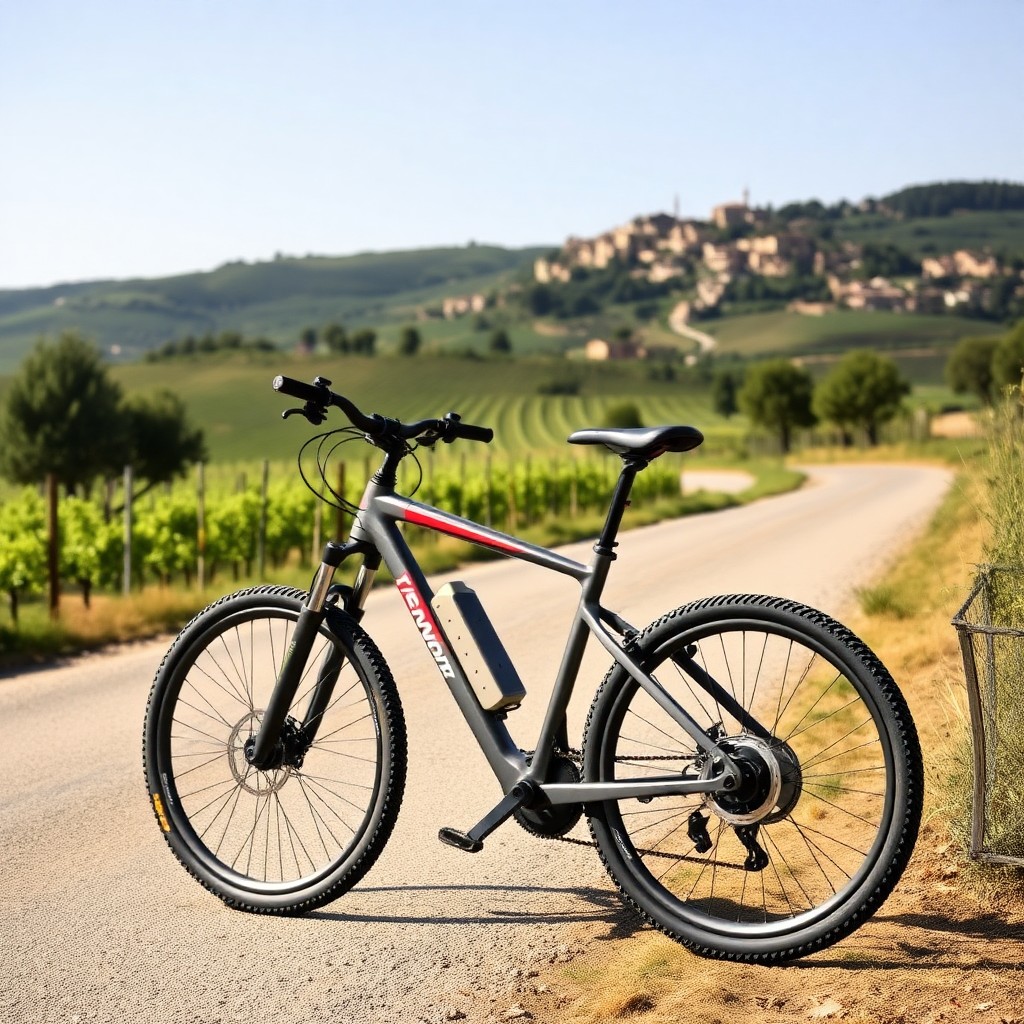
The Riding Experience: The climb from San Quirico to Bagno Vignoni is 120 meters over 5 kilometers—nothing brutal, but steady. On a traditional bike, this would be a grinding slog in the midday heat. With my eBike set to Tour mode (Level 2 of 4), I maintained 18 km/h with normal breathing and actually enjoyed the oak canopy overhead. The 15% gradient on the final approach to the village square would sting on a road bike; on the eBike, I clicked up to Sport mode and arrived without breaking a sweat.
eBike Tip: Bagno Vignoni has no public charging, but you do not need it. The critical factor here is thermal management—park your eBike in shade if possible. Lithium batteries perform optimally between 15°C and 25°C, and Tuscan summer sun can push casing temperatures well above that.
4. Montalcino: The Crown of the Route
Montalcino dominates the southern horizon for the final kilometers before arrival, and the approach road corkscrews up to its fortified walls in a series of switchbacks that would demoralize a tired cyclist. With pedal assist, I treated this as the scenic climax rather than an endurance test.
The town is synonymous with Brunello di Montalcino, one of Italy’s most prestigious wines. I arrived at 12:30 PM, locked my eBike at the public parking below the Rocca fortress, and spent 90 minutes on a leisurely lunch of pici cacio e pepe and a glass of Rosso di Montalcino (the younger, more affordable sibling to Brunello). The terrace at Osteria Porta al Cassero overlooks the Val d’Orcia and lets you monitor your bike.
The Riding Experience: From Bagno Vignoni to Montalcino is the route’s most demanding segment: 180 meters of gain over 8 kilometers, with sustained sections at 8-10% gradient. On my gravel eBike with a Bosch Performance Line CX motor (85 Nm torque), I selected Turbo mode for the switchbacks and climbed at 12-14 km/h—slow enough to appreciate the vineyard terraces, fast enough to feel like I was making progress. A traditional cyclist would be grinding at 6-8 km/h or walking.
eBike Tip: Montalcino’s streets are steep and cobbled. Walk your bike through the center. I witnessed a rider attempt to ride the Via Ricasoli incline and nearly lose control—the combination of 20+ kg bike weight, wet cobbles from a fountain, and tourist foot traffic is genuinely dangerous.
5. Sant’Antimo Abbey: The Contemplative Finale
The western leg from Montalcino back toward Pienza is where this loop saves its most profound surprise. Sant’Antimo Abbey sits in a valley surrounded by rolling wheat fields and ancient olive groves, its 12th-century Romanesque facade glowing amber in afternoon light. I arrived at 3:00 PM to find Gregorian chant echoing from within—the monks still observe the canonical hours here.
The approach road descends from Montalcino through dense woodland, then opens dramatically onto the valley floor. I stopped 500 meters from the abbey, turned off my motor, and pedaled the final stretch in silence, the only sound the crunch of gravel under my tires.
The Riding Experience: From Montalcino to Sant’Antimo is predominantly downhill—120 meters of descent over 9 kilometers. I used minimal assist, regenerating slightly where my system allowed and saving battery for the final climb back to Pienza. The road surface is narrower here, with occasional gravel patches from farm access; 32mm tires handled it comfortably.
eBike Tip: The return from Sant’Antimo to Pienza is the final 10 kilometers and includes 60 meters of climbing in the last 3 kilometers. After a full day of riding, this would be the “empty tank” moment on a traditional bike. With 67% battery remaining, I selected Tour mode and finished the loop feeling like I could do another 20 kilometers.
eBike Setup and Battery Management for This Route
After riding this loop, I can offer precise recommendations for eBike configuration:
Recommended Assist Strategy
| Segment | Distance | Assist Level | Estimated Battery Use |
| Pienza → San Quirico | 9 km | Eco or Off | 2-3% |
| San Quirico → Bagno Vignoni | 7 km | Tour | 5-6% |
| Bagno Vignoni → Montalcino | 8 km | Sport/Turbo | 12-15% |
| Montalcino → Sant’Antimo | 9 km | Eco or Off | 2-3% |
| Sant’Antimo → Pienza | 10 km | Tour | 6-8% |
| Total | 43 km (with detours) | — | 27-35% |
With a standard 500 Wh battery, this loop consumes approximately 30% of total capacity—leaving massive reserves for wrong turns, extended exploration, or returning against a headwind. A 400 Wh battery would still handle this comfortably, but I would not recommend attempting it on anything smaller unless you are prepared to use minimal assist.
Critical Gear for This Route
- Tires: Minimum 28mm, ideally 32-35mm with light tread. The farm tracks and gravel sections near Sant’Antimo reward wider rubber.
- Range extender battery: Unnecessary for this loop, but peace of mind if you plan side trips to La Foce gardens or Rocca d’Orcia.
- Lock: Essential. Pienza, Montalcino, and Bagno Vignoni all see tourist traffic. I use a Abus Bordo Granit X-Plus 6500—compact enough for a frame mount, secure enough for lunch stops.
- Charging cable: Carry it even if you do not expect to charge. Montalcino has cafes with outdoor outlets; a 30-minute top-up while eating adds 15% to most systems.
Practical Information
Best Season
I rode in late May, and the conditions were ideal—20-24°C, dry, wildflowers in full display. The Val d’Orcia has distinct seasonal characteristics:
- Spring (April-May): Greenest landscapes, poppies in wheat fields, moderate temperatures. Best overall.
- Summer (June-August): Stunning light, but midday temperatures exceed 35°C. Start at 7:00 AM, finish by 1:00 PM. Critical battery temperature management.
- Autumn (September-October): Harvest season, golden light, possible early morning fog. Excellent for photography.
- Winter (November-March): Possible snow at elevation, many restaurants closed. Viable for experienced riders with proper clothing.
Charging Infrastructure
Formal eBike charging stations are scarce in rural Tuscany. My strategy:
- Pienza: Ask at your accommodation. Agriturismo properties almost always permit charging.
- Montalcino: Several cafes on Via Gozzante have outdoor seating near outlets. I charged at Caffè Fiaschetteria Italiana while having an espresso.
- Emergency: The tourist information office in Montalcino (Piazza del Popolo, 1) has assisted with charging for cyclists in the past.
Rental Options
If you are not traveling with your own eBike, these operators serve the Val d’Orcia:
- Pienza: Val d’Orcia Cycling (valdorciacycling.com) offers Bosch-equipped trekking eBikes with panniers. Reserve 48 hours ahead in peak season.
- Montepulciano (25 km north): several agriturismo properties rent eBikes to guests; day-rental for non-guests is less common.
- Siena (50 km north): larger fleet options, but logistics of transporting to Pienza add complexity.
I recommend confirming battery capacity (minimum 400 Wh) and tire width (minimum 32mm) when booking. Some rental fleets still use narrower urban tires inappropriate for this route’s farm tracks.
FAQ: Pienza to Montalcino eBike Loop
Is this route suitable for beginners on an eBike?
Yes, with qualifications. The eBike eliminates the physical barrier of the 460 meters of climbing, but the route includes narrow roads shared with agricultural vehicles and some gravel sections. A beginner with basic bike handling skills and comfort riding on roads with occasional traffic will manage fine. Complete novices should consider the shorter Pienza–San Quirico out-and-back (18 km) as a warm-up.
Can I complete this loop on a city eBike with narrow tires?
I would not recommend it. The farm track between Sant’Antimo and the SP road back to Pienza has loose gravel and potholes. A city eBike with 40mm+ tires and no suspension can handle it slowly, but the ride quality degrades significantly. A gravel or touring eBike with 32-35mm tires and some tread is the optimal tool for this job.
What happens if I run low on battery mid-route?
Given the modest total consumption (under 35% for most riders), this is unlikely unless you start with a depleted battery or experience a mechanical fault. If it occurs, Montalcino is the last reliable stop before the return leg; from there, the route to Pienza is net downhill. You could also call your accommodation—many Val d’Orcia agriturismo owners will collect cyclists in difficulty.
Are there water sources along the route?
Public fountains are present in Pienza, San Quirico, and Montalcino. Between these points, carry minimum 1.5 liters in summer. I refilled at Bagno Vignoni’s public tap near the thermal pool (not from the pool itself—the water there is 50°C and sulfurous).
Is the route enjoyable in reverse (counter-clockwise)?
Technically possible, but I do not recommend it. The clockwise direction places the steepest sustained climb (to Montalcino) on fresh morning legs and reserves the gentler, more scenic descent from Sant’Antimo for the afternoon when fatigue sets in. Counter-clockwise, you face a long, grinding climb back to Pienza at the end of the day—precisely when the eBike battery is lowest and your body most tired.
Final Verdict: Why an eBike Transforms This Route
I have ridden the Val d’Orcia on a traditional road bike, and I have ridden it on an eBike. The difference is not merely one of effort—it is one of access. On a standard bicycle, Montalcino looms as a physical obstacle to be overcome. On an eBike, it becomes a destination you arrive at energized, ready to explore its wine bars and viewpoints. The 38 kilometers cease to be a test of endurance and become a framework for experiencing one of Italy’s most celebrated landscapes.
The thermal springs at Bagno Vignoni, the silence of Sant’Antimo, the Brunello in Montalcino—these are the memories you carry from this route. An eBike ensures you have the energy to collect them.
Part of our complete guide to the 25+ best eBike routes in Europe.
FAQ
How long is the Pienza to Montalcino bike ride?
The Pienza to Montalcino eBike loop covers approximately 35-45 kilometers depending on the exact route taken. Most cyclists complete the ride in 3 to 5 hours including stops for photos and wine tasting.
Is Val d’Orcia good for cycling?
Val d’Orcia is considered one of the best cycling destinations in Italy due to its gentle rolling hills, well-maintained gravel roads, and stunning UNESCO World Heritage landscapes. The region offers routes suitable for various fitness levels with minimal traffic.
Do you need a guide for eBike Tuscany tour?
While experienced cyclists can navigate the Pienza to Montalcino loop independently using GPS routes, guided eBike tours provide valuable local knowledge about wineries, history, and hidden viewpoints. Many visitors prefer guides for the added cultural context and logistical support.
What is the best time of year to cycle in Tuscany?
The ideal months for eBiking from Pienza to Montalcino are April through June and September through October. Spring offers blooming wildflowers and mild temperatures, while autumn provides harvest season scenery with fewer tourists.
FTC Disclosure: DOMI eBike Guide participates in affiliate marketing programs. If you purchase products or book services through links on this page, we may earn a commission at no additional cost to you. All route recommendations are editorially independent and based on firsthand riding experience. This article was not sponsored by any tourism board, rental company, or eBike manufacturer.
