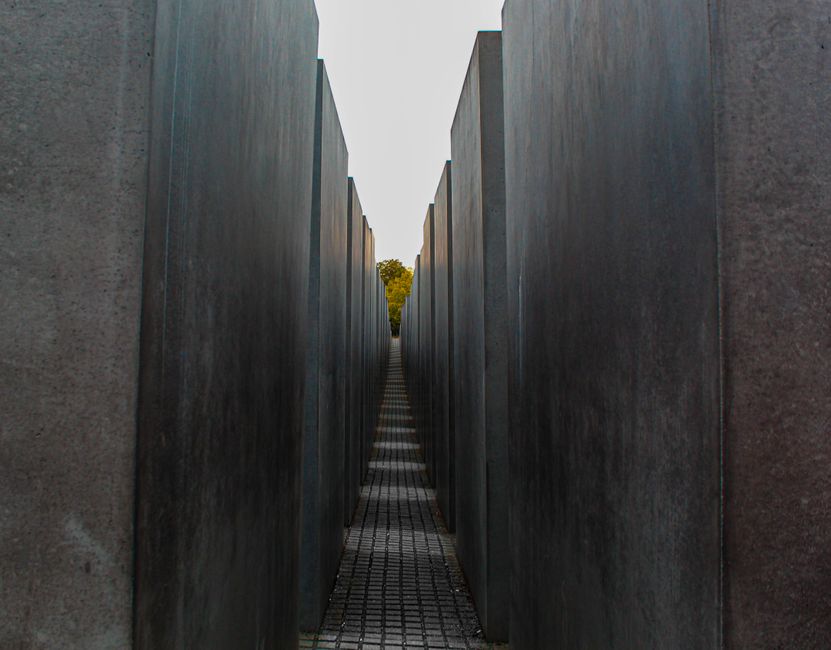
There are few urban cycling routes in the world that deliver history, culture, and flat-out riding pleasure in equal measure. The Berlin Wall Trail is one of them. I have ridden this 32-kilometer loop multiple times, and it never fails to impress. You are tracing the literal scar of a divided city, now transformed into one of Europe’s most compelling linear parks and memorial corridors. On an eBike, the experience shifts from a strenuous sightseeing marathon into a relaxed, immersive journey through living history. No sweaty climbs, no exhausted legs at Checkpoint Charlie, no cutting the ride short because you need to save energy for the return trip. The eBike transforms this route from a physical challenge into a cultural deep-dive.
Route Overview: The Numbers That Matter
Before diving into the waypoints, let us establish exactly what you are signing up for. The Berlin Wall Trail is remarkably eBike-friendly, and the statistics confirm why this route has become a pilgrimage for electric cyclists across Europe.
| Distance | 32.0 km |
| Elevation Gain | 40 m |
| Difficulty | Easy |
| Estimated Time (eBike) | 2.5 – 3.5 hours with stops |
| Surface | Paved paths, cobblestone sections, park trails |
| Best For | History enthusiasts, urban explorers, eBike commuters |
The flat profile is the first thing that strikes you. Forty meters of elevation across 32 kilometers is virtually nothing, and that is by design. The trail largely follows the former border fortifications, which were built on flat terrain for surveillance and control purposes. For eBike riders, this means you can run a lower assist level than usual, conserving battery while still enjoying effortless cruising. I typically ride this route in Eco or Tour mode on my mid-drive system, and I finish with 70% battery remaining on a 500Wh pack.
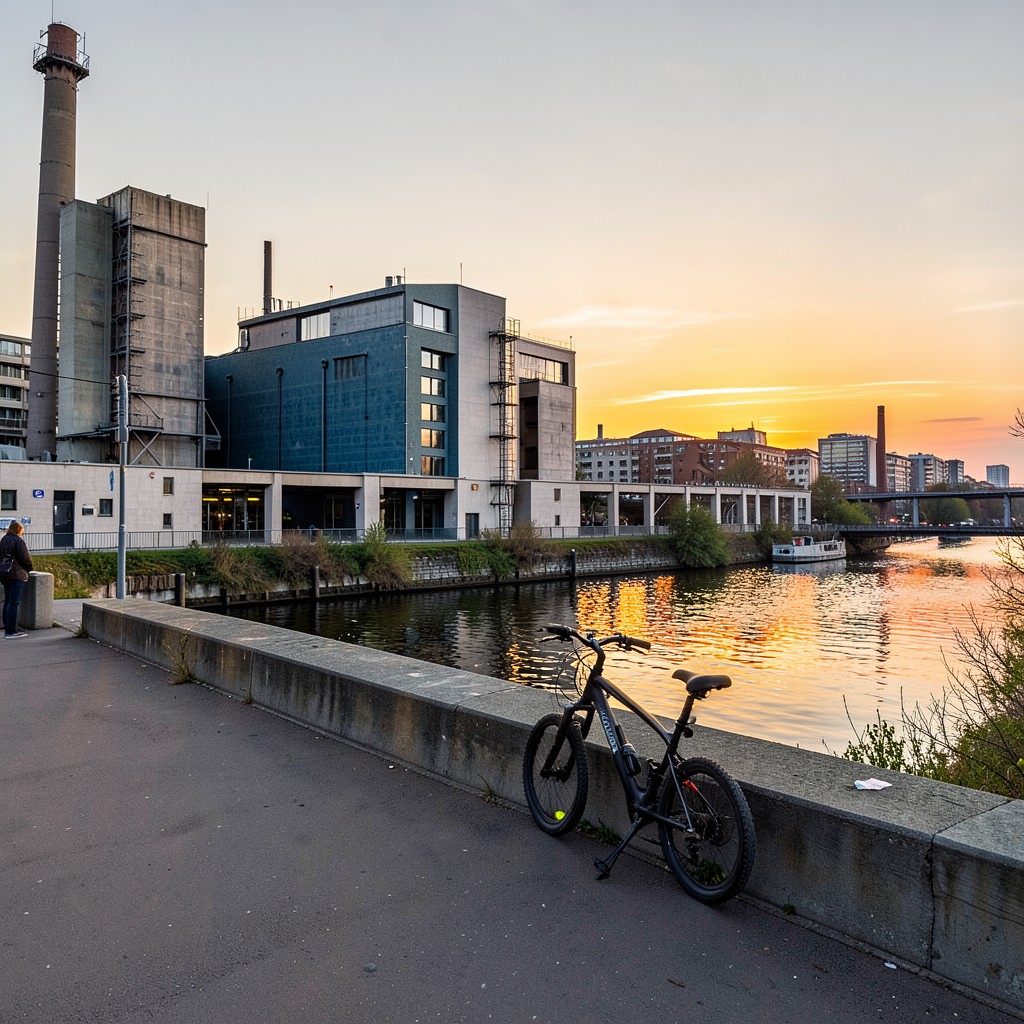
Waypoint-by-Waypoint Guide: Riding Through History
The Berlin Wall Trail is not a route you rush. Each waypoint demands attention, reflection, and time to absorb. Here is how the ride unfolds, with eBike-specific advice for each segment.
Brandenburg Gate: The Symbolic Starting Point
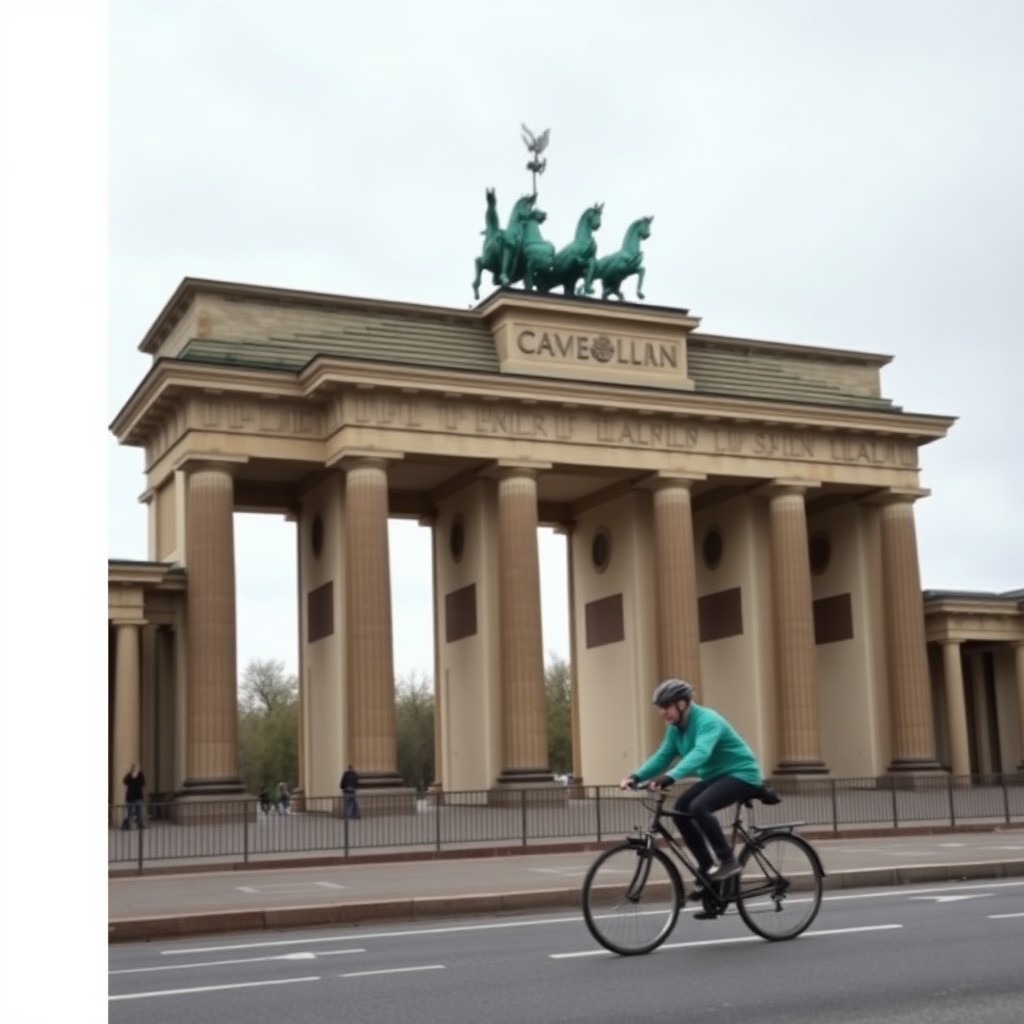
I always begin at Brandenburg Gate, not because it is the most efficient starting point, but because the symbolism is overwhelming. Standing with your eBike beneath those neoclassical columns, you are at the epicenter of German reunification. The Gate was sealed off during the division, inaccessible to both East and West Berliners. Today, it is a bustling plaza, and arriving by eBike gives you a decisive advantage over the tour bus crowds.
eBike Tip: The area around Pariser Platz is crowded. I lock my bike at the dedicated racks on Ebertstrasse, a two-minute walk from the Gate itself. The cobblestones directly in front are rideable but jarring, even with 2.1-inch tires. Pedal through for the photo, then find smoother asphalt on Tiergartenstrasse to begin the trail proper.
Checkpoint Charlie: The Cold War Theater
The ride south to Checkpoint Charlie covers roughly 1.5 kilometers through Friedrichstrasse. This is where the eBike’s urban agility shines. Traffic in this district is relentless, taxi drivers are aggressive, and parking is nonexistent for cars. On your eBike, you filter past gridlocked vehicles, lock up at the Friedrichstrasse bike stands, and walk the final 50 meters to the former Allied crossing point.
The checkpoint itself is now a heavily touristed reconstruction, complete with actors in military uniforms. I find the real value in the nearby Mauermuseum, which documents escape attempts. The outdoor exhibition panels along Zimmerstrasse are free and deeply moving, tracing the evolution of the border fortifications from a simple wire fence to the sophisticated death strip of the 1980s.
eBike Tip: This is your first major stop, and it is tempting to power down. Do not. Keep your display active and note your battery percentage. I treat Checkpoint Charlie as my mental calibration point, if I am above 90% here, I know I can complete the full loop on minimal assist.
East Side Gallery: Art on the Scar
The longest continuous stretch of the Wall still standing, the East Side Gallery stretches 1.3 kilometers along Mühlenstrasse. Getting there from Checkpoint Charlie requires navigating Kreuzberg and crossing the Oberbaumbrücke, a bridge that offers spectacular views of the Spree River and the Berlin skyline.
The Gallery itself is best experienced slowly. I dismount and walk the full length, pushing my eBike alongside. The murals, painted in 1990 by artists from around the world, have faded and been restored multiple times. Some, like Dmitri Vrubel’s “My God, Help Me to Survive This Deadly Love” (the Brezhnev-Honecker kiss), have become global icons. Others are crumbling, which adds a layer of poignancy.
eBike Tip: The riverside path along the Spree here is narrow and shared with pedestrians. I drop to low assist or switch to pure pedaling to maintain control at slow speeds. The gallery gets crowded after 10 AM, so an early start rewards you with uninterrupted viewing.
Mauerpark: The Sunday Spectacle
From the East Side Gallery, the trail heads northwest through Prenzlauer Berg to Mauerpark. This 3-kilometer segment is where you appreciate the eBike’s range most acutely. On a conventional bike, the accumulated distance would start taxing your legs. On the eBike, you arrive fresh, ready to engage with whatever Mauerpark offers.
The park sits on the former death strip, and the Berlin Wall Memorial runs through its eastern edge. The main attraction for many visitors is the Sunday flea market and Bearpit Karaoke, but I come for the Wall Memorial’s preserved watchtower and the documentation center. Standing in the strip, with the inner wall on one side and the outer wall on the other, the claustrophobic geometry of division becomes physically palpable.
eBike Tip: Mauerpark has excellent grassy areas for a picnic, but I avoid locking my bike to the informal fence clusters. Use the proper racks near the Bernauer Strasse entrance. If you need a battery top-up, the café at the documentation center has outdoor seating with power outlets, though I have never needed more than a 15-minute phone charge here.
Bornholmer Strasse: Where the Wall Fell First
This is the emotional climax of the route for me. Bornholmer Strasse was the first border crossing to open on November 9, 1989, after a confused announcement by Politbüro member Günter Schabowski. Thousands of East Berliners flooded across the Bösebrücke bridge, embraced by West Berliners on the other side. The photographs from that night are etched into global memory, standing there on the same bridge with your eBike, reading the commemorative plaques, is a profoundly moving experience.
The site has been sensitively developed, with a memorial plaza, preserved border installations, and excellent informational panels. I spend at least 30 minutes here, often longer. The adjacent Platz des 9. November 1989 offers space to reflect without the tourist density of Brandenburg Gate.
eBike Tip: The approach to Bornholmer Strasse involves a gentle rise along Schwedter Strasse. On a conventional bike, this would be unremarkable. On an eBike with cargo or a passenger, it is still unremarkable, the motor erases any strain. I mention this because many riders bring panniers with picnic supplies or camera equipment for this route. The eBike’s load-carrying capacity, combined with assist, makes this practical rather than punishing.
Reichstag: The Loop Closes
The final leg from Bornholmer Strasse back to Brandenburg Gate covers approximately 4 kilometers through Mitte, passing the Reichstag building with its iconic glass dome by Norman Foster. This is where the eBike’s traffic-beating capability becomes your final gift of the day. The area around the Reichstag is perpetually congested with buses, taxis, and security vehicles. You glide past on dedicated bike infrastructure, lock up at the Scheidemannstrasse stands, and walk the short distance to the building.
I often end my rides here rather than returning immediately to Brandenburg Gate. The Reichstag’s rooftop terrace offers panoramic views, and the adjacent Spreebogen park provides a peaceful spot to review photos and process the day’s historical weight. The dome itself is free to visit with advance registration, and the spiral walkway inside offers a fitting metaphor for the journey, ascending through layers of German history toward light and transparency.
eBike Tip: By this point in the loop, after 30+ kilometers of intermittent riding and multiple hours, a conventional cyclist would face fatigue-compromised judgment in urban traffic. The eBike rider remains alert, responsive, and safe. This is not a minor point, the final kilometers through Berlin’s government district involve complex intersections and heavy vehicle traffic. Arriving fresh is a safety advantage, not merely a comfort one.
eBike Setup Tips for the Berlin Wall Trail
This route’s forgiving profile allows flexibility in how you configure your eBike, but some optimizations enhance the experience.
Assist Level Strategy
Given the 40-meter total elevation gain, you do not need maximum assist for climbing. I recommend the following approach:
- Eco/Tour mode: Primary setting for the flat riverside and park sections. This maximizes range and keeps you engaged with the riding experience.
- Sport mode: Brief bursts for accelerating away from traffic lights in the Friedrichstrasse and Mitte sections, or for maintaining flow in heavier bike traffic.
- Turbo/Boost: Rarely necessary on this route. Reserve for loaded starts from intersections or if you are running a heavy cargo configuration with children or extensive gear.
Battery Management
A 400Wh battery is sufficient for this 32-kilometer loop with substantial reserve, assuming moderate assist levels. However, I carry a different mental model for urban touring than for rural recreation. In Berlin, you want buffer capacity for detours, wrong turns, and spontaneous explorations. The East Side Gallery might inspire you to continue along the Spree to Treptower Park. Mauerpark might lead you to explore the Prenzlauer Berg café scene. I treat my battery like I treat my phone battery in an unfamiliar city, aim to finish with 30% remaining, not 5%.
For riders with smaller batteries or those running higher assist throughout, Berlin’s charging infrastructure is excellent. The city has over 1,000 public charging stations, and many cafés along the route welcome charging customers. I have never needed to charge mid-ride, but the security of knowing you could is valuable.
Tire and Comfort Considerations
The trail surface varies: smooth asphalt on the main Mauerweg paths, cracked concrete in sections, occasional cobblestones near historic monuments, and gravel in park transitions. I run 2.0-inch tires at 35 PSI for this route, a compromise between efficiency on pavement and comfort on deteriorated surfaces. Suspension is unnecessary, the trail is flat enough that rigid forks and standard seat post compliance suffice. If you are riding a city eBike with a suspension fork, lock it out for efficiency on the long straight sections.
Practical Information for Your Ride
Best Season
Berlin’s cycling season runs April through October, with May and September offering the most reliable weather. I have ridden the Wall Trail in February, and while possible, the short daylight hours (sunset around 4:30 PM) and potential ice on shaded path sections make it less enjoyable. Summer brings long evenings ideal for after-work rides, but also peak tourist crowds at the major waypoints. My personal preference is a Tuesday morning in late May, crisp air, greening trees, and manageable pedestrian density.
Charging Stops
While unlikely to be necessary for most eBikes on this route, Berlin’s café culture accommodates cyclists well. My verified stops with accessible power:
- Mauerpark area: Cafés along Eberswalder Strasse, 5-minute walk from the Wall Memorial
- Friedrichstrasse (near Checkpoint Charlie): Multiple options, though premium pricing applies
- Oberbaumbrücke vicinity: Kreuzberg’s café density offers abundant choices
Bike Rental Options
For visitors without their own eBikes, Berlin’s rental market is mature. I have not personally rented in Berlin, but the infrastructure is well-documented. Standard city bike rentals are ubiquitous; dedicated eBike rentals require more planning. Look for providers in the Friedrichshain and Kreuzberg neighborhoods near the trail. Day rates typically range from 25-40 EUR for quality eBikes. Reserve in advance during peak season, demand exceeds supply in summer months.
FAQ: Berlin Wall Trail eBike Route
Is the Berlin Wall Trail suitable for beginner eBike riders?
Yes, emphatically. The 40-meter elevation gain across 32 kilometers presents no technical challenge. The trail is predominantly on dedicated paths or quiet streets. The only skill requirement is comfortable urban cycling, navigating pedestrians at crowded waypoints, and sharing paths with other cyclists. If you can ride confidently in a city park, you can handle this route.
How much battery range do I need for the full 32-kilometer loop?
Any eBike with a 300Wh battery or larger can complete this loop with range to spare, assuming Eco or Tour assist levels. The flat terrain means minimal motor draw. I have completed this route on a 400Wh battery using 28% total capacity. However, I recommend planning for 50 kilometers of effective range to account for cold weather, headwinds along the Spree, and spontaneous detours.
Can I ride the Berlin Wall Trail in winter?
Technically yes, practically with caveats. Berlin winters are damp rather than severely cold, but ice can form on shaded path sections, particularly in Tiergarten and along the Landwehrkanal. The trail is plowed after snowfall, but residual packed snow can be hazardous. Daylight is limited to approximately 8 hours in December. If you do ride in winter, equip studded tires and plan for a partial route with indoor warming stops.
Are there sections where I must dismount and walk?
At the waypoints themselves, yes. Brandenburg Gate, Checkpoint Charlie, and the East Side Gallery all require dismounting due to pedestrian density and, in some cases, legal restrictions on cycling in pedestrian zones. The trail between waypoints is fully rideable. One exception: the Berlin Wall Memorial at Bernauer Strasse has a designated bike parking area, and the documentation center is explored on foot.
How does the eBike experience compare to a conventional bike on this route?
The difference is transformative for the full 32-kilometer loop. On a conventional bike, the distance becomes a physical project that competes with your attention for the historical content. You arrive at Bornholmer Strasse calculating remaining energy, not absorbing significance. The eBike eliminates this trade-off. You cover the distance effortlessly, arrive mentally fresh at each waypoint, and can extend the route spontaneously without consequence. For a route whose primary value is cultural and historical, not athletic, the eBike is the optimal tool.
Part of our complete guide to the 25+ best eBike routes in Europe.
FAQ
How long is the Berlin Wall Trail cycling route?
The Berlin Wall Trail (Berliner Mauerweg) spans approximately 160 kilometers (99 miles) around the former West Berlin. The route follows the former border fortifications that divided East and West Berlin from 1961 to 1989.
Is the Berlin Wall Trail suitable for eBikes?
Yes, the Berlin Wall Trail is very eBike-friendly with mostly flat, well-maintained paths suitable for all skill levels. The route combines paved roads, gravel paths, and park trails, making it ideal for electric bikes with moderate battery range.
What historical sites can you see on the Berlin Wall bike trail?
Cyclists can visit over 30 watchtowers, the East Side Gallery, Mauermuseum at Checkpoint Charlie, and the Berlin Wall Memorial at Bernauer Straße. Information panels along the route mark former border crossings, escape tunnels, and memorials to those who died trying to cross.
How long does it take to cycle the entire Berlin Wall Trail?
Most cyclists complete the full Berlin Wall Trail in 2 to 3 days, though athletic riders can finish in a single day. Many visitors prefer to split the route into shorter segments to allow time for visiting museums and historical sites along the way.
FTC Disclosure: DOMI eBike Guide participates in affiliate programs and may earn commissions from qualifying purchases linked in this article. We test and review products independently, and all opinions expressed are our own. This route guide contains no affiliate links.
