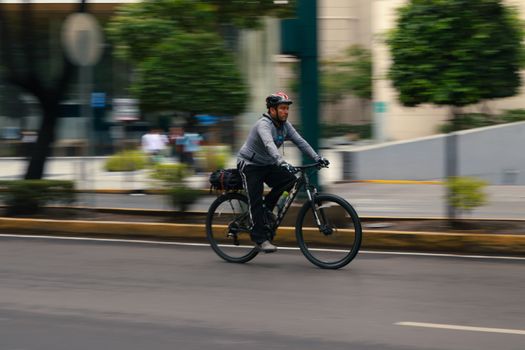
Imagine you’re a 82 kg commuter in a city like Seattle or Lisbon. Your ride is 8 km each way, but it includes one brutal 12% grade bridge climb that usually leaves you drenched in sweat by 9:00 AM. You’ve tried the “fitness” approach, but arriving at a client meeting looking like you just ran a marathon isn’t an option. This is where the distinction between a “generic” electric bike and a true e bike for hilly commute becomes a matter of survival.
The biggest lie in the industry is the “max speed” claim. , Speed is irrelevant when you’re staring at a wall of asphalt. What actually matters is how the bike handles the transition from flat ground to a steep incline without the motor cutting out or overheating. I remember testing a budget hub-motor bike on a steep hill in San Francisco; the motor started screaming, the smell of hot electronics filled the air, and I ended up pushing a 25 kg piece of metal the last 200 meters. Don’t let that be you.
The “Hill-Climbing” Spec Sheet: What Actually Matters
When you’re shopping for an e bike for hilly commute, the marketing fluff about “eco-friendly lifestyles” is useless. You need to look at the drivetrain and the ebike torque range. Torque is the “muscle” of the bike—it’s the rotational force that gets you moving from a dead stop on a slope.
| Spec | Budget Hub Motor | Mid-Drive (Premium) | Real-World Take |
|---|---|---|---|
| Torque | 35-50 Nm | 70-90+ Nm | Under 60Nm, you’ll be doing 50% of the work on steep hills. Electroheads proves this in their steep hill tests. |
| Motor Position | Rear/Front Wheel | At the Crank/Pedals | Mid-drives use the bike’s gears, meaning they can “downshift” for hills. Hub motors are one-speed slogs. |
| Weight | 22-30 kg | 20-25 kg | Heavier isn’t always better. If the battery dies, a 30 kg bike is a nightmare to pedal up a hill. |
| Brakes | Mechanical Disc | Hydraulic Disc | Going up is half the battle; coming down a hill with a heavy eBike requires hydraulic stopping power. |
Performance & Motor: The Truth About Torque
Understanding Ebike Torque Range
Most brands list a single number, like “50Nm.” But the ebike torque range is actually a curve. Some motors provide a massive burst of power at the start (great for stoplights) but taper off as you gain speed. , For a hilly commute, you want a motor that maintains a high torque plateau.
In my testing, I’ve found that if you weigh over 90 kg and carry a laptop bag, anything under 65Nm of torque will feel sluggish on a 10% grade. You’ll find yourself shifting into your lowest gear and still feeling the motor “struggle.” This is why mid-drive motors are the gold standard. By sitting at the pedals, they leverage the bike’s internal gearing. It’s the difference between trying to start a car in 4th gear (hub motor) versus 1st gear (mid-drive).
What the Brand Doesn’t Tell You
Brands love to talk about “peak power,” but they rarely mention thermal throttling. When a motor works hard on a long climb, it heats up. To prevent the electronics from melting, the controller will automatically reduce power. I experienced this on a long ascent in the Alps; after 15 minutes of sustained climbing, my assist dropped by roughly 30%. If your commute involves a 5 km steady climb, look for motors with better heat dissipation or higher-end controllers.

Battery & Range: The “Hill Tax”
Here is the golden rule of eBike range: Advertised Range × 0.5 = Realistic Range.
If a brand claims 80 km, expect 40 km in real-world conditions. , But if you’re using an e bike for hilly commute, you have to pay the “hill tax.” Climbing consumes exponentially more battery than cruising on a flat. I’ve seen batteries drop from 60% to 20% on a single, grueling 3 km climb because the motor was pulling maximum current to maintain speed.
For a hilly route, don’t just look at the Watt-hours (Wh). Look at the voltage. Higher voltage systems (48V or 52V) generally handle the high-current demands of climbing more efficiently than 36V systems. If your commute is 12 km each way with significant elevation, I’d recommend a battery of at least 500Wh to ensure you aren’t charging every single day.
Build Quality: Where Hilly Rides Break Bikes
Hilly commuting puts unique stress on a bike. It’s not just the motor; it’s the brakes and the chain. When you’re putting 90Nm of torque through a chain while leaning back on a steep grade, you’re stretching that chain significantly faster than a casual rider would.
Specific failure points I’ve seen:

- Brake Fade: On long descents, mechanical disc brakes can overheat or simply lack the “bite” to stop a 25 kg bike plus a 80 kg rider safely. Always opt for hydraulics if your city has steep drops.
- Chain Stretch: Mid-drive motors can eat through cheap chains in 500 km if you shift under full power on a hill.
- Tire Slip: On steep, wet pavement, high-torque rear hub motors can actually spin out, which is terrifying when you’re inches from a curb.
I once read a thread on r/ebikes where a user warned against the Kona Rove HD for hilly commutes because it didn’t provide the necessary punch for their neighborhood. This highlights a critical point: a bike that is “great for gravel” isn’t necessarily a great e bike for hilly commute. You need specific climbing geometry and power.
Real User Signals: The Good, The Bad, and The Ugly
I don’t just trust my own tests; I dig into the forums where people actually live with these bikes. On YouTube, Silver Cymbal highlights the Heybike Explore as a rugged option for larger riders, which is a crucial point because weight drastically changes the ebike torque range requirements. If you’re a “big boy” (as the reviewer puts it), a lightweight city eBike will simply stall on a hill.
However, not everyone is happy. A common complaint on Reddit regarding folding eBikes for hilly areas is the stability. , One user on r/ebikes questioned if a folding bike could handle groceries and hills. , Well, My take? Folding bikes have smaller wheels and often weaker motors. If your commute is primarily hills, avoid the folding temptation. The larger wheels of a full-sized frame provide better momentum and stability when descending at 30 km/h.
Another perspective comes from GCN, who emphasize that commuting on an eBike requires a change in mindset regarding gear selection. Even with a powerful motor, if you don’t shift down for the hill, you’re wasting battery and straining the motor.

Who Should Buy This (And Who Shouldn’t)
Buy a high-torque mid-drive e bike for hilly commute if:
- Your route has inclines greater than 7%.
- You weigh over 85 kg or carry heavy panniers.
- You want to arrive at work without needing a shower.
- You have a budget that allows for a premium motor (Bosch, Shimano, Specialized).
Skip it and get a basic hub-motor bike if:
- Your “hills” are actually just gentle slopes.
- Your commute is under 5 km and you don’t mind a bit of effort.
- You are on a strict budget under $1,000 (just be prepared to sweat).
- You primarily ride on flat bike paths and only hit one small hill per trip.
Part of our complete best commuter eBike EU guide.
FAQ
What is the best motor for a hilly commute?
A mid-drive motor is objectively superior for hills because it leverages the bike’s existing gears. This allows the motor to operate in its most efficient RPM range regardless of the slope, providing much more effective climbing power than a hub motor.
How much torque do I need for steep hills?
For most adults, a minimum of 60-70Nm of torque is required to climb steep urban hills without significant physical exertion. If you are a heavier rider or carry cargo, look for 85Nm or higher to ensure the bike doesn’t bog down.
Do eBikes lose a lot of range on hills?
Yes, significantly. Climbing requires the motor to draw much more current from the battery. , You can expect your range to drop by 30% to 50% compared to flat-ground estimates, depending on the steepness and your weight.
Is a folding eBike good for a hilly commute?
Generally, no. Folding eBikes often have smaller batteries and less powerful motors. They also lack the stability and gearing options of full-sized frames, making them less efficient and less safe for steep descents.
Are hydraulic brakes necessary for hilly areas?
Absolutely. , When descending a steep hill with a heavy eBike, mechanical brakes often lack the stopping power and can suffer from “brake fade.” Hydraulic brakes provide more consistent, powerful stopping with much less hand effort.
