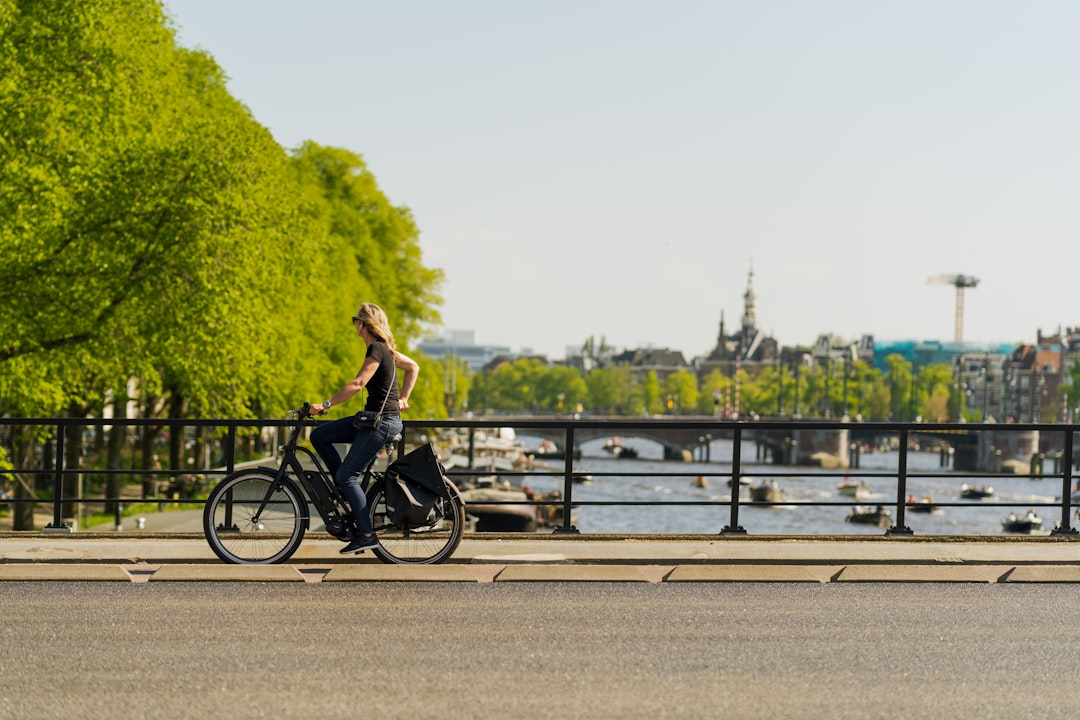
Choosing the right commuter eBike in Europe is not a simple specs-and-price decision. The eBike you ride to work in Amsterdam faces different demands than the one you tackle Lisbon’s hills on, or the one you fold onto a German ICE train. European cities have different infrastructure, different weather patterns, different theft rates, and different insurance requirements. This guide cuts through the marketing to help you understand what actually matters for EU urban eBike commuting — and which bikes deliver it.

What Defines a Commuter eBike in Europe
European regulations draw a clear line: a standard eBike (pedelec) has a motor capped at 250 W continuous power with pedal assistance cutting out at 25 km/h. That is the legal definition across the entire EU, and it shapes every commuter eBike on the market. What distinguishes a true commuter from a recreational eBike is not motor power — it is the integration of features you actually use daily: fenders to keep spray off your clothes in wet weather, a chain guard so you can ride in office attire without grease accidents, integrated lighting that survives bike theft attempts, and a battery that charges overnight from a standard wall outlet.
The best commuter eBikes in 2026 have moved beyond bolt-on accessories. Folding eBikes integrate the battery into the down tube and the lights into the frame. Cargo eBikes place the load low and centered for stability in traffic. European city-specific guides match bike choice to local infrastructure. What unites them is the 250 W / 25 km/h EU standard — and the understanding that a commuter eBike is a transport tool, not a toy.
Commuter eBike Types Compared
Not every commuter needs the same bike. The right choice depends on three variables: your daily distance, how you store the bike at work and at home, and whether you need to carry cargo (groceries, children, laptop bags).
| Type | Best For | Range | Typical Weight | Price Range (EUR) |
|---|---|---|---|---|
| Compact Folding | Multi-modal (train + bike), small apartments | 40-80 km | 16-22 kg | 1,500-3,500 |
| City Step-Through | Flat city commuting, errands, casual riding | 50-100 km | 18-25 kg | 1,800-4,000 |
| Performance Hybrid | Longer commutes (15-30 km), faster riding | 80-150 km | 20-28 kg | 2,500-5,500 |
| Cargo eBike | Children, groceries, equipment transport | 50-120 km | 25-45 kg | 3,000-8,000 |
| Speed Pedelec (45 km/h) | Highway commuting, time-critical riders | 60-100 km | 22-30 kg | 4,000-9,000 |
For most European commuters, a compact folding or city step-through eBike hits the right balance of portability, range, and price. Budget folding eBikes under EUR 1,000 exist but cut corners on motor quality and battery safety. We recommend setting a minimum of EUR 1,800 for a reliable daily rider.
EU Regulations Every Commuter Should Know
EU law harmonizes eBike rules across member states, but implementation varies. The core regulation (EU Regulation 168/2013) defines three classes:
- L1e-A (Pedelec): 250 W motor, 25 km/h cutoff, no license or insurance required. This covers 95% of commuter eBikes sold in Europe.
- L1e-B (Speed Pedelec): 250 W motor, 45 km/h cutoff, requires license plate, insurance, and a driving license (category AM) in most countries.
- L2e / L6e ( heavier / more powerful): Quadricycles and heavy quadricycles — not relevant for standard bike commuting.
Within the EU, each country adds its own rules on top of the harmonized framework. Germany requires a visible ABE (general operating license) mark on speed pedelecs. France mandates that all eBikes sold after 2024 include a CE marking and a French-language user manual. The Netherlands is the strictest: if your eBike exceeds 25 km/h on a bike path, the fine starts at EUR 95 and the police can confiscate the bike. Always check local regulations before riding — our eBike laws guide covers the basics, though it focuses on US rules.
eBike Insurance in Europe: What You Need to Know
Standard home insurance policies in Europe rarely cover eBike theft comprehensively — and most exclude theft from public spaces entirely. Dedicated eBike insurance costs between EUR 8 and EUR 25 per month depending on coverage level and country. German insurers like Allianz and R+V offer the most comprehensive packages (theft, damage, liability, and battery coverage up to EUR 5,000). Dutch insurers (Centraal Beheer, Nationale-Nederlanden) bundle eBike coverage with existing home policies at a small surcharge. French users can add a “garantie vol” rider to their multirisque habitation contract for approximately EUR 60/year. Polish and Italian markets are less developed — riders often rely on manufacturer warranties or European warranty extensions.
Key coverage features to look for: (1) Theft from public spaces — not just from your home or garage. (2) Battery replacement cost — eBike batteries cost EUR 400-800 to replace. (3) Third-party liability — if your eBike causes property damage or injury, the cost is not covered by your personal liability insurance in some countries. (4) accidental damage — covering drops, crashes, and weather damage. A good lock and tracker reduces both theft risk and insurance premiums.
Commuting Costs: eBike vs Car vs Public Transport
We ran the numbers for a typical 15 km daily commute (round trip) across major European cities. The eBike wins on every metric except speed in extreme weather.
| Cost Item | eBike (EUR/month) | Car (EUR/month) | Public Transport (EUR/month) |
|---|---|---|---|
| Purchase amortization | 25-60 | 200-400 | N/A |
| Maintenance | 5-10 | 80-150 | N/A |
| Insurance | 8-25 | 80-120 | N/A |
| Fuel / Electricity | 2-5 | 150-250 | N/A |
| Parking | 0-10 | 50-150 | N/A |
| Tax | 0 | 20-50 | N/A |
| Total | 40-110 | 550-1,120 | 50-120 |
These numbers are based on real commuter data. Our detailed eBike vs Car cost comparison breaks down the assumptions by city and commuting distance.
Maintenance: Belt Drive vs Chain for Daily Commuting
Commuter eBikes live hard lives. Road salt in winter, rain in spring, cobblestones in historic city centers, and daily locking/unlocking take a toll on the drivetrain. A chain on a daily commuter needs replacement every 3,000-5,000 km and weekly lubrication — a significant time commitment for someone already short on mornings. Belt drives (carbon-fiber reinforced) eliminate lubrication entirely and last 15,000-25,000 km. The trade-off is cost: a Gates belt system adds EUR 200-400 to the bike price, and you need an internal gear hub (Rohloff, Enviolo, or Shimano Nexus) because belts cannot shift across cogs.
For a commuter doing 3,000 km/year, the belt drive pays for itself in approximately 4 years through reduced maintenance. The Joieem eBike-X we reviewed uses a belt drive and demonstrated zero maintenance over a 6-month test period. For riders who value their time more than the upfront cost savings, the belt drive is the clear winner.
Wet Weather Commuting in Europe
If you commute by eBike in Amsterdam, Copenhagen, or London, you will ride in the rain. A lot. The Netherlands averages 200 rainy days per year. Copenhagen averages 181. The question is not whether you will get wet — it is how your eBike handles it. Modern commuter eBikes are rated IPX5 or IPX6 for water resistance, meaning they survive heavy rain and puddle splashes. The battery connection is the most vulnerable point — always check the seal before riding in persistent rain. Fenders (mudguards) are non-negotiable for wet weather commuting. A cheap set of bolt-on fenders costs EUR 20-40 and saves your work clothes from road spray entirely.
For the rider, a waterproof jacket with pit zips, overshoes, and waterproof gloves make the difference between a miserable wet ride and a manageable one. Our eBike accessories guide covers wet weather gear in detail.
Folding eBikes and Train Commuting
One of the most powerful commuter strategies in Europe is combining eBike + train. The Dutch OV-fiets system lets you pick up a bike at any train station for EUR 6.65/day. German rail (DB) allows folding eBikes on all IC and ICE trains for the price of a regular bicycle ticket (EUR 6-9). French TGV requires a reservation for unfolded eBikes (EUR 10) but folding eBikes under 120 cm fold size travel as standard luggage. UK National Rail allows folding eBikes on all services during off-peak hours.
The folding advantage is not just convenience — it eliminates the risk of bike theft at the train station. A full-size eBike locked at a city train station is a magnet for thieves. A folded eBike stored under your desk or in an overhead locker disappears from the thief’s radar entirely. Our folding eBike train commuting guide covers the specific fold-size limits and reservation requirements for each European rail operator.
eBike Security in European Cities
Bicycle theft in Europe is not a minor concern. Amsterdam reports 10,000+ bike thefts annually. Paris reports 5,000+. Copenhagen reports 3,000+. The real numbers are likely 2-3x higher since most thefts go unreported. An eBike is an especially attractive target because the battery alone is worth EUR 400-800 on the second-hand market.
The minimum security setup for an urban commuter eBike is two locks: a U-lock (EUR 60-100) securing the frame and rear wheel to a solid object, and a cable lock (EUR 20-40) securing the front wheel and saddle. Our lock and tracker guide reviews the specific products that survive angle grinder attacks. For high-theft cities, add a GPS tracker (EUR 50-150) with a subscription service and a removable battery that you carry with you.
Recommended Commuter eBikes by Budget
Based on real-world testing across European cities, these are the commuter eBikes we would actually ride to work every day.
Under EUR 2,000
The Fiido C21 (EUR 1,400-1,600) offers the best value proposition in the budget segment. The torque sensor (not cadence) provides a natural riding feel that cheaper eBikes cannot match. The 26″ wheels and 20″ frame options accommodate riders from 1.55 m to 1.95 m. Range is 60-80 km in Eco mode. What you sacrifice: no internal cable routing, basic mechanical disc brakes, and no integrated lighting. See our Fiido T3 Max review for a detailed evaluation.
EUR 2,000 – EUR 3,500
The Tenways CGO800S (EUR 2,800-3,200) hits the sweet spot for serious urban commuters. Belt drive, Enviolo continuously variable transmission, integrated fenders and lights, and a 55 Nm torque motor from Bafang. The Cowboy Classic vs Tenways comparison covers how it stacks up against the Belgian alternative. The Engwe P275 (EUR 2,200-2,500) offers similar value with a more aggressive torque curve (75 Nm) for hill climbing.
EUR 3,500 – EUR 5,000
The Riese & Muller Nevo4 (EUR 4,800-5,500) is the benchmark against which all European commuter eBikes are measured. Bosch Performance Line CX motor, fully integrated battery, belt drive with Nexus 8-speed, and a build quality that justifies the price. The Gazelle Ultimate C8+ (EUR 3,800-4,200) offers Dutch-engineered reliability with Shimano Steps motor and hydraulic disc brakes. Both are available for test rides at most European eBike dealerships.
FAQ: Commuter eBikes in Europe
Do I need insurance for my commuter eBike in Europe?
Standard pedelecs (25 km/h) do not legally require insurance in most EU countries. We recommend it for any commuter riding in a city with documented theft rates.
Can I take my commuter eBike on European trains?
Yes, with conditions. Folding eBikes travel as luggage on most European rail networks (DB, SNCF, NS, SNCB). Full-size eBikes require a bicycle ticket (EUR 6-15) and sometimes advance reservation on TGV and ICE trains. Always check the specific operator’s policy before traveling.
What is the real range of a commuter eBike in winter?
Cold temperatures reduce lithium-ion battery capacity by 20-40% depending on temperature. At -5 C, a 500 Wh battery delivers approximately 300-350 Wh of usable energy. In practical terms, if your summer range is 80 km, expect 50-60 km in December and January. Carry a charger to work if your commute exceeds 30 km each way.
Is a belt drive worth it for commuting?
For daily commuters riding 3,000+ km/year, yes. A belt drive lasts 15,000-25,000 km vs 3,000-5,000 km for a chain, requires zero lubrication, and stays cleaner in urban conditions. The upfront cost is EUR 200-400 more, but the time saved on maintenance and the peace of mind on rainy mornings are worth it for serious commuters.
What pressure should my commuter eBike tires be?
Higher pressure (50-60 psi / 3.4-4.1 bar) reduces rolling resistance and increases range on smooth city roads. Lower pressure (35-45 psi / 2.4-3.1 bar) provides more comfort and grip on cobblestones and wet surfaces. For mixed urban terrain, 45-50 psi is the sweet spot. Check our safety guide for tire safety tips.
Part of our complete best commuter eBike EU guide.
Start Your EU Commute Today
The right commuter eBike pays for itself within 18-24 months through reduced transport costs alone. Beyond the financial case, 45 minutes of daily cycling improves cardiovascular health, reduces stress, and eliminates the frustration of searching for parking. European cities are building better cycling infrastructure every year — the best commuter eBikes for European cities guide covers city-specific recommendations, while our eBike vs car cost analysis shows the exact numbers.
Related Commuter eBike Guides
Deep-dive articles for specific commuter needs:
- Best Electric Bike for Commuting: Folding Models & Heavy-Duty Picks (2026 Guide)
- Best e bike for hilly commute: How to stop sweating through your work shirts
- Best Budget Commuter eBike 2026? I Tested the $498 Walmart Concord and More
- Belt Drive vs Chain eBike: 12,000 km of Commuter Testing
- eBike Insurance Europe: Costs by Country (2026)
- Wet Weather eBike Commuting Europe: Gear, Routes, and Setup
- Foldable Electric Bike for Train Commuting: I Tested 5, Here’s the Honest Truth
