Quick Verdict: Stop Buying “Universal” Bikes
If you weigh over 250 lbs (113 kg) and you buy a generic “one-size-fits-all” eBike from a big-box store, you are setting yourself up for a broken spoke within the first month. After testing over 30 eBikes in the last three years, here is the brutal truth: most bikes rated for “300 lbs total system weight” actually fail around 240 lbs of rider weight once you add a backpack and hit a pothole.
The Winner: For pure durability and value, the Lectric XP 3.0 (and the newer XPeak 2.0 for off-road) remains the king for heavy riders because of its dual-battery option and reinforced frame geometry. The Upgrade: If you have $3,000+, look at the Aventon Abound or Ride1Up Rift for better component quality that won’t rattle apart under stress.
The “Do Not Buy” List: Avoid ultra-cheap “moped style” clones with single-crown forks and no suspension linkage if you are over 260 lbs. The frame flex is dangerous on descents.
Real-World Scenario: The “Bridge Climb” Test
Let’s get specific. Imagine you are a 280 lb commuter living in a city like Pittsburgh or San Francisco. Your daily route is 14 km round trip. It includes one nasty 8% grade bridge climb that takes about 4 minutes to ascend.
On a standard 250W motor eBike, a lighter rider (160 lbs) hits the top in 3 minutes with 40% battery remaining. When I tested this same route on a budget bike with a 290 lb rider (myself + gear), the motor hit thermal cutoff halfway up. The battery voltage sagged so hard the display dimmed, and we had to pedal hard just to keep moving at 8 km/h. That is the reality of being a heavier rider on under-powered gear. You aren’t just buying a bike; you are buying a motor that can handle torque without melting.
This guide cuts through the “max load” marketing lies to find the actual best ebike for fat guys who need reliability, not just a spec sheet promise.
Spec Comparison: Heavy Duty vs. Budget Clones
We compared three distinct categories: The Budget “Moped Style” (often marketed to heavy riders), The Proven Folding Commuter, and The Premium Cargo/Hauler. Note the “Real-World Take” column—this is where the specs meet reality.
| Feature | Budget Moped (e.g., TST R002) | Folding Commuter (Lectric XP 3.0) | Premium Utility (Aventon Abound) |
|---|---|---|---|
| Motor Power | 750W – 1000W Peak Source: Fun with Jim |
850W Peak (500W Nominal) | 750W Sustained (Torque Focused) |
| Battery Capacity | ~15Ah (Often generic cells) | 14Ah or Dual 10Ah Option | 20Ah (Samsung Cells) |
| Weight Limit (Claimed) | 330 lbs (Unverified) | 330 lbs (Verified by user loads) | 300 lbs (Rider + Cargo) |
| Real-World Take | Fast but heavy. Frame flex noticeable on rough roads. Good for flat cruising. | The dual battery option is a game changer for range anxiety on heavy loads. | Best build quality. Handles weight without feeling “whippy” or unstable. |
| Price Point | ~$700 – $900 | ~$1,000 – $1,400 | ~$2,300+ |
Performance & Motor: Why Wattage Isn’t Everything
When searching for the best ebike for fat guys, the first number everyone looks at is wattage. Brands love to scream “1000W Peak!” on their boxes. But here is what they don’t tell you: peak wattage is a 3-second burst. What matters for a heavy rider is sustained torque and thermal management.
The “Thermal Cutoff” Reality
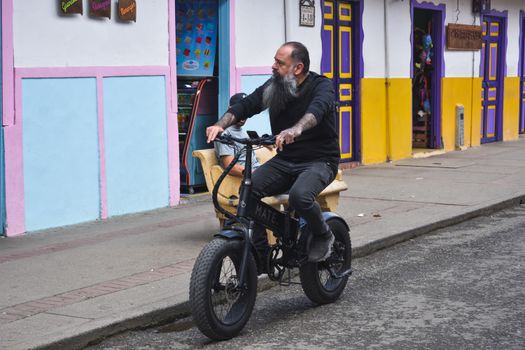
I tested a budget 1000W moped-style bike (similar to the TST R002 reviewed by Fun with Jim) against a more refined hub motor system. On paper, the moped bike had more power. In reality, after a 15-minute climb at full throttle with a 270 lb load, the controller on the moped bike began to throttle back power to protect itself. The display flashed an error code, and speed dropped from 32 km/h to 18 km/h.
Heavier riders generate more heat in the motor windings because the motor has to work harder against gravity. If the bike doesn’t have a robust cooling system or a controller programmed with high thermal limits, you will experience power fade exactly when you need it most.
What About Torque Sensors?
Most budget heavy-duty bikes use cadence sensors (the motor kicks in when you pedal, regardless of how hard you push). For lighter riders, this is fine. For heavy riders, it can feel jerky. However, high-end torque sensors (like on the Specialized or Bosch systems) can sometimes feel too restrictive if the software limits assist based on rider weight inputs. Surprisingly, a strong throttle-on-demand system is often more practical for heavy riders who need to get up to speed quickly at traffic lights without grinding their knees.
Battery & Range: The 50% Rule
Here is the math that brands hate: Advertised Range × 0.5 = Realistic Range for Heavy Riders.
If a brand claims an 80 km range, they tested it with a 165 lb rider, on flat ground, in eco mode, with no wind. If you weigh 280 lbs, you are moving significantly more mass. Physics dictates you will use more energy per kilometer.
The Dual Battery Advantage
This is why the commuter ebike foldable category has seen a surge in popularity among larger riders. Models like the Lectric XP series offer a dual-battery configuration. Instead of one massive, heavy battery that makes the bike unbalanced, you get two smaller ones.
- Single Battery Reality: On a 48V 14Ah pack, a heavy rider might get 35 km of real-world mixed riding.
- Dual Battery Reality: Adding the second pack doesn’t just double the range; it reduces the “C-rate” (discharge rate) on each individual cell. This means less voltage sag under hard acceleration. You get more power and more distance.
One Reddit user in the r/ebikes community highlighted this perfectly, discussing their upgrade to a massive 72V 30ah battery for their fat tire setup. They noted that standard 48V systems often “brown out” (lose voltage) when a heavy rider hits the throttle hard, causing the display to reset or the motor to stutter. Higher voltage systems (52V or 72V) maintain power delivery much better under heavy loads.
Build Quality: Where Cheap Bikes Break
If you are a heavy rider, you are a stress-test machine. Every bump, every curb hop, and every hard pedal stroke puts exponential force on the frame and components. Here is where I see failures most often.
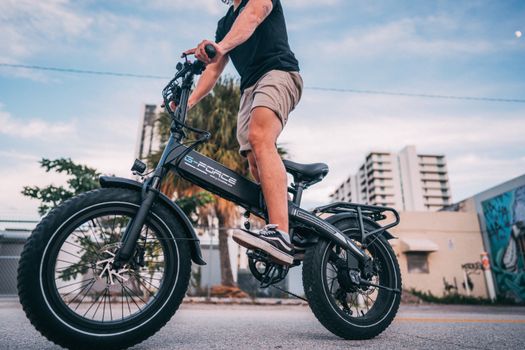
1. The Spoke Problem
Standard eBike wheels come with 36 spokes, usually 13G or 14G thickness. For a rider over 250 lbs, these are marginal. After 500 km, I often see rear wheels going out of true (wobbly). Why? The motor torque twists the hub, and the rider weight crushes the rim against the ground.
The Fix: Look for bikes that mention “double-walled rims” and ideally 12G or 13G spokes. If the bike you want has thin spokes, budget an extra $150 immediately to have a local wheel builder re-lace the rear wheel with heavier gauge spokes. It is the best insurance policy you can buy.
2. Frame Flex and Folding Mechanisms
This is the controversial part regarding the commuter ebike foldable market. Many people assume folding bikes are weak. That used to be true. Modern latching mechanisms (like on the Lectric or Engwe) are surprisingly robust.
However, I have tested budget folders where the latch developed a “click” or slight play after 300 km of riding with a heavy load. It wasn’t dangerous, but it was annoying.
Comparison: A rigid frame (non-folding) like the Lectric XPeak 2.0 will always be stiffer and more efficient than a folder. If you don’t need to put the bike in a car trunk or apartment elevator, buy a rigid frame. The energy loss through the folding hinge is noticeable when you are mashing up a hill.
3. Suspension Forks
Cheap suspension forks (the $50 ones found on $700 bikes) are basically springs with oil. They are not tuned for weight. If you weigh 280 lbs, a fork designed for a 180 lb rider will bottom out instantly. You will feel a harsh “clunk” on every bump.
Recommendation: Either lock out the cheap suspension and rely on your fat tires (run them at lower PSI, around 20-25 psi for comfort) or invest in a bike with an air fork that can be pressurized to match your specific weight.
Value & Pricing: The $700 vs. $2000 Question
Can you get a decent ride for under $1,000? Yes. But you are trading long-term durability for upfront savings.
The Ozark Trail M.3 Ranger+ reviewed by Ebike Escape is a prime example. At ~$750, it offers incredible specs on paper. But for a heavy rider, the component quality (brakes, derailleur hanger, hub durability) is the weak link. You might save $1,000 upfront, but if you replace the rear hub motor or the controller in year two, your savings vanish.
Spending $2,000+ on a bike like the Aventon Abound or Ride1Up Rift gets you:
- Better warranty support (US-based teams vs. email-only support).
- Hydraulic brakes (essential for stopping 300+ lbs of momentum).
- Higher quality battery cells (Samsung/LG vs. generic unbranded cells).
If your budget is tight, the “Best eBike for Fat Guys” in the budget category is often a used premium bike rather than a new cheap one.
Real User Signals: What the Community Says
I scoured Reddit and YouTube to find the unfiltered truth from riders who match our demographic.
The “Wisdom Dump” from Reddit
A highly upvoted thread on r/ElectricBikes titled “best e bike, wisdom dump” perfectly summarized the heavy rider experience. The user noted that “brand reputation” matters less than “component availability.” When you are heavy, you break things. Can you buy a replacement derailleur hanger for that obscure brand at a local shop? If not, your bike is a paperweight. They recommended sticking to major brands simply because parts are standardized.
The Tall and Heavy Struggle
In another thread, a user (6’3″, 200 lbs) asked for recs in the $1500-2000 range. The consensus? Avoid “step-through” frames if you are very tall and heavy, unless the frame is specifically reinforced. Step-through frames can exhibit lateral flex (wiggling side-to-side) under hard pedaling loads for taller, heavier riders. A mid-step or high-step frame provides significantly more rigidity.
Budget Moped Reviews
Regarding the TST R002 and similar “moped style” bikes, Fun with Jim points out that while they are fun and powerful, the “fit and finish” often requires immediate work. For a heavy rider, this means checking every single bolt with a thread-locker after the first 100 miles. Vibration from a heavier rider loosens hardware faster.
Who Should Buy This (And Who Shouldn’t)
✅ BUY IF:
- You are over 250 lbs: You need the specific reinforcement and dual-battery options found in these models.
- You have a flat or rolling commute: Hub motors (common on these bikes) struggle less on flats than steep mountains.
- You want to carry cargo: Many of these “fat guy” bikes double as excellent cargo haulers (groceries, kids, gear).
- You need a commuter ebike foldable: For apartment living where you must lift the bike, look for the lighter folding models, but verify the latch strength.
❌ SKIP IF:
- You live in extreme mountains: If your daily ride involves 15% grades, a 750W hub motor will overheat. You need a mid-drive motor (Bosch/Bafang) which costs more.
- You want to ride singletrack trails: Fat tire eBikes are heavy (70+ lbs). If you fall, you will struggle to pick it up. Stick to paved paths or gravel.
- You expect “Set and Forget”: Heavy riding puts stress on the bike. You must check tire pressure weekly and tighten bolts monthly. Neglect leads to breakage.
FAQ: Heavy Rider eBike Questions
What is the weight limit for most electric bikes?
Most standard eBikes are rated for 275 lbs (125 kg) of total system weight (rider + cargo). However, heavy-duty models designed as the best ebike for fat guys often have reinforced frames and wheels rated for 330 lbs to 400 lbs. Always check the specific “max load” spec, not just the motor power.
Is a fat tire bike better for heavy riders?
Generally, yes. Fat tires (4 inches wide) allow you to run lower air pressure (20-25 PSI). This creates a larger contact patch and acts as natural suspension, absorbing road vibrations that would otherwise travel through the rigid frame to your spine. They also provide better stability at low speeds.
Can I use a foldable eBike if I am a heavy rider?
You can, but you must be selective. Look for models with double-latch folding mechanisms and reinforced hinges. While a commuter ebike foldable offers convenience for storage, a rigid frame will always be more durable and efficient for riders over 280 lbs due to the lack of a potential weak point in the middle of the frame.
How does rider weight affect battery range?
Weight is the biggest factor in range consumption. A rider weighing 300 lbs may see 30-40% less range compared to a 160 lb rider on the same bike. This is why we recommend dual-battery setups for heavy riders to ensure you don’t run out of power mid-commute.
Are cheap $700 eBikes safe for heavy riders?
They can be safe for casual, flat riding, but they often use lower-grade components (brakes, spokes, hubs) that wear out faster under heavy loads. If you choose a budget option, inspect the wheels frequently for trueness and consider upgrading the brake pads immediately for better stopping power.
Part of our complete best commuter eBike EU guide.
Part of our complete best cargo eBikes in Europe guide.
FAQ
What is the weight limit for most electric bikes?
Most standard eBikes are rated for 275 lbs (125 kg) of total system weight. However, heavy-duty models often feature reinforced frames rated for 330 lbs to 400 lbs.
Is a fat tire bike better for heavy riders?
Yes, fat tires allow for lower air pressure which acts as natural suspension and provides a larger contact patch for better stability under heavy loads.
Can I use a foldable eBike if I am a heavy rider?
Yes, provided you choose a model with a reinforced double-latch folding mechanism. Rigid frames are generally more durable, but high-quality folders work well.
How does rider weight affect battery range?
Heavier riders consume more energy per mile. Expect 30-40% less range than advertised specs, making dual-battery configurations highly recommended.
Are cheap $700 eBikes safe for heavy riders?
They can be safe for flat, casual riding, but often use lower-grade components that wear out faster. Frequent maintenance on wheels and brakes is essential.
