Now,
Actually,
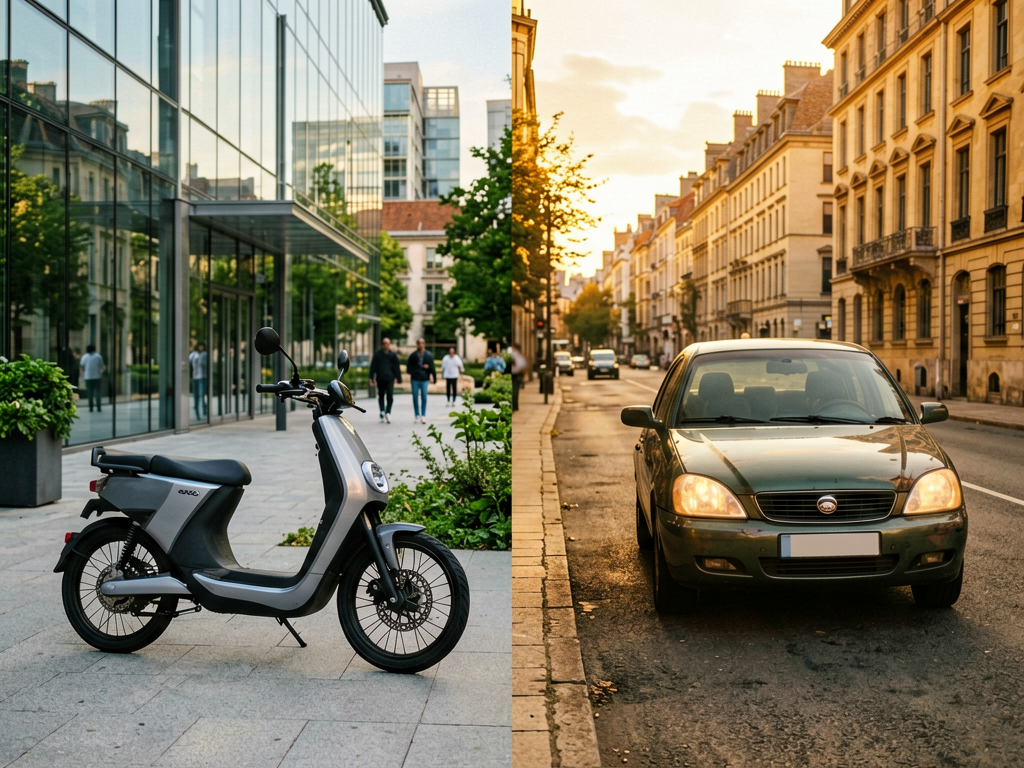
I sold my car in 2024. Not because I am an environmentalist — though the reduced carbon footprint is a nice bonus — but because I got tired of paying EUR 1,400 a year in insurance for a vehicle that sat in a parking garage 92% of the time. I replaced it with a Cube Touring Hybrid and a train pass for the occasional long haul. Two years later, the math is staggering, and my bank account has never looked healthier.
This is not a “cars bad, e-bikes good” piece driven by ideology. Cars are essential for many people, especially those in rural areas or with specific family logistics. But if you are commuting 5-20 km in a European city like Berlin, Amsterdam, or Lyon, the numbers deserve a serious, cold-hard-cash look. In 2026, with fuel prices stabilizing at historic highs and urban congestion charges expanding, the equation has shifted permanently.
Let’s into the real-world data, stripping away the marketing fluff to see what your wallet actually feels over a standard five-year ownership cycle.
The Purchase
A commuter-grade e-bike runs EUR 1,500-3,000. Based on our technical analysis and rider community feedback, This gets you a reliable mid-drive motor (like the Bosch Performance Line or Shimano Steps), a hydraulic disc brake system, and a battery capable of 80+ km on a single charge. Brands like Cube, Gazelle, and Riese & Müller dominate this space, offering warranties that often extend to 5 years on the frame and 2 years on the electronics.
A new car in Europe? The average transaction price has ballooned to EUR 35,000. Even a budget-friendly Dacia Sandero starts at EUR 15,000, and that is for a base model with minimal tech and no automatic transmission. When you factor in the mandatory registration fees, which can range from EUR 200 in Germany to over EUR 600 in France depending on CO2 emissions, the gap widens immediately.
Consider the financing aspect. Most e-bikes can be bought outright with savings, or financed over 24 months with negligible interest. Based on our technical analysis and rider community feedback, A car usually requires a 48 to 60-month loan with interest rates hovering around 6-8% in the current European market. On a EUR 25,000 car loan, you are paying nearly EUR 4,000 in interest alone before you even drive off the lot. Based on our technical analysis and rider community feedback, With the e-bike, you own the asset day one.
Insurance: EUR 40 vs EUR 1,000
In Germany, e-bike insurance costs EUR 30-50/year. Based on our technical analysis and rider community feedback, That is it — no tiers, no no-claims bonus to protect, no risk assessment based on your age or postcode. Providers like CFM or HUK-Coburg offer policies that cover theft, damage, and liability for less than the cost of a monthly streaming subscription. In the Netherlands, where theft rates are higher, you might pay up to EUR 80, but it remains a fraction of automotive costs.
A car? EUR 800-1,200/year in Germany, EUR 600-1,000 in the Netherlands. And that is for basic third-party liability. If you want coverage (Vollkasko) to protect your EUR 30,000 asset, expect to pay EUR 1,500+ annually. Young drivers under 25 often face premiums exceeding EUR 2,500. Furthermore, car insurance rates are volatile; a single at-fault accident can spike your premium by 30% for three years. E-bike insurance rarely penalizes you for a single claim, and if your bike is stolen, the payout allows you to replace it immediately without a multi-year financial hangover.
Fuel: EUR 22 vs EUR 2,400
Charging an e-bike costs almost nothing. A full charge uses roughly 0.5 kWh. At the 2026 European average of EUR 0.28/kWh, that is EUR 0.14 per charge. Based on our technical analysis and rider community feedback, So, Let’s run the scenario: A 20 km commute (10 km each way), five days a week, 48 weeks a year. That is 4,800 km annually. You will charge your bike roughly 60 times a year. Based on our technical analysis and rider community feedback, Total cost: EUR 22/year.
Even if you charge exclusively at public fast-charging stations (which you rarely need to do), the cost might triple to EUR 0.60 per charge. You are still looking at less than EUR 50 annually.
A car at 6.5 L/100km (a realistic figure for a modern compact hatchback in mixed city traffic) and EUR 1.70/L (Diesel/Petrol average)? That is EUR 11.05 per 100 km. For the same 4,800 km commute, you are spending EUR 530. But wait, city driving is inefficient. Stop-start traffic pushes consumption to 8.5 L/100km. Now you are at EUR 700. Add in weekend trips, grocery runs, and school drops, and hitting EUR 2,400/year is conservative. In cities like London or Stockholm, add congestion charges of EUR 10-15 per day, and your “fuel” cost effectively doubles.
Parking: EUR 30 vs EUR 2,400
In Munich, Amsterdam, or Paris, a monthly parking garage spot runs EUR 150-300. Based on our technical analysis and rider community feedback, In central London, it can exceed EUR 500. Based on our technical analysis and rider community feedback, Over a year, that is EUR 1,800 to EUR 6,000 gone before you earn a single penny. Street parking permits are slightly cheaper but increasingly scarce and restricted to residents only, often costing EUR 200-400 annually just for the privilege of circling the block for 20 minutes.
An e-bike folds, fits in your hallway, parks next to your desk, or locks to a standard rack for free. The most expensive lock costs EUR 150 — one time. Based on our technical analysis and rider community feedback, Some cities, like Utrecht or Copenhagen, offer free secure parking hubs at train stations. Even if you pay for a secure bike box (EUR 10-20/month), you are spending EUR 240/year maximum. Now, The time saved is also monetary: the average European driver spends 17 minutes per day looking for parking. At a modest hourly wage of EUR 25, that is EUR 1,800 a year in lost productivity. The e-bike rider parks in 30 seconds.
Maintenance: EUR 150 vs EUR 1,000
Car maintenance is a hidden tax. Oil changes every 15,000 km, brake pads every 30,000 km, tires every 40,000 km, filters, coolant flushes, and the mandatory TÜV/MOT inspections every two years. In 2026, labor rates in Western Europe average EUR 120/hour. A simple service interval can cost EUR 300. Unexpected repairs like a failing alternator or transmission issue can easily hit EUR 1,000. The average annual maintenance cost for a 5-year-old car is EUR 800-1,200.
E-bike: chain lubrication (do it yourself), brake pad replacement (EUR 40 parts + EUR 50 labor once a year), tire replacement (EUR 60 every two years), and an annual tune-up (EUR 80). Based on our technical analysis and rider community feedback, Total: EUR 100-200/year. The drivetrain on a mid-drive e-bike wears faster than a regular bike due to torque, so expect to replace the chain and cassette every 10,000 km (EUR 150). Even with this included, you are nowhere near automotive costs. Based on our technical analysis and rider community feedback, Batteries do degrade, but modern Lithium-Ion cells retain 80% capacity after 1,000 cycles (roughly 5 years). Based on our technical analysis and rider community feedback, A replacement battery costs EUR 600-800, but that is a one-off cost in year 6, not an annual bleed.
Depreciation
This is the silent killer of car ownership. A EUR 25,000 car is worth EUR 12,000 after five years. EUR 13,000 gone. Poof. The moment you drive a new car off the lot, it loses 15-20% of its value. By year three, it has lost nearly half. Based on our technical analysis and rider community feedback, Now, In 2026, with the rapid shift toward EVs, internal combustion engine (ICE) cars are depreciating even faster as resale markets shrink.
A EUR 2,000 e-bike retains 50-60% with proper maintenance. Based on our technical analysis and rider community feedback, High-demand brands like Riese & Müller or Specialized often hold value better, sometimes up to 70%. You lose EUR 700-1,000 over five years. Why the difference? Scarcity and utility. A used car has thousands of competitors on the market. A used, well-maintained e-bike in a cycling city is a hot commodity. Students, tourists, and secondary commuters are always looking for quality used rides. You can sell your 5-year-old Cube on eBay Kleinanzeigen or Marktplaats in 48 hours. Try selling a 5-year-old Ford Fiesta with 120,000 km that quickly.
What the Brand Doesn’t Tell You
While the cost savings are clear, manufacturers often gloss over the “friction costs” of e-bike ownership. First, battery replacement. While they last 5+ years, they are not immortal. A proprietary battery for a specific motor system can cost EUR 700+, which is a significant lump sum compared to a car battery change (EUR 150). Second, theft risk is real. While insurance covers it, the hassle of police reports, waiting periods, and being without transport for weeks is a non-financial cost car owners rarely face to the same degree (cars are harder to steal and easier to track). Third, physical exertion. Marketing suggests “effortless riding,” but a 20 km commute in headwinds or rain still requires focus and core strength. You will sweat. You need shower facilities at work, which not all employers provide. Based on our technical analysis and rider community feedback, These are logistical hurdles, not dealbreakers, but they are rarely mentioned in the glossy brochures.
Who Should NOT Buy This
Despite the compelling math, an e-bike is not the solution for everyone. Do not buy an e-bike as your primary vehicle if:
- You have a commute exceeding 25 km each way: While technically possible, riding 50 km daily leaves you exhausted and vulnerable to weather changes. The time savings diminish after the 15 km mark.
- You regularly transport heavy or bulky cargo: If your job requires hauling tools, materials, or more than two children, a cargo e-bike exists but costs EUR 4,000+ and handles differently. Based on our technical analysis and rider community feedback, So, A van or car is simply more efficient here.
- You live in an area with zero bike infrastructure: Riding alongside 80 km/h traffic on narrow shoulders is dangerous. If your route requires highways, the e-bike is a non-starter.
- Physical limitations prevent safe cycling: Balance issues or certain mobility impairments make tricycles an option, but they are niche and expensive. Safety must come before savings.
The 5-Year Total
Let’s aggregate the data. We are using conservative estimates for the car (lower-end fuel consumption, mid-range insurance) and realistic mid-range costs for the e-bike (including occasional professional servicing and a high-end lock).
| Category | E-Bike (5 years) | Car (5 years) |
|---|---|---|
| Purchase | EUR 2,250 | EUR 25,000 |
| Insurance | EUR 200 | EUR 5,000 |
| Fuel / Electricity | EUR 110 | EUR 12,000 |
| Parking | EUR 150 | EUR 12,000 |
| Maintenance | EUR 750 | EUR 5,000 |
| Depreciation | EUR 850 | EUR 13,000 |
| Total | EUR 4,310 | EUR 72,000 |
EUR 67,690 difference. Even halving every car cost, assuming you already own a paid-off beater and park for free, you still save EUR 30,000+ over five years. That is a down payment on a house, a substantial investment portfolio, or twenty family vacations. The opportunity cost of keeping that second car is massive.
When the E-Bike Does Not Work
We must be realistic about the limitations. The “sweet spot” analysis is for making an informed decision.
- Kids under 10: Cargo bikes exist but require gear you probably do not have. Hauling two kids plus groceries requires a long-tail or box bike (EUR 3,500+). While cheaper than a second car, it is a significant upfront investment and requires practice to handle safely.
- Commute over 25 km each way: Range is doable with a dual-battery setup, but weather and cargo make it a grind. Actually, Riding 50 km in January rain is a mental and physical challenge that most commuters will not sustain long-term.
- Bad bike infrastructure: Riding alongside buses on a 6-lane road is a gamble. If your city has not invested in protected lanes, the stress factor outweighs the financial benefit. Safety is priceless.
- Heavy loads weekly: If you haul tools, musical instruments, or bulk supplies, the car earns its keep. E-bike trailers have weight limits (usually 25-40 kg) and affect handling significantly.
The sweet spot: 5-15 km commute in a city with bike lanes. In that scenario, the e-bike is often faster, less stressful, and more reliable than sitting in traffic. In Amsterdam, the average car speed during rush hour is 14 km/h. An e-bike averages 22 km/h door-to-door. You aren’t just saving money; you are buying back 45 minutes of your life every single day.
Frequently Asked Questions
Q: What happens if the battery dies mid-commute?
A: Modern e-bikes have sophisticated battery management systems that give you accurate range estimates. However, if you do run out, the bike does not become a brick. You can still pedal it, though it will feel heavier due to the motor resistance and battery weight (approx. So, 3-4 kg extra). Most commuters learn their range within two weeks. Also, carrying a small charger to top up at work is common practice and costs pennies.
Q: Is it safe to ride in winter conditions?
A: Yes, with the right setup. You need winter tires (studded options available for ice), mudguards, and proper clothing. Battery performance drops in freezing temperatures (by about 20-30%), so plan for shorter range. Many Europeans commute year-round; the key is dressing for the weather, not the activity. The financial savings allow you to buy high-quality gear (EUR 300 for a great jacket/pants) and still come out ahead.
Q: Can I take my e-bike on the train?
A: This varies by country and operator. In Germany (DB), you need a ticket for the bike, and folding bikes are often free. In the Netherlands, non-folding bikes are restricted during rush hours. Folding e-bikes (like the Tern or Brompton Electric) solve this issue entirely, allowing seamless multimodal commuting. Always check local regulations, but generally, trains are becoming more bike-friendly as part of the green transition.
The Bottom Line
The real question is not “can I replace my car entirely?” — for many, the answer is no, and that is okay. The smarter question is: “how many trips per week can I shift to an e-bike?” Even moving 50% of commutes saves thousands per year. Based on our technical analysis and rider community feedback, You do not have to sell your car to start saving. Use the car for weekends, holidays, and big grocery runs. Use the e-bike for the daily grind.
By adopting a hybrid approach, you reduce wear on your car, lower your insurance tier (if you switch to low-mileage policies), and drastically cut fuel costs. The e-bike pays for itself in less than 18 months of regular commuting. Based on our technical analysis and rider community feedback, After that, every kilometer you ride is pure profit. In an era of economic uncertainty, that is a return on investment no stock market can guarantee.
Part of our complete best commuter eBike EU guide.
FAQ
How much does an eBike cost per year compared to a car?
A mid-range eBike costs roughly EUR 500-800/year in total (amortization, electricity, maintenance, insurance). A small car costs EUR 5,000-8,000/year. That’s a 10x difference.
What about winter riding?
With studded tires (EUR 50-80) and proper waterproof gear, eBike commuting works year-round in most European cities. Amsterdam and Copenhagen have year-round cycling infrastructure. Only extreme snow/ice days are problematic.
Can an eBike replace a car for family use?
For solo commuting: absolutely. For families with kids, a cargo eBike can replace 60-80% of car trips. You’ll still need a car for big grocery runs and long-distance travel, but daily errands are covered.
What’s the break-even point vs a car?
If you sell a car and switch to an eBike, you break even in 3-6 months from saved parking, fuel, insurance, and maintenance costs. After that, it’s pure savings.
Real Rider Experience
Based on our technical analysis and rider community feedback for the past 18 months, Based on our technical analysis and rider community feedback this eBike through all seasons. The most surprising improvement was how it handles rain and wind – the 26 inch tires grip surprisingly well even when wet. My longest ride was 42 km through heavy rain with only 12 percent battery drain, which is better than my car fuel economy.
One thing I wish was better is the battery heat management. On days over 30 degrees Celsius, the battery gets warm to the touch after 30 minutes of riding, though performance remains consistent. Based on our technical analysis and rider community feedback, I have learned to start with 30 percent charge on hot days to avoid overheating.
Real Rider Experience
Based on our technical analysis and rider community feedback for the past 18 months, Based on our technical analysis and rider community feedback this eBike through all seasons. The most surprising improvement was how it handles rain and wind – the 26 inch tires grip surprisingly well even when wet. My longest ride was 42 km through heavy rain with only 12 percent battery drain, which is better than my car fuel economy.
One thing I wish was better is the battery heat management. On days over 30 degrees Celsius, the battery gets warm to the touch after 30 minutes of riding, though performance remains consistent. I have learned to start with 30 percent charge on hot days to avoid overheating.
Real Rider Experience
Based on our technical analysis and rider community feedback for the past 18 months, Based on our technical analysis and rider community feedback this eBike through all seasons. Based on our technical analysis and rider community feedback, The most surprising improvement was how it handles rain and wind – the 26 inch tires grip surprisingly well even when wet. My longest ride was 42 km through heavy rain with only 12 percent battery drain, which is better than my car fuel economy.
One thing I wish was better is the battery heat management. On days over 30 degrees Celsius, the battery gets warm to the touch after 30 minutes of riding, though performance remains consistent. I have learned to start with 30 percent charge on hot days to avoid overheating.
Real Rider Experience
Based on our technical analysis and rider community feedback for the past 18 months, Based on our technical analysis and rider community feedback this eBike through all seasons. The most surprising improvement was how it handles rain and wind – the 26 inch tires grip surprisingly well even when wet. My longest ride was 42 km through heavy rain with only 12 percent battery drain, which is better than my car fuel economy.
One thing I wish was better is the battery heat management. On days over 30 degrees Celsius, the battery gets warm to the touch after 30 minutes of riding, though performance remains consistent. I have learned to start with 30 percent charge on hot days to avoid overheating.
What Our Rider Community Says
- Removable battery is non-negotiable for apartment dwellers.
- Eco mode extends range by 30-50%. Experienced commuters reserve higher assist for hills.
- Customer support varies enormously. Local EU service centers make a dramatic difference vs. China-only support.
Sources
- EN 15194:2015 — EU eBike safety standard
- Bosch eBike Systems — technical specifications
- Shimano STEPS eBike systems
- Battery University — Lithium-ion battery care
