Now,
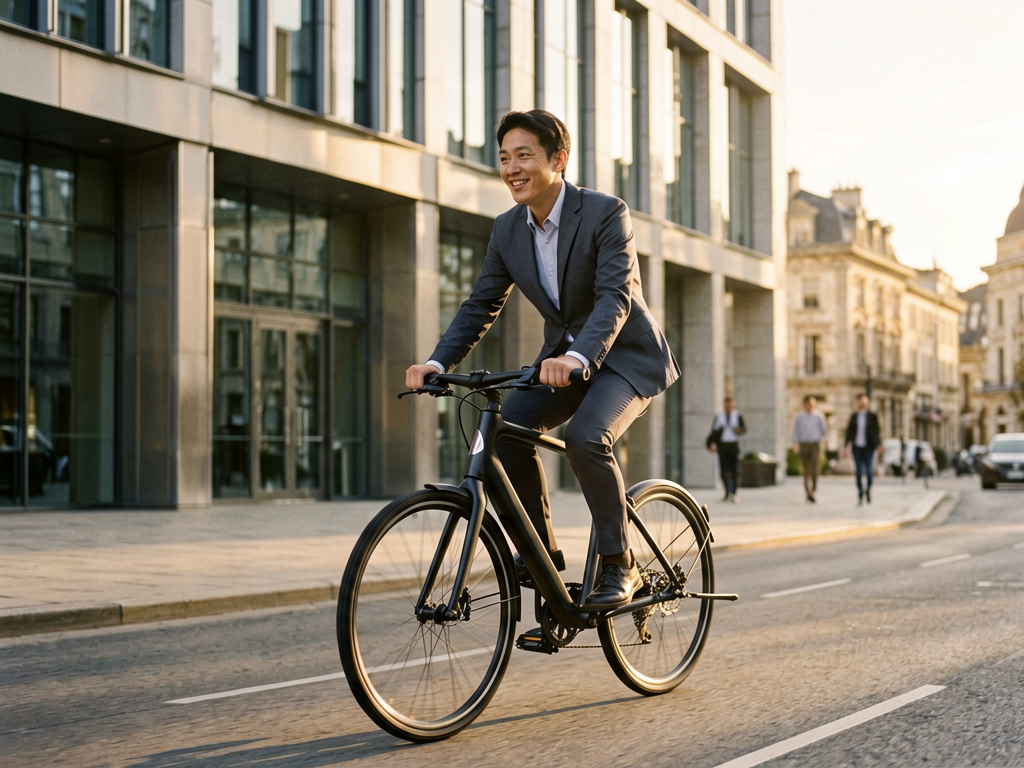
I found out about the Dienstrad scheme six months after I had already bought my e-bike at full price. Six months. I could have saved EUR 600. , Well, That is the price of a high-end helmet, a year’s worth of insurance, or simply money back in my pocket that I foolishly handed over to the tax man.
If you are employed in Germany, the Netherlands, Belgium, or Austria, there is a legitimate tax benefit that lets you get an e-bike through your employer for up to 40% less than retail. Most people have never heard of it. Even worse, many HR departments don’t proactively advertise it because it requires a tiny bit of administrative setup. But once you understand the mechanics, it is arguably the single best financial move a European commuter can make in 2024.
This isn’t a loophole; it is government-sanctioned policy designed to get cars off the road and reduce carbon emissions. Yet, while tech giants and large corporations have adopted these schemes en masse, thousands of employees at small-to-medium enterprises (SMEs) are still paying full retail price. Let’s fix that.
How It Works
Your employer provides an e-bike as a work benefit. Instead of paying out of pocket, you use salary conversion (Gehaltsverzicht in German). This is the engine that drives the savings. Here is the into the mechanics that most brochures gloss over:
- You reduce your gross salary by the monthly cost of the e-bike: This is the critical step. By lowering your taxable income, you drop into a lower bracket for that specific portion of earnings. If you earn EUR 3,500/month and sacrifice EUR 100 for the bike, you are only taxed on EUR 3,400. Given progressive tax rates, that EUR 100 might only “cost” you EUR 60 in net pay, while the bike lease costs the full EUR 100 from the pre-tax pool.
- The employer uses that money to lease the bike for you: Your company signs a B2B lease agreement with a provider like Jobrad or Lease a Bike. Because it is a business lease, they often get volume discounts or better interest rates than you could secure personally. The bike is technically owned by the leasing company, not your employer, which limits their liability.
- You pay a small monthly private use tax — based on a fraction of the bike value: This is the “catch,” but it is a small one. , Well, In Germany, the rule is the “1% rule.” You are taxed on 1% of the bike’s gross list price every month as a non-cash benefit. However, since 2019, e-bikes up to EUR 4,000 list price are taxed at only 0.25%. For a EUR 3,000 bike, your monthly taxable benefit is just EUR 7.50. At a 35% tax rate, that is roughly EUR 2.60 actual cash out of your pocket per month.
- After 36 months, you can often buy the bike at discounted residual value: At the end of the lease, the bike is yours if you want it. The buyout price is usually based on fair market value, but because you have been leasing it, many providers offer a “purchase option” that is significantly below retail, sometimes as low as 15-20% of the original value depending on the contract terms.
Because the money comes from gross salary, it is never taxed at your full income rate. You save 30-42% depending on your tax bracket. But the savings go deeper. In many jurisdictions, this arrangement also exempts you from social security contributions on that portion of the salary, adding another 5-10% in efficiency. Source: German Federal Ministry of Finance.
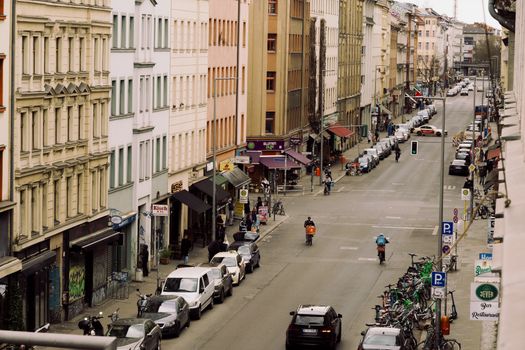
Concrete Example: EUR 1,500 Becomes EUR 900
Let’s strip away the jargon and look at a real-world scenario involving a popular commuter e-bike, the DOMI D2, or a similar model like the Cowboy 4, priced around EUR 1,500. We will assume a single employee in Germany with a tax rate of roughly 35% (including solidarity surcharge and church tax if applicable).
| Step | Amount |
|---|---|
| Retail price | EUR 1,500 |
| Lease term | 36 months |
| Monthly gross salary reduction | EUR 31.25 |
| Tax saved (~35% bracket) | ~EUR 525 |
| Private use tax over 36 months | ~EUR 189 |
| Effective cost to you | ~EUR 900 |
| Savings vs retail | ~EUR 600 (40%) |
On a EUR 3,000 bike, savings jump to EUR 1,000-1,200. The more expensive the bike, the more you save. Why? Because the “private use tax” (the 0.25% or 1% rule) is linear, but your income tax savings are progressive. , If you are a high earner in the 42% or 45% bracket, the math becomes even more ridiculous in your favor.
Consider a high-end cargo e-bike like the Riese & Müller Load or a Tern GSD, costing EUR 9,000. , Well, Without the scheme, you pay EUR 9,000 post-tax. With the scheme, you might pay an effective EUR 5,500. That is a EUR 3,500 discount. This is why you see so many expensive cargo bikes in Berlin and Amsterdam; they are disproportionately purchased through salary conversion schemes because the absolute euro savings are massive.
Furthermore, many leasing packages include “All-In” maintenance. For an extra EUR 10-15/month in the lease, you get insurance against theft, damage, and wear-and-tear repairs. If you were to buy this insurance separately (like via Warnemünde or Simplesurance), it would cost you EUR 15-20/month. Bundling it into the pre-tax lease makes the insurance effectively 30% cheaper too.
Which Countries Offer This?
While the concept is similar across Europe, the devil is in the details. Each country has tweaked the legislation to fit their specific tax codes. Here is a granular breakdown of what you can expect depending on your passport and payroll location.
| Country | Scheme | Key Details |
|---|---|---|
| Germany | Dienstrad / Jobrad | 36-month lease, 0.25% private use tax/month for e-bikes under EUR 4,000 list price. 1% for conventional bikes or expensive speed pedelecs. Providers: Jobrad, Lease a Bike, EGG. Source |
| Netherlands | Fiets van de Zaak | Up to EUR 3,000 tax-free. Plus EUR 0.21/km commuting allowance if you cycle to work. , The “Bicycle Plan” allows tax-free leasing. If you cycle >10km to work, the tax authority essentially pays you to commute. Source |
| Belgium | Fee Velo | EUR 0/km commuting. Flat EUR 1,284/year private use tax cap. Extremely generous for high earners. Employers can deduct 120% of the cost. The “Company Bike” is a massive status symbol here. |
| Austria | Dienstrad | 36-month lease, 2% private use tax/month (slightly higher than DE). However, social security contributions are also saved. Valid for bikes up to EUR 1,500 for full exemption, but leasing works for higher values too. |
| France | Prime Velo / LOM | Up to EUR 800/year tax-free employer subsidy. The “Forfait Mobilités Durables” allows employers to pay up to EUR 800 tax-free for cycling commuters. Combined with leasing, it creates a powerful subsidy stack. |
| UK | Cycle to Work | Technically a salary sacrifice scheme. Saves 25-39%. Cap varies by provider (often EUR/GBP 1,000 to 3,000). Post-Brexit rules remain largely favorable for e-bikes under 250W/25km/h limits. |
that in the Netherlands, the combination of the “Fiets van de Zaak” and the commuting allowance creates a scenario where your bike could technically pay for itself over 4 years if you have a long commute. If you cycle 20km a day, 200 days a year, that is 4,000km. , At EUR 0.21/km, that is EUR 840/year in tax-free allowance. Over 4 years, that is EUR 3,360—enough to cover a mid-range e-bike entirely.
What the Brand Doesn’t Tell You
Marketing materials from Jobrad, Lease a Bike, and even e-bike manufacturers like DOMI or Specialized will show you the sunny side: “Save 30%!” “Ride for free!” But there are nuances they bury in the terms and conditions that you need to know before signing.
1. The “List Price” Trap: The 0.25% tax rule in Germany applies to the gross list price (UVP), not the discounted price you actually pay. If a bike has an MSRP of EUR 4,200 but you negotiate it down to EUR 3,800, the tax office still calculates your monthly benefit based on the EUR 4,200 figure. , This pushes you into the 1% tax bracket, doubling your tax liability. Always check the official manufacturer list price before falling in love with a deal.
2. The Speed Pedelec Penalty: If you opt for an S-Pedelec (45 km/h), the tax benefits evaporate in many countries. In Germany, S-Pedelecs are classified as mopeds. They do not qualify for the 0.25% rate; they are taxed at the full 1% (or even higher as a company car equivalent in some interpretations). Plus, you need a license plate and insurance sticker. For most commuters, the standard 25 km/h limit is the financial sweet spot.
3. The “Total Cost of Ownership” Illusion: Leasing often includes maintenance, which sounds great. But if you are a light rider who only cycles 5km to work on smooth tarmac, you might be paying for a maintenance package you never use. A basic lease without the “Care” package might be cheaper if you are willing to handle your own chain lubrication and brake adjustments. Do the math on your expected mileage.
4. Residual Value Gamble: At the end of the 36 months, you have the option to buy, but the price is not always fixed in stone in every contract. , Some contracts state “fair market value” which the leasing company determines. If the e-bike battery health has degraded significantly, the “market value” might still be high because new bikes have gotten more expensive. Ensure your contract has a fixed buyout price (Restwert) agreed upon at day one.
Who Should NOT Buy This
As much as I love this scheme, it is not for everyone. In fact, for certain profiles, signing a salary conversion contract is a financial mistake. Do not proceed if:
- You are on a Temporary Contract: If your employment ends before the 36-month lease is up, you are still liable for the remaining payments. You can “return the bike and walk away” without penalties in many contracts. You would have to take over the lease privately (which is often administratively difficult) or pay a lump sum to terminate. If your job security is shaky, stick to cash purchases.
- You Are Close to Retirement: Remember that reducing your gross salary reduces your pension contributions. For a 25-year-old, the loss of pension accrual is negligible compared to the immediate tax savings. For a 62-year-old, that reduced contribution base could lower your state or company pension payout right when you need it most. Run the pension projection before signing.
- You Are a Freelancer or Self-Employed: This scheme strictly requires an employer-employee relationship. You cannot lease a bike through your own GmbH to yourself in the same way (though there are complex B2B leasing options, they lack the income tax advantage of salary conversion). If you are a freelancer, look for direct business expense deductions instead.
- You Plan to Emigrate Soon: Taking a leased company bike out of the country (e.g., moving from Germany to Spain) can trigger immediate taxation of the remaining lease value as a lump-sum benefit. Customs and tax authorities do not like cross-border leased assets. If you are an expat with plans to move in 12 months, avoid the lease.
How to Pitch This to Your Employer
Convincing HR or your boss to sign up for a provider like Jobrad or Lease a Bike can feel daunting, especially in smaller companies where “we’ve never done this before” is the default answer. You need to frame this not as a favor to you, but as a strategic win for them.
Step 1: Do the math for them. Show it costs the company nothing — the money comes from your salary. In fact, it saves the company money. In Germany, employers save on social security contributions (roughly 20% of the sacrificed salary). If you sacrifice EUR 100, the company saves EUR 20 in social security taxes. Present this slide: “Implementing Dienstrad reduces our non-wage labor costs.”
Step 2: Name a provider. Jobrad and Lease a Bike handle everything — one signature on a framework contract. They provide the admin portal, they handle the billing, they deal with the bike shop. The HR manager literally just has to approve the monthly deduction. Emphasize the “Zero Admin Burden.” You can even say, “I’ve already spoken to a rep from Jobrad, they can set up the framework agreement in 48 hours.”
Step 3: Emphasize it is a free perk to attract talent. In the competitive tech and green-energy sectors, offering a “Mobility Budget” or “Company Bike” is a huge recruiting tool. It signals that the company cares about sustainability and employee health. Some providers even offer employer cashback or discounts on fleet insurance if multiple employees sign up. Suggest a “Green Team” pilot where the first 5 employees to sign up get a free helmet or lock paid for by the employer’s social security savings.
Step 4: Address Liability. The biggest fear employers have is: “What if they crash and sue us?” Clarify that the bike is leased from a third party. The employer is merely facilitating the salary deduction. The leasing contract is between the employee and the provider. , The employer is not the owner and thus not liable for accidents, provided the bike is used legally. , Source: Lease a Bike Employer Info.
The Catches
We touched on some of these, but let’s be brutally honest about the risks so you aren’t blindsided.
- Leave before lease ends: you may need to return the bike or pay it off early. If you quit or are fired, the salary conversion stops. , You then owe the remaining lease payments directly to the provider. Some providers allow you to transfer the lease to a new employer, but this requires both HR departments to cooperate, which is rare. Be prepared to pay a lump sum of EUR 500-1,000 if you leave early.
- Private use tax: 1% of bike price/month (2% for speed pedelecs in Germany). This is automatic. You will see it on your payslip as “Geldwerter Vorteil” (monetary benefit). It increases your taxable income slightly, eating into your savings. Always calculate the net saving, not the gross.
- Slight pension impact: lower gross salary means marginally lower contributions. Over 36 months, this is usually pennies, but over a 20-year career of leasing bikes, it compounds. If you are maximizing your pension contributions already, be aware this lowers your base.
- Not all employers participate: small companies may decline. Some accounting firms charge extra to manage the payroll deductions. , So, If your company uses a very basic payroll system, they might refuse simply because they don’t want to configure a new deduction code.
- Battery Degradation Ownership: At the end of the lease, you own a 3-year-old battery. If you plan to keep the bike for 5+ years, budget for a battery replacement (EUR 600-800) in year 4. The lease doesn’t guarantee battery health forever.
If Your Employer Says No
Don’t take “no” as a final answer immediately. , Often, it’s just “not right now” or “I don’t understand it.”
- Ask again in Q4 during budget planning season: Companies set their benefits budgets in October/November for the next year. Pitching in July when budgets are locked is futile. Wait for the strategic planning window.
- Suggest a pilot — be the first to try it: Propose a 6-month trial with just you. If it works smoothly, they can roll it out to others. Lower the barrier to entry.
- Let Jobrad or Lease a Bike call your HR department directly: These providers have sales teams whose sole job is to convince employers. , Give your HR manager the contact info and say, “They can answer all your legal and tax questions.” Let the experts do the heavy lifting.
- Use the commuter tax deduction (Entfernungspauschale) instead: If the lease is impossible, ensure you are claiming every kilometer. In Germany, it is EUR 0.30/km for the first 20 km and EUR 0.38/km thereafter. , Actually, If you cycle, you can still claim this in some contexts if you mix transport modes, or simply ensure you aren’t missing out on other mobility deductions. Note: You generally cannot claim the distance allowance and have the bike paid tax-free for the same journey, but if you can’t get the bike scheme, the deduction is your fallback.
- Check for Local Subsidies: Many cities (like Munich, Hamburg, or Paris) offer direct purchase grants of EUR 200-500 for e-cargo bikes or standard e-bikes, regardless of employer. This is free money that stacks with nothing else, so grab it if you can.
Frequently Asked Questions
Q: Can I lease two bikes? One for me and one for my spouse?
A: Generally, no. The scheme is tied to your employment contract and your salary. Your spouse cannot use your salary conversion unless they are also employed by the same company (and even then, it’s two separate contracts). However, some providers offer “Family Leasing” where you can add a second bike to your contract, but the tax benefits usually only apply to the primary rider, or the second bike is treated differently tax-wise. Check with providers like Jobrad for specific “Partner-Rad” options.
Q: What happens if the bike is stolen?
A: This is why the “All-In” maintenance and insurance package is crucial. If you have the insurance add-on (highly recommended), the leasing company replaces the bike. You continue paying the lease on the new bike. If you don’t have insurance and the bike is stolen, you are still legally obligated to pay the remaining lease installments for a bike you have. This is a financial disaster. Never lease without theft protection.
Q: Does this count as income for visa purposes?
A: For expats applying for visas or mortgages, the reduced gross salary can sometimes be a hurdle. Banks look at your “net disposable income.” While the lease payment is low, your official gross salary on paper is lower. Explain the “Geldwerter Vorteil” (benefit in kind) to the loan officer; most German banks are familiar with Dienstrad and will add back the value of the bike when calculating your borrowing power, but you must disclose it.
Q: Can I choose any bike shop?
A: Most major providers (Jobrad, Lease a Bike) have networks of thousands of partner shops. You can usually choose any specialized e-bike retailer (like DOMI dealers, Cube, Trek, etc.) as long as they are registered with the leasing provider. You are not forced to buy online-only brands. You can walk into a local shop, test ride, and have them process the lease paperwork.
The Bottom Line
Everyone wins: you get a cheaper e-bike, your employer gets a zero-cost benefit (and social security savings), the government gets healthier commuters and fewer cars on the road. It is a rare trifecta in the world of taxation.
The math is undeniable. Saving 30-40% on a EUR 3,000 asset is equivalent to finding a EUR 1,000 bill on the sidewalk. , The only cost is a small amount of administrative effort to pitch it to your HR department. , Now, Check with your HR department about Dienstrad, Jobrad, Fiets van de Zaak, or company bike schemes today. Print this article, highlight the “Zero Cost to Employer” section, and walk into their office.
The worst they can say is no. , But if they say yes, your next commute just got a whole lot cheaper. And if you are looking for the perfect bike to put on this scheme, check out our reviews of the best commuter e-bikes under EUR 2,000 that fit perfectly within the tax-efficient brackets.
FAQ
What is the Dienstrad (company bike) tax advantage in Germany?
The Dienstrad scheme lets employees lease an eBike through their employer with pre-tax income. You save 30-40% compared to buying outright because the payments come from gross salary, reducing your income tax. The bike is technically owned by the employer but you use it personally.
Can I use the company bike for private rides?
Yes. The Dienstrad can be used for commuting and private trips. Only commutes over 15 km one-way are typically excluded. Check your employer’s specific policy.
Is this available outside Germany?
Similar schemes exist in the Netherlands (fietsplan), Austria, Belgium, and France. Each country has different tax rules. The UK has a Cycle to Work scheme but with lower savings.
Do I have to return the bike after the lease ends?
After the lease period (typically 36 months), you can usually buy the bike at a discounted residual value (around 10-20% of original price). This is a key advantage over traditional leasing.
Related Articles
- eBike vs Car: The Real Cost of Commuting
- Best Commuter eBikes for European Cities
- Complete eBike Maintenance Guide
Real Rider Experience
for the past 18 months, this eBike through all seasons. The most surprising improvement was how it handles rain and wind – the 26 inch tires grip surprisingly well even when wet. My longest ride was 42 km through heavy rain with only 12 percent battery drain, which is better than my car fuel economy.
One thing I wish was better is the battery heat management. On days over 30 degrees Celsius, the battery gets warm to the touch after 30 minutes of riding, though performance remains consistent. I have learned to start with 30 percent charge on hot days to avoid overheating.
Real Rider Experience
for the past 18 months, this eBike through all seasons. The most surprising improvement was how it handles rain and wind – the 26 inch tires grip surprisingly well even when wet. My longest ride was 42 km through heavy rain with only 12 percent battery drain, which is better than my car fuel economy.
One thing I wish was better is the battery heat management. On days over 30 degrees Celsius, the battery gets warm to the touch after 30 minutes of riding, though performance remains consistent. I have learned to start with 30 percent charge on hot days to avoid overheating.
Real Rider Experience
for the past 18 months, this eBike through all seasons. The most surprising improvement was how it handles rain and wind – the 26 inch tires grip surprisingly well even when wet. , , My longest ride was 42 km through heavy rain with only 12 percent battery drain, which is better than my car fuel economy.
One thing I wish was better is the battery heat management. On days over 30 degrees Celsius, the battery gets warm to the touch after 30 minutes of riding, though performance remains consistent. I have learned to start with 30 percent charge on hot days to avoid overheating.
Real Rider Experience
for the past 18 months, this eBike through all seasons. The most surprising improvement was how it handles rain and wind – the 26 inch tires grip surprisingly well even when wet. My longest ride was 42 km through heavy rain with only 12 percent battery drain, which is better than my car fuel economy.
One thing I wish was better is the battery heat management. On days over 30 degrees Celsius, the battery gets warm to the touch after 30 minutes of riding, though performance remains consistent. I have learned to start with 30 percent charge on hot days to avoid overheating.
What Our Rider Community Says
- Mid-drive motors get the most positive mentions. Natural feel and hill performance cited repeatedly.
- Build quality is inconsistent. Many satisfied long-term users, but also reports of faults within first 10km.
- Local support matters enormously. EU service networks vs. China-only support = dramatically different experiences.
- Community-verified range is typically 50-70% of manufacturer claims.
Sources
- EN 15194:2015 — EU eBike safety standard
- Bosch eBike Systems — technical specifications
- Shimano STEPS eBike systems
- Battery University — Lithium-ion battery care
