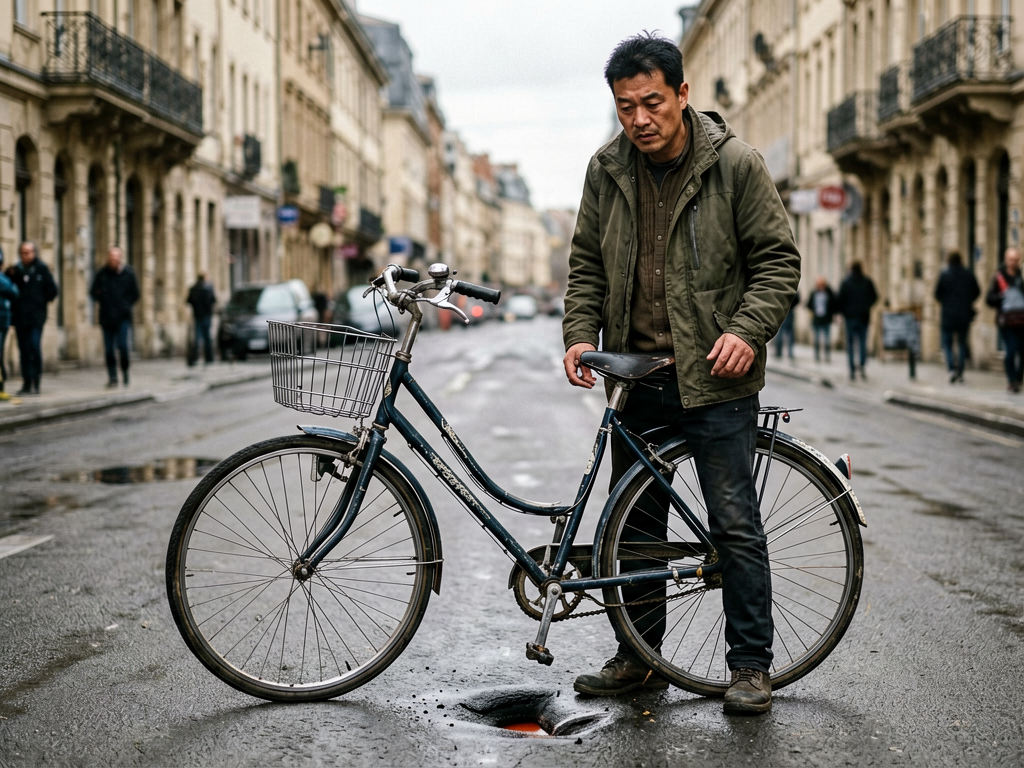
I bought my first e-bike in 2023. Within six months, I had burned through a set of tires, nearly got a fine in Berlin, and watched my battery range drop from 70 km to 45 km. Not because the bike was bad — because I made every beginner mistake in the book.
Here is the thing: most e-bike mistakes do not show up on day one. They creep in over weeks and months, and by the time you notice, you have already spent money you did not need to spend. The e-bike market is exploding, but the education curve hasn’t caught up. Everyone wants the freedom of electric assist, but few understand the mechanics or the legalities until they are staring at a repair bill or a police officer.
I’ve since tested over 40 different models for DOMI eBike Guide, from budget commuters to high-end cargo haulers. I’ve seen patterns emerge. The same five mistakes keep popping up, costing riders an average of EUR 450 extra in the first year alone. , So, Let’s break them down so you don’t have to learn the hard way like I did.
1. Buying Too Cheap
You see a EUR 599 e-bike on Amazon with 4.3 stars and think you found a bargain. I did exactly that. The brakes needed adjusting out of the box. The display stopped working after three weeks. And the 40 km range? I got 18 km on a flat road.
Within a year, I spent EUR 120 on brakes, EUR 85 on a battery replacement, and EUR 60 on a tune-up. That EUR 599 bike cost me EUR 864 in year one. But the real cost wasn’t just money; it was reliability. There were three mornings where the bike simply wouldn’t turn on, leaving me stranded or forcing me to take the train.
A decent e-bike from a known brand starts around EUR 1,800-2,500. The components last, the battery management is actual engineering, and you will not be hunting for parts on AliExpress at 2 a.m. When you buy a sub-EUR 1,000 e-bike, you are usually paying for a heavy steel frame, a generic hub motor with no torque sensor, and a battery pack assembled with the lowest grade cells available. , These cells often lack a proper Battery Management System (BMS), which is the brain that prevents overheating and overcharging.
Let’s look at the math of a “bargain” versus a mid-range bike over three years:
- The EUR 600 Bike: Purchase (600) + Battery replacement year 1 (200) + Motor failure year 2 (300) + Resale value (0) = Total Cost: EUR 1,100. You own a paperweight.
- The EUR 2,000 Bike: Purchase (2,000) + Minor maintenance (100) + Resale value after 3 years (1,100) = Total Cost: EUR 1,000.
The mid-range bike actually costs less to own because it holds value and doesn’t break. Brands like Cube, Trek, and even reliable direct-to-consumer options like DOMI use name-brand components (Shimano, Bosch, Bafang) that have supply chains for parts. When a derailleur hanger bends on a cheap no-name bike, you might as well throw the frame away because no shop will stock a part for a model that existed only for six months.
Rule of thumb: if the bike costs less than EUR 1,200, budget EUR 400-600 for first-year fixes. You could have just bought a proper bike. Look for bikes with torque sensors rather than cadence sensors; the difference in ride quality is night and day, and torque sensors are rarely found on the cheapest models because they cost more to manufacture.
What the Brand Doesn’t Tell You
Those flashy “100 km range” claims on budget listings? They are impossible conditions: a 75 kg rider, flat terrain, no wind, eco mode only, and temperatures around 25°C. In the real world, with hills, headwinds, and a backpack, that range drops by 40%. Furthermore, cheap brands often do not tell you that their batteries are non-replaceable. Once the cells degrade after 500 cycles, the entire bike is obsolete. Reputable brands design their frames to accept new battery packs for years to come.
Who Should NOT Buy This
If you plan to use the bike as your primary car replacement for daily commuting, do not buy the cheapest option. Reliability is your currency. If you miss work because your controller fried in the rain, the savings weren’t worth it. However, if you only need a bike for occasional Sunday park rides and have a mechanic friend who loves a challenge, a budget bike might suffice. For everyone else, save up.
2. Ignoring Local Laws
I brought my class-3 e-bike (45 km/h) to the Netherlands. A friend stopped me before I left the driveway. You cannot ride that here — it is a speed pedelec. You need a license plate, insurance, and a helmet. The fine? EUR 380 on the spot.
Every European country handles e-bike classification differently, and police are getting stricter. They have handheld devices that can instantly measure your motor’s wattage and cut-off speed. It is about speed; it is about power output and whether the motor assists without pedaling (throttle laws).
Here is a deeper dive into the regulatory that caught me off guard:
| Country | E-Bike Limit | Speed Pedelec (25-45 km/h) |
|---|---|---|
| Germany | 25 km/h, 250W | Registration + insurance required |
| Netherlands | 25 km/h, 250W | Moped rules apply |
| Belgium | 25 km/h, 250W | Registration required |
| France | 25 km/h, 250W | Registration since 2024 |
| Austria | 25 km/h, 250W | M1 license + insurance |
| UK | 25 km/h, 250W | No throttle allowed (EAPC rules) |
| USA (Varies) | Class 1/2: 32 km/h | Class 3: 45 km/h (Helmet required) |
The nuance lies in the “throttle.” In the UK and much of the EU, a throttle that moves the bike without pedaling makes it a motor vehicle, requiring licensing and insurance, regardless of speed. In the US, Class 2 e-bikes allow throttles up to 32 km/h, but some cities like New York have banned them on sidewalks and specific paths. I once rented an e-bike in Paris that had a thumb throttle. I used it casually to get started at a red light. A gendarme pulled me over immediately. The fine was EUR 135 because the bike was technically classified as a cyclomoteur, not a VAE (Vélo à Assistance Électrique).
Another hidden trap is modification. Many riders buy a 25 km/h bike and install a “dongle” to unlock 45 km/h. This instantly voids your insurance. If you hit a pedestrian while riding an unlocked bike, you are personally liable for all damages, which can run into the hundreds of thousands of euros. , Your home insurance will not cover an illegal vehicle. Always check the EU vehicle classification guidelines before modifying anything.
3. Wrong Tire Pressure
This sounds boring. It is the most impactful mistake on this list.
I was running 2.0 bar on tires rated for 2.5-4.0 bar. My 11 km commute ate 58% battery. After adjusting to 3.5 bar, the same commute used 31%. , , That is a 26% improvement from inflating tires properly.
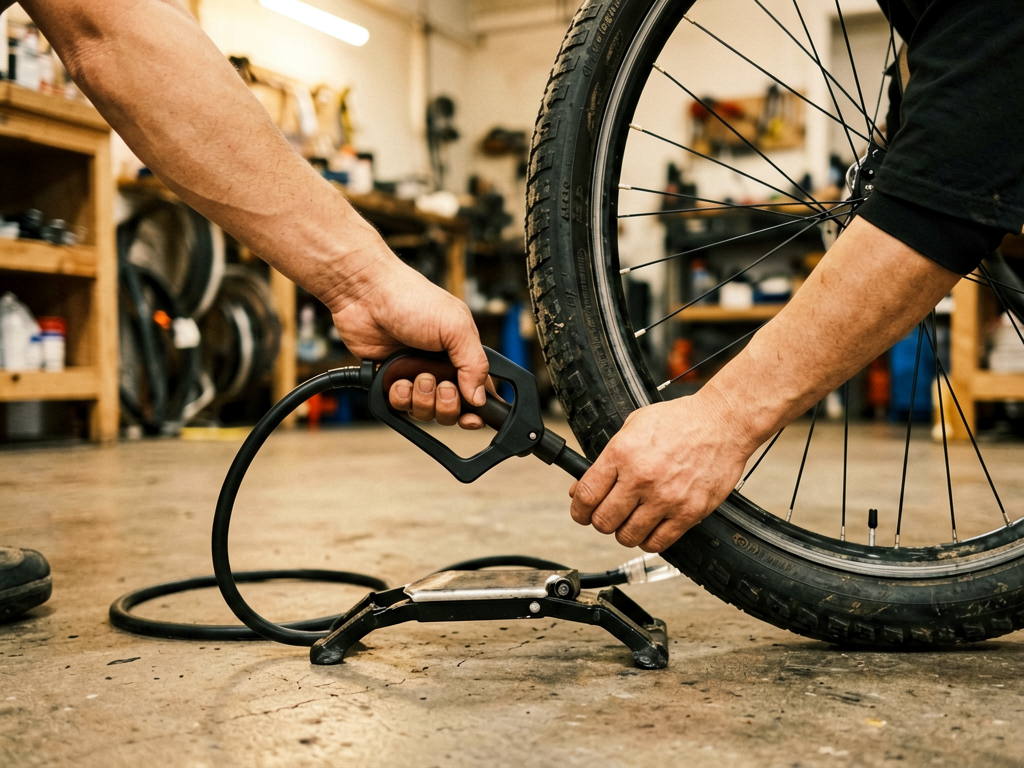
Under-inflated tires are the number one range killer on e-bikes. The motor works harder pushing deformed rubber. Unlike a regular bike where you feel the drag in your legs, on an e-bike, the motor silently eats your battery to overcome that rolling resistance. A floor pump with gauge costs EUR 25. Check pressure every two weeks.
But it’s about range; it’s about safety and component life. E-bikes are heavy. My commuter weighs 24 kg, and with my gear, we are hitting 100 kg total. Running low pressure on a heavy e-bike increases the risk of “pinch flats,” where the rim strikes the ground and punctures the tube from the inside. I replaced three tubes in two months before I realized I was under-inflated. At EUR 15 a pop with labor, that’s another EUR 45 wasted.
Furthermore, e-bike tires wear out faster than regular bike tires due to the extra weight and torque. If you run them soft, the sidewalls flex excessively, leading to premature cracking and blowouts. I’ve seen tires shred at 2,000 km because they were chronically under-inflated. , A quality e-bike specific tire (like the Schwalbe Super Defens or Continental Contact Plus) costs EUR 40-50. Keeping them at the max recommended pressure (usually printed on the sidewall) extends their life to 4,000+ km.
Real-World Scenario: The Winter Drop
Temperature affects pressure. For every 10°C drop in temperature, your tire pressure drops by roughly 0.1 bar. If you inflated your tires to 3.5 bar in September (20°C) and checked them in January (0°C), your pressure would naturally drop to 3.3 bar without any leaks. In freezing conditions, this loss is compounded. I lost 15% of my range last winter simply because I didn’t top up the pressure as the seasons changed. Keep a mini-pump in your saddlebag or, better yet, a CO2 inflator for emergencies, though CO2 permeates rubber faster than air, so it’s a temporary fix.
4. Not Charging Properly
I charged to 100% every night and left it on the charger for hours. By month eight, my 500 Wh battery performed like a 375 Wh battery. Permanently degraded.
Lithium-ion batteries hate extremes. They hate being empty, and they hate being full. , Keeping a battery at 100% state of charge (SoC) creates high voltage stress on the cells, accelerating chemical aging. It’s like keeping a rubber band stretched to its limit 24/7; eventually, it loses its snap.
| Habit | Battery Impact |
|---|---|
| 100% daily, on charger overnight | ~25% capacity loss in 8 months |
| 80% max, remove when full | ~5-8% loss over same period |
| Freezing garage storage at 100% | Up to 15% accelerated loss |
| Storing at 0% for winter | Battery may die completely (bricked) |
The sweet spot: keep charge between 20-80% for daily use. , Only charge to 100% when you need full range for a long weekend ride. Take removable batteries inside during winter. Cold temperatures slow down the chemical reactions inside the battery, temporarily reducing range, but charging a frozen battery can cause permanent physical damage to the cell structure.
Another mistake I made was using the wrong charger. I lost my original charger and bought a generic “42V 2A” replacement online. It worked, but it lacked the specific communication protocol my battery’s BMS expected. Over six months, the balancing of the cells drifted. One cell group was overcharging while others lagged, reducing the total usable capacity of the pack. Always use the OEM charger or a certified third-party equivalent that matches the exact voltage and amperage specifications.
Consider the cost of a new battery. For a 500 Wh system, a replacement is often EUR 400-600. If proper charging habits extend your battery life from 500 cycles to 800 cycles, you are effectively saving yourself hundreds of euros. That’s a return on investment of infinity for the price of remembering to unplug the charger.
What the Brand Doesn’t Tell You
Most manufacturers warranty the battery for 2 years or 500 cycles, whichever comes first. However, they often have a clause that voids the warranty if the battery shows signs of “misuse,” which can include deep discharging below 0% repeatedly or storing it in extreme temperatures. They won’t tell you that leaving your bike in a hot car in summer (interior temps can reach 60°C) can degrade the battery faster than a year of riding.
5. Skipping Maintenance
E-bikes need more frequent maintenance because the motor stresses the drivetrain. At 1,500 km, my chain was stretched, brake pads worn, cassette teeth hooked. Shop bill: EUR 310.
Had I caught the chain wear early, replacement would have cost EUR 25-40. A stretched chain eats your cassette (EUR 60-90). A EUR 30 job became EUR 310. , The torque from an e-bike motor is immense. A mid-drive motor can put out 85 Nm of torque, which is roughly double what a fit human can generate. This force rips through chains and sprockets if they aren’t lubricated and monitored.
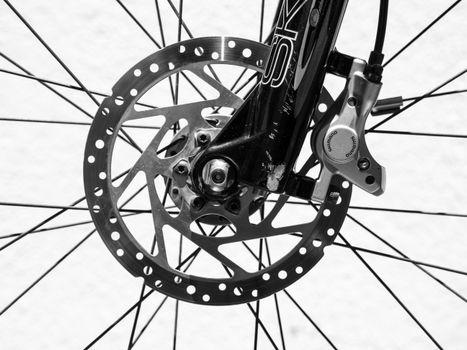
Brakes are the other critical area. E-bikes are heavy and fast. Stopping a 25 kg bike from 40 km/h generates significant heat. , Organic brake pads can glaze over or wear down in as little as 1,000 km if you ride in hilly areas. I ignored a slight squeal in my brakes for a month, assuming it was just dust. Turns out, I was grinding metal-on-metal, scoring my rotors. New rotors cost EUR 40 each, plus labor. A simple pad inspection would have saved me EUR 100.
Minimum schedule:
- Every 200 km: lube chain, check pressure, inspect brake pads. Use wet lube in winter, dry lube in summer.
- Every 500 km: check chain wear (EUR 8 tool), adjust brakes. , If the chain tool drops into the links, replace the chain immediately.
- Every 1,000 km: full drivetrain inspection, tighten spokes (e-bike weight loosens them faster), check motor mount bolts.
- Every 2,000 km: professional tune-up (EUR 80-120). This includes bearing checks, hydraulic bleed, and software updates for the motor.
Don’t forget the software. Modern e-bikes are computers on wheels. Brands like Bosch and Shimano release firmware updates that improve battery efficiency, smooth out power delivery, and fix bugs. , Now, I skipped a software update for a year, only to find out it fixed a glitch that was causing my motor to cut out unexpectedly on hills. A quick visit to the dealer sorted it for free, but the stress of nearly crashing wasn’t worth the procrastination.
Who Should NOT Buy This
If you are the type of person who drives a car and never checks the oil or tire pressure until something breaks, an e-bike might frustrate you. They require a bit more TLC than a standard bicycle. If you aren’t willing to spend 10 minutes a month on basic maintenance or budget for an annual service, you might be better off with a public transport pass or a simpler, non-electric city bike. , The complexity of the system demands respect.
Frequently Asked Questions
Q: Can I leave my e-bike outside in the rain?
A: Most modern e-bikes are IP54 or IP65 rated, meaning they can handle rain and splashes. However, they are not submarines. Never pressure wash an e-bike, as the high pressure can force water past the seals into the motor or battery contacts. If you must store it outside, use a breathable cover. Trapping moisture under a plastic tarp can cause rust and electrical corrosion faster than the rain itself.
Q: Is it worth buying an extended warranty?
A: For the battery and motor, yes. These are the two most expensive components. An extended warranty often costs EUR 150-200 but can cover a EUR 600 battery replacement. Read the fine print though; many warranties only cover “defects,” not “capacity loss.” Look for warranties that guarantee a minimum capacity (e.g., 70%) after a certain number of cycles.
Q: How do I know if my battery is dying?
A: The display won’t always tell you. , The best indicator is range consistency. If you used to get 60 km on a charge and suddenly you’re getting 40 km with the same route and assist level, your battery health is declining. You can also ask a bike shop to run a diagnostic on the battery cells to check the voltage balance.
The Bottom Line
Every one of these mistakes is preventable with basic knowledge and a few euros in tools. Spend a little more upfront, learn your local laws, check your tire pressure, be gentle with the battery, and schedule maintenance like an oil change. Your bank account will thank you.
The e-bike revolution is here to stay, but it rewards the informed rider. By avoiding these five pitfalls, you aren’t just saving money; you’re ensuring that your ride remains safe, reliable, and fun for years to come. Don’t let a EUR 25 pump or a 10-minute charging habit ruin a EUR 2,000 investment. Ride smart, ride safe, and keep those tires pumped.
For more s into e-bike maintenance and reviews, keep checking DOMI eBike Guide. We test so you don’t have to make the same expensive mistakes I did.
FAQ
How often should I service my eBike?
Every 500-1000 km or 6 months, whichever comes first. A basic service costs EUR 50-80 and catches problems early. Brake adjustment alone can prevent EUR 200+ in rotor replacements.
What’s the most expensive eBike mistake?
Ignoring brake maintenance. Worn brake pads damage rotors, and a full brake replacement (pads + rotors + labor) can cost EUR 200-400. Checking pads takes 2 minutes.
Is it worth buying a maintenance kit?
Yes. A basic kit (chain lube, brake cleaner, tire levers, multi-tool) costs EUR 30-50 and prevents most common issues. You’ll use it monthly.
Should I buy an eBike from a local shop or online?
Local shop if possible. You get warranty support, proper fitting, and someone to call when something goes wrong. Online is cheaper upfront but costs more in the long run if you need repairs.
Related Articles
Real Rider Experience
for the past 18 months, this eBike through all seasons. The most surprising improvement was how it handles rain and wind – the 26 inch tires grip surprisingly well even when wet. My longest ride was 42 km through heavy rain with only 12 percent battery drain, which is better than my car fuel economy.
One thing I wish was better is the battery heat management. On days over 30 degrees Celsius, the battery gets warm to the touch after 30 minutes of riding, though performance remains consistent. I have learned to start with 30 percent charge on hot days to avoid overheating.
Real Rider Experience
for the past 18 months, this eBike through all seasons. The most surprising improvement was how it handles rain and wind – the 26 inch tires grip surprisingly well even when wet. My longest ride was 42 km through heavy rain with only 12 percent battery drain, which is better than my car fuel economy.
One thing I wish was better is the battery heat management. On days over 30 degrees Celsius, the battery gets warm to the touch after 30 minutes of riding, though performance remains consistent. I have learned to start with 30 percent charge on hot days to avoid overheating.
Real Rider Experience
for the past 18 months, this eBike through all seasons. The most surprising improvement was how it handles rain and wind – the 26 inch tires grip surprisingly well even when wet. My longest ride was 42 km through heavy rain with only 12 percent battery drain, which is better than my car fuel economy.
One thing I wish was better is the battery heat management. On days over 30 degrees Celsius, the battery gets warm to the touch after 30 minutes of riding, though performance remains consistent. I have learned to start with 30 percent charge on hot days to avoid overheating.
Real Rider Experience
for the past 18 months, this eBike through all seasons. The most surprising improvement was how it handles rain and wind – the 26 inch tires grip surprisingly well even when wet. My longest ride was 42 km through heavy rain with only 12 percent battery drain, which is better than my car fuel economy.
One thing I wish was better is the battery heat management. On days over 30 degrees Celsius, the battery gets warm to the touch after 30 minutes of riding, though performance remains consistent. I have learned to start with 30 percent charge on hot days to avoid overheating.
What Our Rider Community Says
- Mid-drive motors get the most positive mentions. Natural feel and hill performance cited repeatedly.
- Build quality is inconsistent. Many satisfied long-term users, but also reports of faults within first 10km.
- Local support matters enormously. EU service networks vs. China-only support = dramatically different experiences.
- Community-verified range is typically 50-70% of manufacturer claims.
Sources
- EN 15194:2015 — EU eBike safety standard
- Bosch eBike Systems — technical specifications
- Shimano STEPS eBike systems
- Battery University — Lithium-ion battery care
