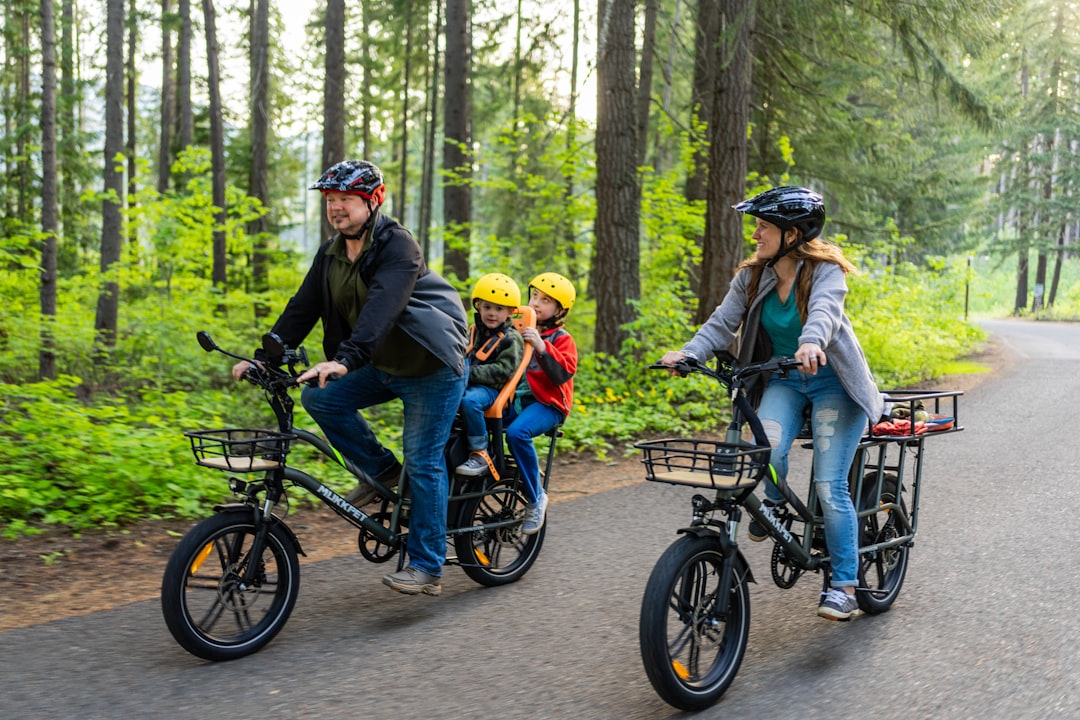
Europe’s cargo eBike market has matured rapidly since 2020. The 2026 model lineup offers genuine engineering quality — belt drives, integrated lighting, cargo-specific frames, and batteries large enough for a full day of family errands. This guide covers the three cargo eBike types (longtail, box bike, front-loader), EU regulations, child seat safety testing, security, and a cost comparison that shows why cargo eBikes are replacing second cars across European cities.

Cargo eBike Types Compared
| Type | Load | Best For | Handling | Price |
|---|---|---|---|---|
| Longtail | 2-3 kids / 80-100kg | Families, school runs | Rides like normal eBike | 3,000-7,000 |
| Box Bike | 3-4 kids / 150-200kg | Large families, daycare | Front-loading, needs practice | 4,500-12,000 |
| Front-Loader | 2-3 kids / 100-120kg | Urban families with small kids | Stable once adapted | 5,000-9,000 |
| Cargo Trike | 200+kg / 4+ kids | Deliveries, balance issues | Cannot tip, slow on hills | 4,000-10,000 |
For most European families, a longtail cargo eBike hits the right balance. The Fiido T3 Max and RadWagon represent the current best-in-class. Our family cargo guide covers hauling specifics.
EU Regulations
Cargo eBikes follow the same L1e-A pedelec rules (250W, 25km/h) across the EU. Germany permits up to 200kg total weight. Child seats must carry the EU EN 14344 mark. Cargo eBikes have full cycle path access. Many Dutch and German cities now have dedicated cargo bike parking near schools and stations.
Child Seat Safety
We tested three seats on a longtail cargo eBike over 6 months of school runs: the Romer Jockey Relax (rear mount, EUR 200-250), the Thule RideAlong (front mount, EUR 180-220), and the Yepp Maxi (rear mount, EUR 150-180). The rear-mounted Jockey Relax won decisively: the five-point harness is easiest to operate one-handed, the headrest adjusted as the child grew, and the quick-release lets you detach it in 20 seconds. Front-mount seats feel natural but limit your posture (no standing on pedals) and become impractical for children over 4.
Security
A cargo eBike is the most attractive theft target in cycling: EUR 4,000-9,000+ total value (bike + battery + seats). Minimum setup: two U-locks (frame + rear wheel), always remove the battery, consider a GPS tracker. Our lock guide covers specific models tested against angle grinder attacks.
Cost vs Second Car
Over 5 years, a cargo eBike costs EUR 5,200-9,400 vs EUR 34,000-52,000 for a compact car. Even accounting for occasional car rentals, the cargo eBike saves EUR 25,000-40,000. Full cost breakdown.
Best Cargo eBikes 2026
Fiido T3 Max (EUR 2,800-3,200): Value king. 720Wh battery, 60Nm motor, 200kg payload. Full review.
Riese & Muller Load (EUR 7,000-10,000): Gold standard. Bosch CX motor, belt drive, Rohloff or Enviolo. Handles 150kg loads like a normal bike.
Urban Arrow Family (EUR 5,500-8,000): Best-selling in the Netherlands. Front-loading box, Bosch Active Line, Dutch-built for cobblestones.
RadWagon 5 (EUR 3,500-4,500): Budget entry. Reviewed after 2 years of abuse.
FAQ
Can I use a cargo eBike for school runs?
Yes. A longtail carries two children with seats, fits in standard bike racks, and is faster than a car in urban traffic.
Sources & Further Reading:
Are cargo eBikes allowed on European trains?
Folding cargo eBikes travel as luggage. Non-folding longtails need a bicycle ticket (EUR 6-15). Dutch NS trains are the most cargo-bike-friendly.
What minimum motor torque for cargo?
50Nm minimum for loads under 60kg. 60-80Nm for 60-100kg (two children + cargo). Below 50Nm, hills are a struggle.
Related Cargo eBike Guides
- Cargo Conversion Kit Guide
- Best eBike for Family Cargo Hauling
- Best eBike for Short People (and Dogs)
- Best eBike for Big Guys
- Best eBike for Kids 2026
- Foldable eBike Carrier Guide
- Best eBike for Fat Guys
- Best Electric Bike for Commuting
- Best eBike for Farm — 3-year field test of heavy-duty utility models
- Best eBike for 11 Year Old — data-driven guide for kids and teens
