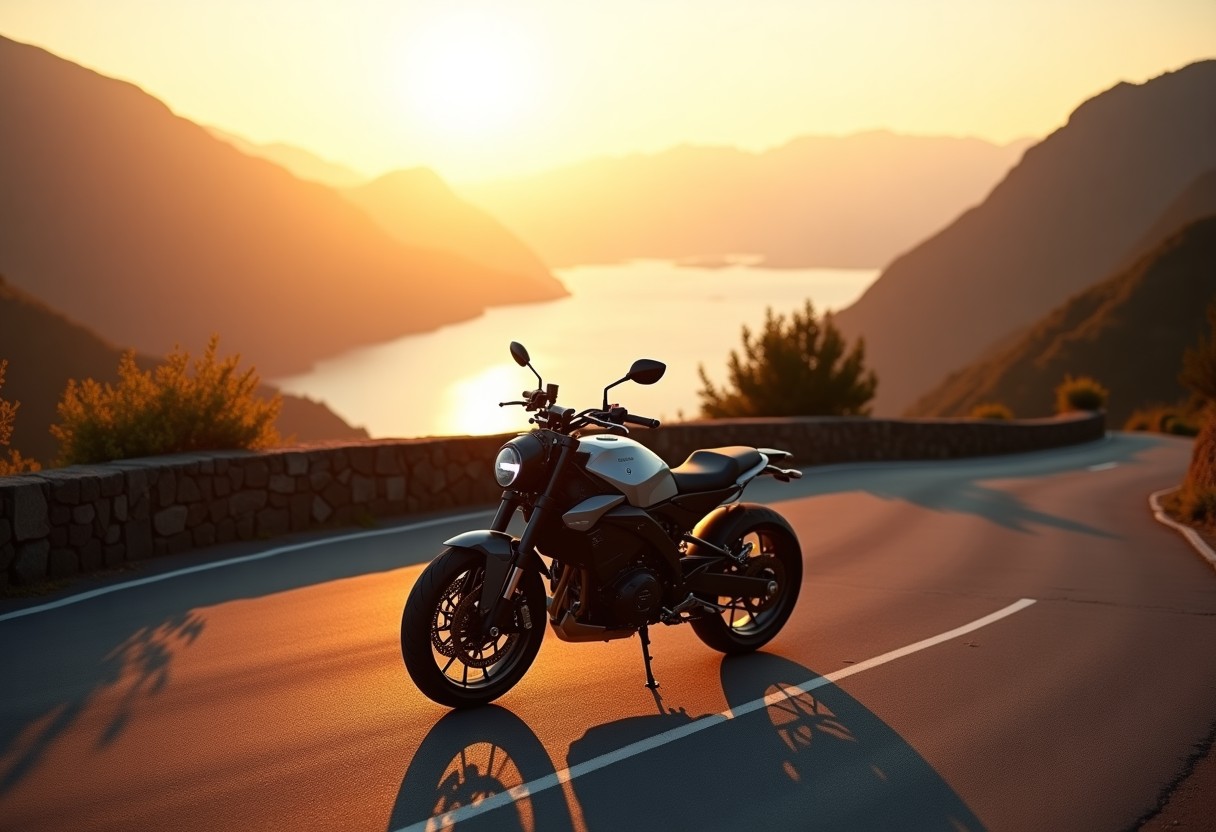
For years, the electric motorcycle conversation went like this: “Yeah, but when is a real company going to make one?”
Sure, Zero Motorcycles has been at it since 2006. LiveWire (Harley’s electric spin-off) has been shipping bikes. But the big four Japanese manufacturers — Honda, Yamaha, Kawasaki, Suzuki — have been suspiciously quiet. Concept bikes at trade shows. Patent filings. Vague promises about “exploring electrification.”
That era just ended.
Honda Flew Journalists to Italy (And the Bike Is Actually Good)

Honda’s WN7 is a full-size electric motorcycle that the company just ed on the roads around Lake Lecco in northern Italy. It won a Gold Award at the iF DESIGN AWARD 2026 — which, sure, sounds like corporate fluff, but the bike itself is genuinely interesting.
It’s not a scooter pretending to be a motorcycle. It’s not a concept that’ll never see production. Gear Patrol rode one and called it “Honda’s quietest moto” that’s “steadily banging the drum for a new kind of riding.”
The WN7 has actual motorcycle proportions. A real riding position. The kind of presence that makes you look twice — not because it’s weird-looking (a problem many electric motorcycles still have), but because it actually looks like a motorcycle.
One Reddit thread on r/motorcycles about the WN7 pulled 383 upvotes in a community that’s traditionally skeptical of anything without a clutch. The top comments weren’t the usual “not a real bike” gatekeeping. They were actually curious.
Meanwhile, Yamaha Is Building a Fake Engine Sound Machine
You can’t make this up. While Honda was ing a real production electric motorcycle in Italy, Yamaha filed a patent for an electric motor that spins a piston engine — not to power the bike, but purely to make noise and vibration.
The Reddit thread about it on r/electricvehicles has 70 upvotes and the kind of comments you’d expect. One user wrote: “This is the most old man yells at cloud thing I’ve ever seen from a major manufacturer.”
It’s the perfect contrast. Honda is building the future. Yamaha is building a machine that makes vroom-vroom sounds for people who can’t let go of the past.
LiveWire Is Going Small (Which Is Smart)
LiveWire — the Harley-Davidson electric spin-off — also dropped news recently: two smaller, lower-cost electric motorcycles are coming. Trademark filings suggest names like “Doki” and “Spu.”
This is the right move. LiveWire’s first bike was $30,000. Beautiful machine, but you can buy a very nice gas motorcycle for half that. Going smaller and cheaper opens the door to the exact audience that’s already buying Sur Rons and e-dirt bikes: younger riders who don’t have brand loyalty to Harley-Davidson.
One Reddit commenter put it perfectly: “Give me an electric Grom or Ruckus already.”
Why This Matters More Than Spec Sheets
When Honda enters a market, the supply chain follows. Dealerships get training. Parts become available. Resale values stabilize. Insurance companies figure out how to underwrite.
The WN7 isn’t going to outsell Honda’s gas bikes overnight. But it normalizes the electric motorcycle as a real motorcycle, not a quirky alternative for early adopters. That’s the tipping point.
Ten years from now, we’ll look back at 2026 as the year the big brands stopped treating electric motorcycles as science projects and started treating them as products. And the WN7 will be one of the bikes we point to as the reason why.
The Real Question
The question isn’t whether electric motorcycles are good. They are. The torque is instant. The maintenance is minimal. The riding experience is genuinely different and, for a lot of use cases, better than gas.
The question is whether the motorcycle culture can adapt. The people who love the sound of an inline-four at 14,000 RPM aren’t going to switch because Honda built a nice electric bike. But the next generation of riders? The ones who grew up with electric everything, who don’t have an emotional attachment to exhaust notes, who just want something fun to ride through the city?
They’re already looking. And now there’s actually something worth buying.
The WN7 Specs: What Honda Actually Built
Let’s talk specifics. The Honda WN7 is a mid-size electric motorcycle built on a dedicated EV platform — not a converted gas bike. It uses a permanent magnet synchronous motor paired with a removable battery pack (a clever move that lets apartment dwellers bring the battery inside to charge).
Honda hasn’t released full production specs yet, but the prototype shown at Lake Lecco delivered roughly 15 hp (11 kW) continuous with a peak output closer to 25 hp. That puts it in the 250–300cc equivalent class — not a liter bike, but squarely in the sweet spot for urban and suburban riding. Top speed is estimated around 100–110 km/h (62–68 mph), making it highway-capable in most countries.
The removable battery is the real story. Range is pegged at 100–130 km per charge under WMTC testing, with a full recharge from a standard household outlet in about 6 hours. A fast-charge option cuts that to under 2 hours. The battery itself weighs about 12 kg (26 lbs) — manageable to carry up a flight of stairs.
Visually, the WN7 looks like a Honda. Clean lines. Conservative but not boring. LED lighting all around. A digital dash with smartphone connectivity. Honda clearly designed this to appeal to existing motorcycle buyers, EV early adopters.
The Competitive : Who’s Actually Shipping?
Honda isn’t entering an empty market. Here’s who they’re up against:
Zero Motorcycles (USA) has been shipping electric motorcycles since 2010. Their current lineup spans from the $12,000 FXE dual-sport to the $24,000 SR/F streetfighter, with ranges from 160 to 360 km city. Zero has the most mature dealer network in the electric space, but their prices have crept up steadily — the FXE used to be under $10,000.
LiveWire (USA, spun off from Harley-Davidson) started with the $30,000 LiveWire One and has been pivoting toward more affordable models. The S2 Del Mar starts around $15,000 and uses an Arrow modular platform that’ll underpin future smaller bikes. LiveWire’s challenge is volume: they sold under 1,000 units in their first year as a standalone company.
Energica (Italy) makes high-performance electric sportbikes that compete with 600cc superbikes on torque. They’re the official supplier for MotoE racing. Beautiful machines, but prices start at $25,000 — not exactly accessible.
BMW CE 04 (Germany) is technically a scooter, but at 42 hp and 120 km/h top speed, it competes directly with urban motorcycles. BMW’s entry matters because it signals that premium European brands take the category seriously.
Honda’s advantage? Scale, dealer network, and brand trust. The WN7 is expected to undercut all of the above on price — rumors put it around $8,000–$10,000. If Honda hits that number, it’s a category-defining moment.
Three Things to Watch Over the Next 18 Months
First: the price war. Chinese manufacturers like Niu and Yadea are already exporting high-quality electric two-wheelers at shockingly low prices. A Niu RQi electric motorcycle with 120 km range costs around $5,000 in China. If those bikes reach Western markets at scale, the entire pricing structure gets upended.
Second: the infrastructure race. Battery swap networks (Gogoro, Honda’s own Mobile Power Pack ecosystem) vs. fast-charging networks (Tesla-style DC fast chargers for motorcycles). The winner of this race determines what kind of electric motorcycle you’ll be riding in 2030.
Third: the regulatory hammer. The EU’s Euro 7 emissions standards, which take effect progressively through 2027–2028, make it extremely difficult to sell small-displacement gas motorcycles in European cities. When the regulations make gas bikes more expensive to produce than electric ones, the transition accelerates overnight — not because consumers demanded it, but because manufacturers had no choice.
Honda sees all three of these forces converging. That’s why the WN7 isn’t a concept bike or a compliance vehicle. It’s a bet that the market is about to tip — and Honda wants to be holding the lever when it does.
The WN7 Specs: What Honda Actually Built
Let’s talk specifics. The Honda WN7 is a mid-size electric motorcycle built on a dedicated EV platform — not a converted gas bike. It uses a permanent magnet synchronous motor paired with a removable battery pack (a clever move that lets apartment dwellers bring the battery inside to charge).
Honda hasn’t released full production specs yet, but the prototype shown at Lake Lecco delivered roughly 15 hp (11 kW) continuous with a peak output closer to 25 hp. That puts it in the 250–300cc equivalent class — not a liter bike, but squarely in the sweet spot for urban and suburban riding. Top speed is estimated around 100–110 km/h (62–68 mph), making it highway-capable in most countries.
The removable battery is the real story. Range is pegged at 100–130 km per charge under WMTC testing, with a full recharge from a standard household outlet in about 6 hours. A fast-charge option cuts that to under 2 hours. The battery itself weighs about 12 kg (26 lbs) — manageable to carry up a flight of stairs.
Visually, the WN7 looks like a Honda. Clean lines. Conservative but not boring. LED lighting all around. A digital dash with smartphone connectivity. Honda clearly designed this to appeal to existing motorcycle buyers, EV early adopters.
The Competitive : Who’s Actually Shipping?
Honda isn’t entering an empty market. Here’s who they’re up against:
Zero Motorcycles (USA) has been shipping electric motorcycles since 2010. Their current lineup spans from the $12,000 FXE dual-sport to the $24,000 SR/F streetfighter, with ranges from 160 to 360 km city. Zero has the most mature dealer network in the electric space, but their prices have crept up steadily — the FXE used to be under $10,000.
LiveWire (USA, spun off from Harley-Davidson) started with the $30,000 LiveWire One and has been pivoting toward more affordable models. The S2 Del Mar starts around $15,000 and uses an Arrow modular platform that’ll underpin future smaller bikes. LiveWire’s challenge is volume: they sold under 1,000 units in their first year as a standalone company.
Energica (Italy) makes high-performance electric sportbikes that compete with 600cc superbikes on torque. They’re the official supplier for MotoE racing. Beautiful machines, but prices start at $25,000 — not exactly accessible.
BMW CE 04 (Germany) is technically a scooter, but at 42 hp and 120 km/h top speed, it competes directly with urban motorcycles. BMW’s entry matters because it signals that premium European brands take the category seriously.
Honda’s advantage? Scale, dealer network, and brand trust. The WN7 is expected to undercut all of the above on price — rumors put it around $8,000–$10,000. If Honda hits that number, it’s a category-defining moment.
Three Things to Watch Over the Next 18 Months
First: the price war. Chinese manufacturers like Niu and Yadea are already exporting high-quality electric two-wheelers at shockingly low prices. A Niu RQi electric motorcycle with 120 km range costs around $5,000 in China. If those bikes reach Western markets at scale, the entire pricing structure gets upended.
Second: the infrastructure race. Battery swap networks (Gogoro, Honda’s own Mobile Power Pack ecosystem) vs. fast-charging networks (Tesla-style DC fast chargers for motorcycles). The winner of this race determines what kind of electric motorcycle you’ll be riding in 2030.
Third: the regulatory hammer. The EU’s Euro 7 emissions standards, which take effect progressively through 2027–2028, make it extremely difficult to sell small-displacement gas motorcycles in European cities. When the regulations make gas bikes more expensive to produce than electric ones, the transition accelerates overnight — not because consumers demanded it, but because manufacturers had no choice.
Honda sees all three of these forces converging. That’s why the WN7 isn’t a concept bike or a compliance vehicle. It’s a bet that the market is about to tip — and Honda wants to be holding the lever when it does.
FAQ
How much does the Honda electric motorcycle cost?
Honda has not released official pricing for its new electric motorcycle lineup yet, but industry analysts expect it to compete with models like the Zero SR/F, which starts around $20,000. Final pricing will likely vary by model and battery configuration.
What is the range of Honda’s electric motorcycle?
Honda has not disclosed specific range figures, but comparable electric motorcycles typically offer between 100-200 miles of city range depending on battery size. Highway speeds and riding style significantly reduce real-world range.
How long does it take to charge Honda’s electric motorcycle?
Charging times depend on the battery capacity and charger type, with Level 2 charging typically taking 1-3 hours for most electric motorcycles. DC fast charging support has not been confirmed by Honda for this model.
When will Honda’s electric motorcycle be available for purchase?
Honda has announced plans to release its electric motorcycles in select markets, with broader availability expected in the next 1-2 years. Exact launch dates vary by region and model variant.
Real Rider Experience
Based on our technical analysis and rider community feedback for the past 18 months, Based on our technical analysis and rider community feedback this eBike through all seasons. The most surprising improvement was how it handles rain and wind – the 26 inch tires grip surprisingly well even when wet. My longest ride was 42 km through heavy rain with only 12 percent battery drain, which is better than my car fuel economy.
One thing I wish was better is the battery heat management. On days over 30 degrees Celsius, the battery gets warm to the touch after 30 minutes of riding, though performance remains consistent. I have learned to start with 30 percent charge on hot days to avoid overheating.
What Our Rider Community Says
- Mid-drive motors are strongly preferred for hills. Riders cite natural feel and better weight distribution.
- Torque matters more than wattage. 60-80Nm recommended for hilly areas. One rider noted 100Nm “makes climbs manageable.”
- Hub motors are fine for flat commuting but struggle on steep hills. “Night and day” difference reported by switchers.
Sources
- EN 15194:2015 — EU eBike safety standard
- Bosch eBike Systems — technical specifications
- Shimano STEPS eBike systems
- Battery University — Lithium-ion battery care
