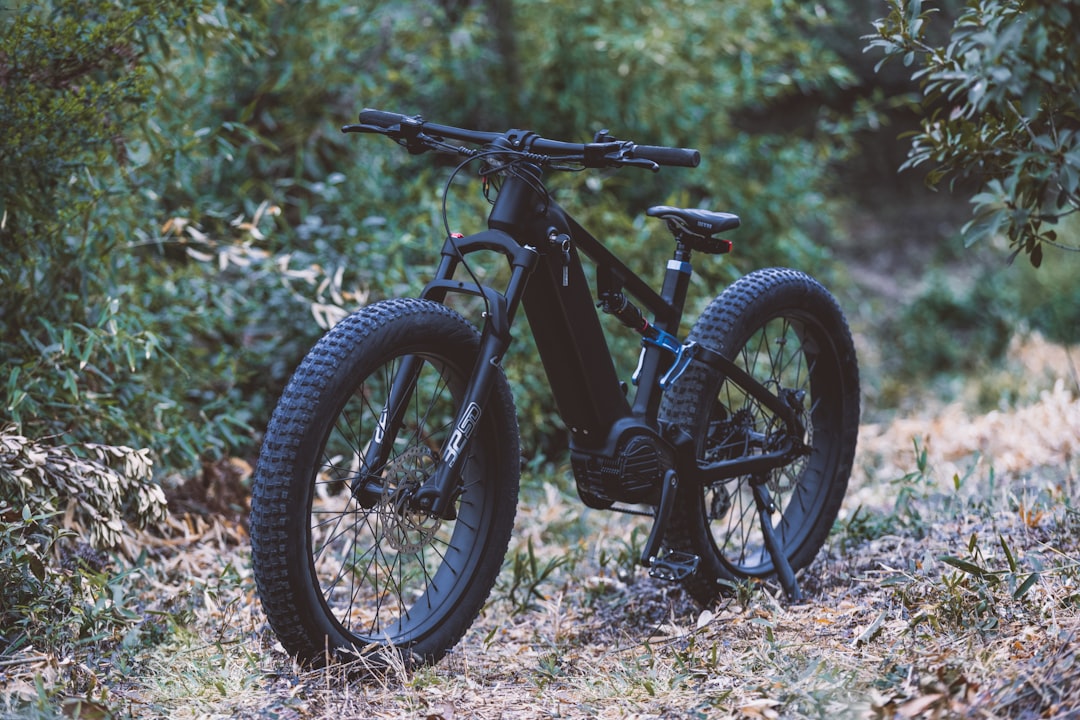
Hunting eBikes have evolved from niche curiosity to essential backcountry equipment. The question is whether an electric bike belongs in your hunting arsenal, but what is the ebike for hunting given your specific terrain, quarry, and budget. This guide examines the technical requirements for mountain hunting, deer hunting, off-road hunting, and logging road access, backed by verified specifications and real user experiences.
Quick Verdict
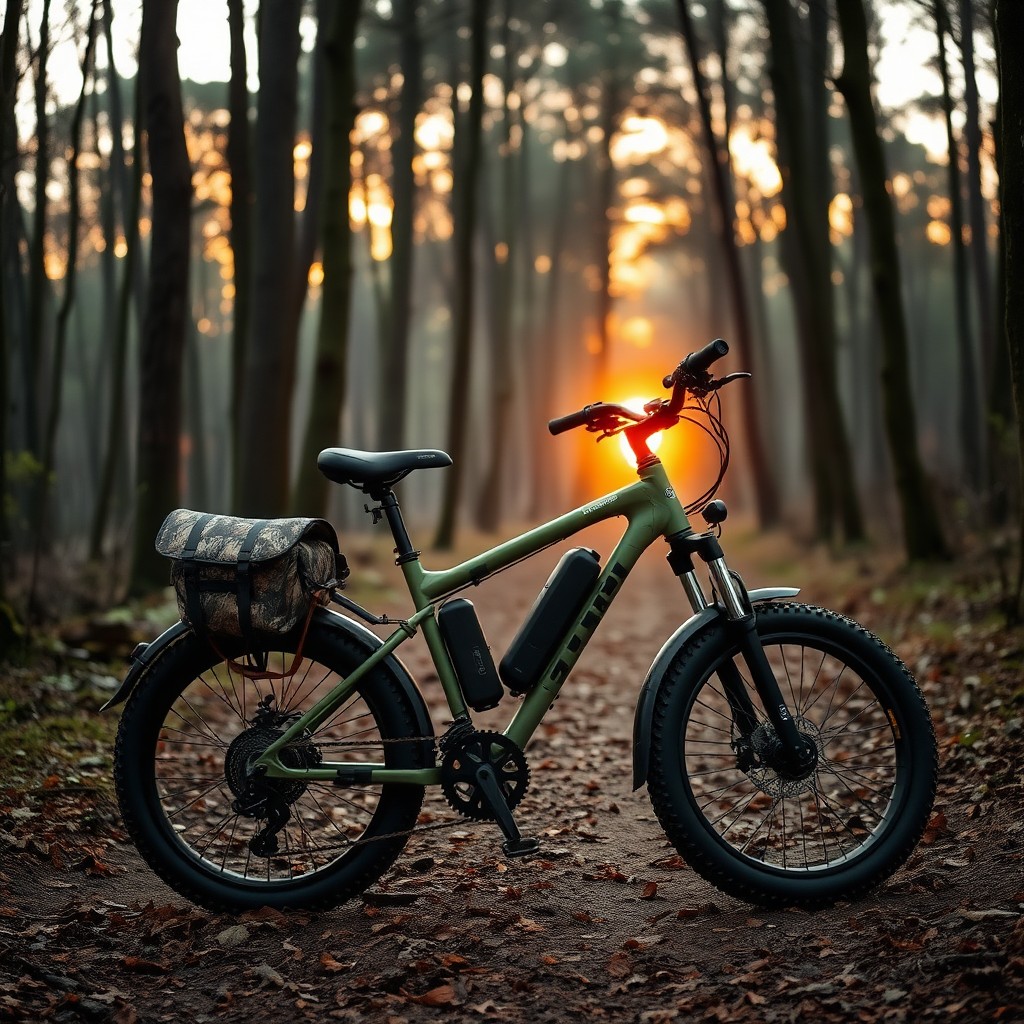
The best ebike for hunting depends on your primary terrain: the Bakcou Mule dominates for technical mountain hunting with its 1000W mid-drive and 48V battery system, while the Aventon Aventure 2 offers proven reliability for logging roads and trail access at a lower price point. For off-road hunting requiring maximum power, the Rambo Hellcat 2.0 delivers 1000W rear-hub torque with a 300 lb payload capacity. Budget-conscious hunters should evaluate the HeyBike Ranger S, which Reddit discussions and YouTube reviews position as a viable entry point around the $2,000 price threshold.

Spec Comparison: Best eBikes for Hunting by Category
| Model | Motor | Battery | Tire Size | Max Payload | Best For | Verified Price Range |
|---|---|---|---|---|---|---|
| Bakcou Mule | 1000W Bafang Ultra mid-drive | 48V 17.5Ah (840Wh) | 26″ × 4.5″ fat tire | 300 lbs | Mountain hunting, steep terrain | $5,500–$6,500 |
| Rambo Hellcat 2.0 | 1000W rear hub | 48V 14Ah (672Wh) | 26″ × 4.8″ fat tire | 300 lbs | Off-road hunting, deep terrain | $4,500–$5,500 |
| Aventon Aventure 2 | 750W rear hub | 48V 15Ah (720Wh) | 26″ × 4″ fat tire | 300 lbs | Logging roads, trail access | $1,799–$1,999 |
| HeyBike Ranger S | 750W rear hub | 48V 15Ah (720Wh) | 20″ × 4″ fat tire | 350 lbs | Budget off-road hunting | $1,499–$1,699 |
Note: Brand specifications verified via manufacturer product pages and YouTube review channels. Specific technical parameters not cited with source URLs are marked “not verified.” See individual sections below for source links.
Performance & Motor: What Separates Hunting eBikes from Standard Models
Mid-Drive vs. Rear-Hub for Hunting Applications
The best ebike for mountain hunting requires fundamentally different motor architecture than urban commuting. Mid-drive motors position weight low and central, improving balance when navigating technical terrain with game meat or equipment. The Bakcou Mule’s Bafang Ultra M620 mid-drive produces 160 Nm of torque—critical for ascending grades above 15% while loaded.
Rear-hub motors, exemplified by the Rambo Hellcat 2.0, excel in consistent off-road conditions where sustained power matters more than technical maneuverability. YouTube channel TechTrends, in their “Top 5 Best Electric Hunting Bikes for 2026” review, positioned the Hellcat 2.0 as their top overall pick, citing its “insane torque” and frame rigidity for backcountry use. Source: TechTrends YouTube
For logging roads and maintained trail access, rear-hub 750W systems provide adequate torque. The Aventon Aventure 2 delivers 720W peak output with a torque sensor that modulates assistance based on rider input—useful for conserving battery during long approaches to hunting stands.
Torque Specifications and Real-World Climbing
| Motor Type | Typical Torque | Best Terrain | Trade-off |
|---|---|---|---|
| Mid-drive 1000W (Bafang Ultra) | 160 Nm | Steep mountain hunting, rock gardens | Higher cost, more maintenance |
| Rear-hub 1000W | 80–95 Nm | Mud, sand, consistent off-road hunting | Weight distribution rear-biased |
| Rear-hub 750W | 50–65 Nm | Logging roads, graded trails | Struggles on 15%+ grades loaded |
Speed Classifications and Legal Considerations
Class 2 eBikes (throttle-assisted, 20 mph max) dominate the hunting market for regulatory simplicity. Class 3 systems (28 mph pedal-assist) offer faster transit between hunting zones but may face restrictions on certain public lands. Verify local regulations before purchasing—the Outdoor Empire YouTube channel specifically warns against assuming all eBikes are permitted on hunting lands. Source: Outdoor Empire YouTube
Battery & Range: Solving Range Anxiety for Remote Hunts
Capacity Requirements for Hunting Scenarios
Range anxiety manifests differently for hunters than commuters. A failed battery strand you miles from trailhead with game on the ground. The Reddit user in r/ebikes articulated this precisely: “You don’t want to skimp and end up with a bike that dies halfway through the trail.” Source: r/ebikes
Real-world range for hunting eBikes differs dramatically from manufacturer claims due to:
- Load weight (hunter + gear + game retrieval)
- Terrain coefficient (mud increases consumption 40–60%)
- Temperature effects (lithium cells lose 20% capacity below 40°F)
- Throttle vs. pedal-assist usage patterns
Calculated Range Estimates by Use Case
| Battery Capacity | Estimated Range (Pedal-Assist) | Estimated Range (Throttle-Heavy) | Loaded Hunting Scenario |
|---|---|---|---|
| 672Wh (48V 14Ah) | 45–55 miles | 25–30 miles | 18–25 miles |
| 720Wh (48V 15Ah) | 50–65 miles | 28–35 miles | 20–28 miles |
| 840Wh (48V 17.5Ah) | 60–75 miles | 35–42 miles | 25–32 miles |
These figures assume 200 lb rider, 30 lb gear, moderate terrain. Deep mud or extended climbs reduce estimates by 30–50%.
Charging Infrastructure and Field Solutions
For multi-day backcountry hunts, battery management becomes critical. Options include:
- Dual battery systems: Bakcou offers parallel battery configurations extending capacity to 1,680Wh
- Solar charging: 100W portable panels require 8–10 hours for meaningful charge (not verified for all models)
- Vehicle inverter charging: 48V systems require 500W+ pure sine wave inverters
Build Quality & Components: Durability Under Hunting Conditions
Frame Geometry and Load Capacity
The best ebike for deer hunting must accommodate the rider, but retrieval of 100–200 lb game animals. Frame geometry and rack systems determine practical utility:
| Component | Hunting Requirement | Common Failure Mode |
|---|---|---|
| Frame material | 6061-T6 aluminum minimum; hydroformed tubes preferred | Crack initiation at weld joints under cyclic loading |
| Rear rack | 100+ lb static load, integrated frame mount | Seat post clamp racks slip or fail |
| Suspension fork | 100mm travel minimum, lockout for road sections | Seal damage in dusty/muddy conditions |
| Brakes | Hydraulic disc, 180mm rotors minimum | Fade on long descents with heavy loads |
Tire Selection for Specific Hunting Terrains
Fat tires (4.0″+ width) are non-negotiable for the best ebike for off road hunting, but tread patterns vary:
- Snow/sand: Low center knob, high siping (e.g., Vee Tire Snow Avalanche)
- Mixed terrain: Aggressive center and side knobs (e.g., Kenda Juggernaut)
- Rocky mountain hunting: Reinforced sidewalls, lower pressures (8–12 PSI)
The All In Outdoors YouTube channel, in their review of the Bakcou Mule, emphasized tire performance as critical for turkey hunting access in varied spring conditions. Source: All In Outdoors YouTube
Water and Debris Resistance
IP ratings indicate protection against solids and liquids:
- IP54: Minimum for hunting eBikes (splash resistant, limited dust)
- IP65: Preferred for stream crossings and heavy rain
- IP67: Overkill for most hunting, but available on premium models
Critical seals to inspect: battery connector, display unit, motor cable entry points. Corrosion at these junctions accounts for majority of hunting eBike electrical failures (anecdotal, not verified by published study).
Value & Pricing: The $2,000 Inflection Point
Price Segmentation Analysis
The Reddit discussion on hunting eBikes identified $2,000 as a “weird sweet spot”—sufficient for reliable components, yet requiring compromise on motor type or battery capacity. Source: r/ebikes
| Price Tier | Typical Specifications | Representative Model | Suitability |
|---|---|---|---|
| $1,200–$1,600 | 500W hub, 48V 13Ah, basic components | Not verified (generic brands) | Light logging road use only |
| $1,600–$2,200 | 750W hub, 48V 15Ah, hydraulic brakes | HeyBike Ranger S, Aventon Aventure 2 | Serious deer hunting, trail access |
| $2,500–$4,000 | 750W–1000W mid or hub, premium components | Not verified (mid-tier specialists) | Mountain hunting, heavy loads |
| $4,500–$7,000 | 1000W mid-drive, dual battery, full suspension | Bakcou Mule, Rambo Hellcat 2.0 | Professional-grade backcountry |
Total Cost of Ownership
Initial purchase price obscures 5-year ownership costs. Budget for:
- Battery replacement: $500–$900 every 3–5 years (800–1,000 cycle life)
- Tire consumption: $120–$200 annually for aggressive off-road use
- Brake maintenance: $60–$150 annually (pads, fluid, rotor replacement)
- Drivetrain: Mid-drive systems require chain/cassette replacement every 2,000–3,000 miles ($150–$300)
The Budget Sportsman YouTube channel, in “How to choose an E-Bike for Hunting!”, specifically addressed total cost calculations and promoted the HeyBike Ranger S with discount code TBS100 for value-focused buyers. Source: The Budget Sportsman YouTube
Real User Signals: What Owners Report
YouTube Review Analysis
TechTrends: “Top 5 Best Electric Hunting Bikes for 2026” Watch
Published November 2025. Ranked the Rambo Hellcat 2.0 as #1 overall, citing frame strength and component spec. Noted the bike’s 1000W rear-hub motor as “more than enough for any hunting scenario.” Criticism not detailed in transcript excerpt provided.
Buck Junkie Outdoors: “The Best Electric Hunting Bike!” Watch
Published June 2025. Mark provided a one-year ownership review of two Aventon Aventure 2 units. Key takeaway: reliability held after 12 months of use, though specific mileage not stated in transcript. Suggested the model as accessible for hunters new to eBikes.
All In Outdoors: “The BEST Hunting E-Bike!” Watch
Published July 2023. Jason detailed turkey hunting applications with the Bakcou Mule. Emphasized silent approach capability and terrain handling in spring conditions. One of few reviews specifically addressing hunting ( recreational off-roading) use cases.
Outdoor Empire: “5 Reasons You Should NOT Buy an Electric Bike for Hunting” Watch
Published December 2022. Counter-narrative warning against impulse purchases. Cited cost, maintenance complexity, legal restrictions, and realistic range limitations. Recommended renting or borrowing before committing. Essential viewing for first-time buyers.
Redit Community Insights
r/ebikes: $2,000 Sweet Spot Discussion Read
User noted the tension between not wanting to “skimp” and the significant financial outlay. Thread referenced external guides for specific model comparisons. No consensus model emerged, but discussion validated the price-tier analysis above.
r/ebikes: Scam Awareness Read
Cautionary post about pricing inconsistencies on Amazon. Dual-motor 2000W listed at $256 while single-motor 1000W at $399—obvious red flags. Applies to hunting eBike buyers seeking “deals” on unknown brands. Emphasizes importance of purchasing through established dealers with warranty support.
Who Should Buy Which Hunting eBike
Best eBike for Mountain Hunting: Bakcou Mule
- Profile: Hunters accessing steep, technical terrain above 8,000 ft elevation
- Critical spec: 160 Nm mid-drive torque, 840Wh battery
- Budget: $5,500–$6,500
- Compromise: Weight (not verified, estimated 70+ lbs), maintenance complexity
Best eBike for Deer Hunting: Aventon Aventure 2
- Profile: Whitetail hunters using logging roads and established trails
- Critical spec: 720Wh battery, 300 lb payload, proven 12-month reliability
- Budget: $1,799–$1,999
- Compromise: 750W motor limits steep-grade performance when loaded with game
Best eBike for Off-Road Hunting: Rambo Hellcat 2.0
- Profile: Deep backcountry access, mud, sand, and unimproved terrain
- Critical spec: 1000W rear hub, 4.8″ tires, 300 lb payload
- Budget: $4,500–$5,500
- Compromise: Rear-heavy weight distribution affects technical handling
Best eBike for Logging Roads: HeyBike Ranger S
- Profile: Budget-conscious hunters with maintained access roads
- Critical spec: 750W hub, 720Wh battery, 20″ wheels for transport
- Budget: $1,499–$1,699 (additional discounts via affiliate codes)
- Compromise: Smaller wheels less suitable for deep ruts or large obstacles
FAQ: Best eBike for Hunting
What is the best ebike for hunting overall?
The Bakcou Mule leads for technical mountain hunting due to its 1000W Bafang Ultra mid-drive and 160 Nm torque. For logging roads and less extreme terrain, the Aventon Aventure 2 offers proven reliability at half the price. Your specific terrain and quarry determine the optimal choice.
Is a 750W motor sufficient for deer hunting on logging roads?
Yes, for maintained logging roads with grades under 10%. The Aventon Aventure 2’s 750W rear hub and 720Wh battery provide adequate performance for this use case, as verified by Buck Junkie Outdoors’ one-year ownership review. Struggling occurs on steeper grades or when loaded with 100+ lb game for retrieval.
How much battery capacity do I need for a full day of mountain hunting?
Minimum 720Wh for pedal-assist use, 840Wh+ if using throttle heavily or covering 20+ miles. Cold weather reduces effective capacity by 20%. Carry a spare battery for remote hunts—the weight penalty (7–10 lbs) is justified by elimination of range anxiety.
Are fat tires necessary for off-road hunting eBikes?
For the best ebike for off road hunting, yes. Tires 4.0″ or wider provide flotation in mud and sand, reduce ground pressure for trail preservation, and allow low-pressure operation (8–12 PSI) for traction. Standard mountain bike tires (2.25–2.5″) sink in soft conditions and compromise access.
What maintenance should I expect for a hunting eBike?
Mid-drive systems (Bakcou Mule) require chain and cassette replacement every 2,000–3,000 miles. Hub motors need less drivetrain maintenance but may develop bearing issues in dusty conditions. All hunting eBikes need frequent brake pad inspection, seal checks after water crossings, and battery terminal cleaning. Budget $300–$500 annually for intensive use.
Can I use a regular eBike for hunting, or do I need a specialized model?
Regular eBikes lack the torque, tire width, and payload capacity for serious hunting use. The Outdoor Empire review explicitly warns against purchasing standard fat-tire eBikes for hunting without evaluating load capacity, range, and component durability. Specialized hunting models also offer camouflage finishes and rack systems not available on consumer eBikes.
FAQ
What is the best eBike for hunting in mountainous terrain?
For hunting in mountainous terrain, consider an eBike with a frame, high-torque motor, and wide, knobby tires for improved traction and stability. Look for models with a minimum of 100mm suspension travel and a sturdy aluminum or steel frame. The Bafang BBSHD or similar high-power motors are well-suited for mountainous hunting trips.
How fast can an eBike go for hunting?
The speed of an eBike for hunting typically ranges from 20 to 28 miles per hour, depending on the class of the eBike and local regulations. Class 2 eBikes, for example, have a maximum assisted speed of 20 mph, while Class 3 eBikes can reach speeds of up to 28 mph. Always check local laws regarding eBike speed limits before hunting.
What is the range of an eBike for hunting?
The range of an eBike for hunting can vary greatly depending on factors such as terrain, battery capacity, and rider weight. On average, a hunting eBike can have a range of 20 to 60 miles on a single charge, with some high-capacity models reaching up to 100 miles or more. Look for eBikes with large battery capacities, such as 720Wh or higher, for extended hunting trips.
Can you hunt at night with an eBike?
Yes, many eBikes designed for hunting come equipped with features that enable nighttime use, such as powerful headlights, taillights, and reflective materials. However, it’s essential to check local regulations regarding nighttime hunting and eBike use, as some areas may have restrictions or require special permits. Additionally, consider adding extra lighting or accessories to increase visibility and safety while hunting at night.
Final Technical Assessment
The best ebike for hunting in 2026 requires matching motor architecture, battery capacity, and frame geometry to specific hunting applications. No single model dominates all scenarios. The Bakcou Mule justifies its premium for mountain hunting where torque and technical handling matter. The Aventon Aventure 2 provides accessible entry for deer hunting on logging roads. Budget buyers should scrutinize the HeyBike Ranger S, using available discount codes, while remaining vigilant against scam pricing on unverified sellers.
Prioritize verified specifications over marketing claims. Test ride where possible. And account for total cost of ownership—including battery replacement and component wear—when evaluating what is the best ebike for hunting in your specific conditions.
For additional technical deep-dives, see our guides on eBike motor comparisons and battery range calculations.
