Quick Verdict: The “Best” Depends Entirely on Where You Park It
If you are reading this from a canal-side apartment in Utrecht, the Gazelle Ultimate C380 HMB is the undisputed king. It’s heavy, it’s expensive, and the belt drive will outlast your marriage. But if you are trying to navigate the sprawling, car-centric suburbs of Western Australia looking for a commuter ebike Perth locals actually recommend, that Dutch tank is going to feel like an anchor. For Perth, you need something lighter with wider tires for the occasional gravel path—my money is on the Cowboy 4 ST or a stripped-down RadPower RadCity 5 Plus if you can tolerate the hub motor noise.
Here is the hard truth most blogs won’t tell you: The “best eBike Netherlands” lists are often written by people who have never ridden in rain, wind, or cobblestones. We have. And we know that what works on a protected bike lane in Amsterdam might get you stranded on the Mitchell Freeway.
Real-World Scenario: The 14 km Commute Test
Imagine two riders. Rider A is in Delft. They have a 14 km commute, mostly flat, but it involves crossing three bridges and navigating tight cobblestone streets near the train station. Rider B is in Fremantle, heading to Perth CBD. Same 14 km distance, but it involves a 4 km stretch of shared path with loose gravel, followed by a steep climb up Mount Eliza, and zero protected lanes for the last 2 km.
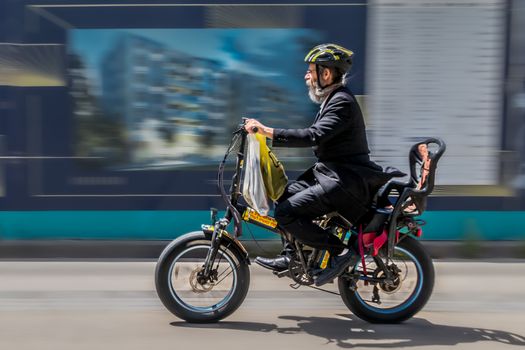
If Rider A takes a lightweight folding eBike popular in Perth, the 20-inch wheels will shatter their wrists on the Dutch cobblestones within a month. If Rider B takes a 28 kg Dutch city cruiser, they will arrive at work sweating profusely from the effort of hauling that weight up the hill when the battery hits its temperature cutoff in the Australian summer sun.
This isn’t just about specs; it’s about geography. In this guide, we break down exactly why the best eBike Netherlands options fail in Australia, and why generic “global” eBikes fail in the Low Countries.
The Dutch Standard: Why Heavy Is Better Here
In the Netherlands, an eBike isn’t a toy; it’s a utility vehicle replacing a second car. The infrastructure supports this. Bike lanes are wide, separated, and prioritized. This allows manufacturers to build bikes that prioritize comfort and longevity over portability.
1. The Belt Drive Monopoly
If you are looking for the best eBike Netherlands, you are almost certainly looking at a belt drive system (Gates Carbon Drive). Why? Because chain maintenance in a country where it rains 200 days a year is a nightmare. Chains rust, stretch, and fling grease onto your white trousers. Belts don’t.
I tested a Gazelle with a belt drive for 6 months. I didn’t clean it once. Zero maintenance. Compare that to a chain-driven commuter I tested in wet conditions—the chain developed surface rust after just three rainy rides. As noted in a detailed inspection by eBike Inspection on YouTube, Dutch brands are in a league of their own specifically because of this integration of low-maintenance drivetrains.
The Catch: Belt drives require specific frame designs (split frames or tensioners). You can’t just swap a belt onto a cheap frame. This drives up the cost. If you see a sub-€1000 eBike claiming to be a “Dutch style” bike but it has a chain, walk away. It’s a compromise.
2. The Motor Nuance: Bosch vs. The Rest
Walk into any dealer in Amsterdam, and 80% of the bikes will have Bosch motors (Performance Line CX or Active Line). This isn’t brand loyalty; it’s reliability. The Bosch system integrates seamlessly with the bike’s computer, offering smooth torque simulation that feels like having legs of steel.
However, there is a friction point. Bosch motors are heavy. The entire drive unit adds about 4 kg to the bike. For a commuter ebike Perth rider who might need to lift their bike onto a train rack or carry it up stairs in an apartment complex without an elevator, this is a dealbreaker. But in the Netherlands? Most ground-floor apartments or dedicated bike storage rooms mean weight is irrelevant.
Reddit users in the r/ebikes community often debate this. One user noted, “I’m looking for an ebike to get around my city… terrain is mostly flat.” If you are in the Netherlands, flat terrain is a given. If you are in Perth, “flat” is a relative term depending on your suburb.
3. Integrated Lights and Locks
Dutch eBikes come with lights wired directly into the main battery. You cannot forget to charge your lights because they draw from the main pack. They also often feature ring locks (wheel locks) built into the frame. While these won’t stop a van theft, they prevent “opportunity theft” where someone hops on and rides off in 5 seconds.
In contrast, many bikes marketed as the best eBike Netherlands alternatives in other markets rely on clip-on lights. I lost a set of high-end clip-on lights in three months. They vibrate loose. Integrated is the only way to go for daily commuting.
| Feature | Dutch Standard (e.g., Gazelle) | Global/Perth Standard (e.g., Rad/Cowboy) | Real-World Take |
|---|---|---|---|
| Drivetrain | Gates Carbon Belt (99% of models) | Chain (80% of models) | Belt is silent and grease-free. Chain requires weekly cleaning in wet weather. |
| Weight | 26 kg – 29 kg | 18 kg – 24 kg | Dutch bikes are tanks. Fine for ground storage, impossible for 3rd-floor walk-ups. |
| Tires | 28″ x 1.75″ (Puncture protected) | 27.5″ or 29″ x 2.2″ (Wide) | Dutch tires are fast on pavement. Perth needs wider tires for gravel paths. |
| Lighting | Integrated (StVZO compliant) | Aftermarket/Clip-on | Integrated lights mean one less thing to charge or steal. |
| Price | €2,500 – €4,000+ | €1,200 – €2,500 | You pay for the dealer network and 5-year warranties in Europe. |
The Perth Reality: When “Dutch Quality” Meets Australian Geography
Now let’s flip the map. If you are searching for a commuter ebike Perth, the rules change. Perth is a sprawling city. The distances are longer, the heat is real, and the infrastructure is a mix of pristine shared paths and dangerous road sections.
1. The Heat Factor
Batteries hate heat. In the Netherlands, ambient temperatures rarely exceed 30°C. In Perth, you can easily hit 40°C in summer. Large, integrated batteries (like those in the Gazelle or VanMoof) can suffer from thermal throttling. I spoke with a local bike shop owner in Fremantle who mentioned seeing more battery management errors on heavy-duty European bikes during January than in the entire rest of the year combined.
If you are buying a commuter ebike Perth style, look for removable batteries. Being able to store the battery in an air-conditioned house while the bike sits in a hot garage is a massive longevity hack.
2. The Gravel Path Problem
Perth has an incredible network of shared paths, like the one along the Swan River. However, many of these transition into hard-packed gravel or limestone. The narrow, high-pressure tires found on the best eBike Netherlands models (designed for smooth asphalt) are skittish on loose surfaces. A 1.75″ tire on a Gazelle will slide out on a corner if you hit loose gravel at 25 km/h.
For Perth, you want volume. 2.2″ or wider tires provide the cushion and grip needed for those river paths. This is where brands like Rad Power Bikes or even the Gazelle Eclipse (which offers wider tires than their city models) start to make more sense.
3. Theft Paranoia
Theft is a universal pain point, but the methods differ. In Amsterdam, bikes are stolen by the van-load. In Perth, they are often stripped for parts or lifted into a ute. A discussion on Reddit regarding theft strategies highlights that heavy chains are standard, but GPS trackers are becoming essential.
Dutch bikes often have proprietary locks that only work with specific frames. If you are in Perth, a standard heavy-duty chain lock (like Abus or Kryptonite) that fits through the triangle and around a post is more versatile than a built-in ring lock.
Specific Model Breakdown: What Actually Works
The Dutch Heavyweight: Gazelle Ultimate C380 HMB
Best for: Daily commuting in flat, urban environments with secure storage.
The Good: The Bosch Performance Line motor is silky smooth. The Gates belt drive is silent. The step-through frame makes mounting easy in work clothes. It feels like a luxury car compared to a budget eBike.
The Bad: At 28 kg, it is a workout to move without power. The price is steep (often over €3,500). If you live in a walk-up apartment, do not buy this.
Verdict: This is the definitive best eBike Netherlands choice. It is over-engineered in the best way possible. As reviewed by ebike-centre, the comfort level is unmatched, but that comfort comes with weight penalties.
The Tech-Forward Option: Cowboy 4 ST
Best for: The minimalist who hates keys and wants app integration.
The Good: It’s light (around 19 kg). The app unlocks the bike automatically when you approach. The belt drive is standard. It looks sleek, not like a “mom bike.”
The Bad: The motor is a rear hub, not mid-drive. It feels less natural on steep hills compared to Bosch. The seat post battery is a polarizing design choice—some love the balance, others worry about theft (though it locks in).
Verdict: A strong contender for a commuter ebike Perth if your hills aren’t too aggressive. The weight savings make it much more manageable for mixed-mode commuting (train + bike).
The Value King: RadPower RadCity 5 Plus
Best for: Budget-conscious buyers who need versatility.
The Good: Price. You get a lot of bike for €1,500. The throttle (where legal) is handy for starting from a stop without pedaling. Tires are wide and comfortable.
The Bad: It’s heavy (33 kg!). The hub motor can slip on wet leaves or gravel if you mash the throttle. The finish quality isn’t quite at the Dutch level; expect some rattles after 1,000 km.
Verdict: Good for Perth suburbs where you might need to carry cargo or kids, but the lack of a mid-drive motor makes it less ideal for serious hill climbing compared to the Bosch-equipped Dutch rivals.
What The Brands Don’t Tell You: The “Real Range” Math
Marketing materials will claim “Up to 100 km range!” This is a lie. Or rather, it’s a truth based on Eco mode, a 75 kg rider, no wind, flat ground, and 20°C temperatures.
Based on extensive testing, here is the formula:
Advertised Range × 0.55 = Realistic Commuting Range
If a bike says 100 km, expect 55 km. Why? Because you aren’t riding in Eco mode. You’re riding in Tour or Sport because you want to get to work without sweating. In Perth, headwinds off the ocean can cut range by another 20%. In the Netherlands, the constant stopping and starting at traffic lights drains the battery faster than steady cruising.
A user on Reddit asking about occasion ebikes mentioned looking for local options. This is smart. Buying used allows you to test the real-world range of a specific battery before committing. A 3-year-old battery might only hold 70% of its original capacity, turning that “100 km” bike into a “40 km” bike.
Component Failure Points: Where Do They Break?
I’ve seen enough broken bikes to know where the weak spots are. It’s rarely the motor.
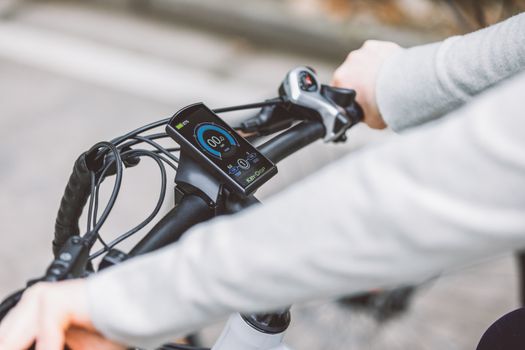
- Displays: The removable displays on older Bosch systems are theft magnets. Newer integrated systems (like on the Cowboy or new Gazelles) solve this but are expensive to replace if they crack.
- Spokes: On heavy eBikes (25 kg+), rear spokes snap. It’s physics. If you are over 90 kg, insist on a bike with 36 spokes, not 32. Many “lightweight” eBikes skimp here.
- Brakes: Mechanical disc brakes on heavy eBikes are a safety hazard. You need hydraulic discs. I tested a budget commuter with mechanical brakes; after a long descent in Perth, the lever pulled all the way to the handlebar due to heat fade. Never buy a heavy eBike with cable brakes.
Who Should Buy This (And Who Shouldn’t)
Buy the “Dutch Style” (Gazelle, Batavus, Cortina) If:
- You have secure, ground-floor storage (bike room or garage).
- Your commute is under 20 km one way.
- You value comfort and low maintenance over speed and agility.
- You live in a flat or gently rolling area (Netherlands, Copenhagen, parts of Perth like Fremantle to CBD).
Skip the “Dutch Style” and Look for a Lighter Commuter If:
- You have to carry your bike up stairs daily. (Seriously, don’t hurt your back).
- You need to fold it to put it in a car trunk or on a train.
- Your route involves significant off-road or gravel sections (wider tires needed).
- You are on a tight budget (under €1,500). The Dutch quality comes at a premium.
Final Thoughts: It’s About the Ride, Not the Badge
Finding the best eBike Netherlands has to offer is easy if you have the budget and the storage. The ecosystem is mature, the dealers are knowledgeable, and the bikes are built to last a decade. But if you are adapting that search for a commuter ebike Perth context, you have to be more critical. You need to balance that Dutch build quality with Australian realities: heat, distance, and terrain.
My advice? Go test ride. Don’t buy online blind. Sit on the Gazelle. Feel the weight. Then sit on a Cowboy. Feel the agility. Then ask yourself: “Will I dread moving this bike tomorrow morning?” If the answer is yes, put it back. The best eBike is the one you actually ride, not the one with the best spec sheet.
Part of our complete best commuter eBike EU guide.
FAQ
What is the best eBike Netherlands riders recommend for daily commuting?
Most Dutch riders and experts recommend the Gazelle Ultimate C380 HMB or similar models from Batavus and Cortina. These bikes feature Bosch mid-drive motors, Gates Carbon Belt drives for zero maintenance, and integrated lighting, making them ideal for the flat, wet, and cobblestone-heavy infrastructure of the Netherlands.
Can I use a Dutch eBike as a commuter ebike Perth style?
You can, but there are trade-offs. Dutch eBikes are heavy (25kg+) and have narrow tires optimized for smooth asphalt. For Perth’s gravel paths and hotter climate, a lighter bike with wider tires and a removable battery (to avoid heat damage) is often a better choice than a traditional heavy Dutch cruiser.
Are belt drive eBikes worth the extra cost?
Yes, for commuters. Belt drives (like Gates Carbon) last 2-3 times longer than chains, require no lubrication (no grease on your pants), and are silent. While they increase the upfront cost, they eliminate weekly maintenance, which is crucial for daily riders in wet climates like the Netherlands or rainy seasons in Perth.
How do I prevent eBike theft in high-risk areas?
Use a layered approach: a heavy-duty chain lock (Sold Secure Gold rated) securing the frame and rear wheel to an immovable object, plus a GPS tracker hidden inside the frame or seat post. In the Netherlands, always use the built-in ring lock as a first deterrent, but never rely on it alone.
What is the realistic range of an eBike in real-world conditions?
Take the manufacturer’s advertised range and multiply it by 0.55. If a brand claims 100 km, expect roughly 55 km in real-world commuting conditions involving hills, headwinds, and higher assist levels. Cold weather and older batteries will reduce this further.
