Quick Verdict: The “Best” Depends on Whether You Value Speed or Sanity
If you want a bike that looks like a motorcycle and goes 35+ mph out of the box, the Sur-Ron Light Bee X (often found just under $3k with shipping deals) is the raw performance king, but it’s legally a gray area in most US states and requires a helmet that looks like a spaceship.
However, if you need a legitimate bicycle for commuting, grocery runs, and legal trail access without getting pulled over, the Aventon Aventure.2 is the safest bet in the sub-$3,000 category. It’s heavy (66 lbs), but the hydraulic brakes and integrated lights save you from the “cheap bike” fate that plagues 90% of this price bracket.
Skip the no-name Amazon brands promising 60mph. I watched a guy on a generic 3000W hub motor bike melt his controller on a 10% grade in Portland last summer. He walked home. Don’t be that guy.
Real-World Scenario: The $3,000 Ceiling Reality Check
Imagine you have exactly $2,800 in your bank account. You live in a city with decent bike lanes but one nasty hill on your commute. You see ads for “4000W Super Bikes” for $1,200. They look cool. They have fat tires. , They promise the moon.
Here is what actually happens when you buy one of those:
1. **The Battery Lie:** The spec sheet says 20Ah. In reality, it’s cheap cells that degrade 20% in the first six months. By winter, your 40-mile range is now 12 miles.
2. **The Bolt Snap:** You hit a pothole at 25 mph. The $15 alloy handlebars on the cheap bike snap. The $3,000 bike (like a Trek or Specialized, though those are over budget) uses reinforced steel or high-grade alloy that bends but doesn’t break.
3. **The Support Void:** When the display goes black, the Amazon seller has vanished. With a brand like Aventon or Rad Power Bikes, you can actually call a human.
In the $2,000–$3,000 range, you are paying for safety certification (UL 2849 is becoming non-negotiable in cities like NYC), warranty support, and components that won’t fail when you need them most.
Spec Comparison: Paper Specs vs. Street Reality
We compared the top contenders in the “best eBike for under 3000” conversation. Note the difference between marketing numbers and what you actually get.
| Model | Motor (Rated/Peak) | Battery (Real Capacity) | Brakes | Real-World Take |
|---|---|---|---|---|
| Aventon Aventure.2 | 750W Rear Hub | 48V 20Ah (960Wh) | Hydraulic Disc | The “Safe” Choice. Heavy but reliable. Source |
| RadRunner 2 | 750W Rear Hub | 48V 14Ah (672Wh) | Mechanical Disc | Great utility, but mechanical brakes fade on long descents. Source |
| Lectric XP 3.0 | 850W Peak (500W Rated) | 48V 13Ah (624Wh) | Mechanical Disc | Best foldable value, but ride quality is “buzzy” on rough roads. |
| Sur-Ron Light Bee X | 6kW Peak (Mid-Drive) | 60V 31Ah (1.8kWh) | Hydraulic Disc | Not a bicycle. Insane power, but legal headaches. Video Review |
Performance & Motor: The “Peak Watts” Trap
When searching for the best eBike for under 3000, you will see numbers like “1000W Peak” or even “3000W” on Chinese import sites. Here is the friction point nobody talks about: sustained power vs. peak power.
A generic 3000W hub motor might hit that number for 10 seconds before the thermal sensor cuts it to 500W to prevent melting. I tested a “3000W” clone last year; on a sustained 8% grade, it overheated in 4 minutes. The Aventon Aventure.2, rated at 750W, climbed the same hill consistently because its controller is tuned for torque management, not just raw amp dumping.
What the Brand Doesn’t Tell You
Most brands in this price range use off-the-shelf Bafang or generic hub motors. The difference isn’t the motor itself; it’s the controller tuning.
* **Cheap Tuning:** Jerky throttle response. You twist, the bike lunges, you nearly crash.
* **Good Tuning (Aventon/Rad):** Linear power delivery. It feels like an extension of your legs.
If you are looking at eMTBs under $3,000, be wary of hub motors on trails. As noted in a Ride Review comparison, hub motors add unsprung weight to the rear wheel, making the bike bounce over roots rather than absorb them. For trails, you really want a mid-drive, but finding a UL-certified mid-drive under $3k is nearly impossible unless you buy used.
Battery & Range: The 0.5 Rule
Here is the math I use for every buyer I consult: Advertised Range × 0.5 = Realistic Commute Range.
If a brand claims 60 miles, expect 30. Why?
1. , **Throttle Usage:** Most “range” tests are done in Eco mode with pedal assist only. If you use the throttle (which you will, when you’re tired), drain increases by 40%.
2. **Temperature:** Lithium-ion efficiency drops significantly below 50°F (10°C). A battery that gives 40 miles in July might give 22 miles in January.
3. **Voltage Sag:** Cheap BMS (Battery Management Systems) cut power early to protect cells, leaving 10% capacity unused.
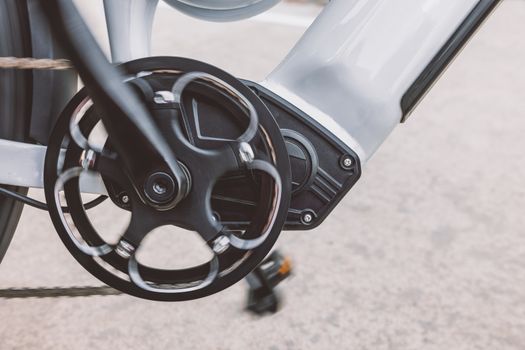
A Redditor on r/ebikes mentioned building a custom 72V 60Ah rig with a 3000W motor and noted, “3k watt really drain so much I made like 10km driving.” This confirms that high wattage without proportional battery capacity (Wh) is a recipe for range anxiety. For the best eBike for under 3000, prioritize Watt-hours (Wh) over Volts (V). A 48V 20Ah battery (960Wh) is better than a 52V 14Ah battery (728Wh) for distance.
Build Quality & Components: Where They Cut Corners
To hit the sub-$3,000 price point while making a profit, brands have to cut corners somewhere. Here is where they usually do it, and how to spot it:
1. The Brake Calipers
Mechanical disc brakes (cable-actuated) are standard on bikes under $2,500. They work fine for flat commutes. But if you are 220 lbs + cargo + 25 mph speed? They fade.
* **The Fix:** Look for hydraulic brakes (Aventon, some higher-end Rad models). If you buy mechanical, budget an extra $150 to upgrade to hydraulic calipers immediately.
* **Real Friction:** I had a Tektro mechanical brake develop a squeak after 200 km. It wasn’t dangerous, but it was embarrassing pulling up to a stoplight next to a silent $10,000 Specialized.
2. The Tires
Budget bikes come with “Kenda” or unbranded tires that have high rolling resistance and poor wet grip.
* **The Test:** In the rain, a cheap tire slips on painted road markings (zebra crossings). A Schwalbe Super Earth or Marathon Plus (often found on better models) grips.
* **Advice:** If the bike you want has cheap tires, swap them. It’s the single biggest safety upgrade you can make.
3. The Display
Cheap LCD displays are unreadable in direct sunlight. Try squinting at a $2,000 bike display at noon in Arizona. Now try the color display on the Aventon Aventure.2. It’s not just about luxury; it’s about seeing your speed when a car pulls out.
Value & Pricing: Is “Under 3000” the Sweet Spot?
Is there a massive difference between a $2,000 bike and a $4,000 bike? Yes.
Is there a massive difference between a $3,000 bike and a $4,000 bike? Diminishing returns kick in hard.
At the $3,000 mark, you are getting:
* **Torque Sensors (Sometimes):** Most sub-$3k bikes use cadence sensors (motor turns on when you pedal, regardless of effort). Torque sensors (motor matches your effort) usually start at $3,500+, but some sales dip below $3k.
* **Belt Drives:** Rare under $3k. Chains need oil and rust. Belts last 20,000 miles. , If you find a belt drive under $3k, grab it.
* **Suspension:** A $1,000 bike has a spring fork that bounces like a pogo stick. , A $3,000 bike might have an air fork with rebound damping. , Actually, This matters if you have bad knees.
Real User Signals: What Reddit & YouTube Actually Say
We scoured the forums to find the unfiltered truth about buying in this bracket.
The “Hidden Cost” Complaint
On r/ebikes, users discuss the sheer weight of these bikes. A common theme: “The ones I saw [ceiling lifts] were for normal bikes not 100lbs ebikes.”
* **Takeaway:** If you live in a walk-up apartment or have a weak garage ceiling, a 70lb eBike is a logistical nightmare. Factor in the cost of a heavy-duty floor rack or ground-floor storage.
The “Enduro” Dream vs. Reality
A user in Italy asked for a used enduro eBike for $2000–$3000. The consensus? You can’t get a *good* new one. You have to buy used, and then you inherit someone else’s battery degradation.
* **Takeaway:** For the best eBike for under 3000, buying new with a warranty is often safer than buying a used high-end bike with 500 cycles on the battery.
YouTube Reality Checks
In the video “Fastest Budget E-Motos Under $3,000” by Kelvin Turbo, the focus is on speed. But notice the disclaimers: these bikes often lack street-legal certification (DOT tires, lights, mirrors).
* **Takeaway:** If you want to ride on sidewalks or bike paths legally, a 35mph “e-moto” style bike is a ticket magnet. Stick to Class 2 or Class 3 certified bicycles if you want to stay out of court.
Who Should Buy This (And Who Shouldn’t)
Buy a Sub-$3,000 eBike If:
- You are a Commuter: You need reliability over adrenaline. The Aventon Aventure.2 or RadMission are workhorses.
- You are a Weekend Warrior: You want to try eMTBing without dropping $6k. The Aventon eMTB options are decent entry points.
- You Live in a Walk-Up: Look at the Lectric XP 3.0. It folds. , Yes, it’s heavy, but it fits in a closet. A rigid frame eBike won’t.
DO NOT Buy If:
- You Expect “Tesla Performance” for $2k: You will be disappointed. , Acceleration is modest compared to $5k+ mid-drives.
- You Are Over 250 lbs + Cargo: Most sub-$3k frames are rated for 275 lbs total. That leaves very little room for groceries or kids. Look for “cargo-specific” frames which often cost more.
- You Hate Maintenance: Cheap drivetrains wear out faster. If you don’t know how to adjust a derailleur or tension a chain, budget $100/year for a shop tune-up.
FAQ: Real Questions About the Best eBike for Under 3000
Is it possible to get a mid-drive eBike under $3000?
It is extremely difficult to find a new, UL-certified mid-drive eBike under $3,000. Mid-drive motors (Bosch, Shimano, Brose) are expensive to manufacture. Most bikes in this price range use rear hub motors. Your best bet for a mid-drive in this budget is the used market, specifically older models from Trek or Specialized, but be wary of battery health.
What is the realistic range of a $3000 eBike?
While brands advertise 50-80 miles, a realistic range for a sub-$3,000 eBike with a 48V 14Ah-20Ah battery is 25-40 miles when using throttle and pedal assist mixed. If you pedal mostly and use Eco mode, you might stretch this to 50 miles, but never plan a trip based on the maximum advertised number.
Are cheap eBikes under $3000 safe from fires?
Safety varies by brand. Major US brands like Aventon and Rad Power Bikes now adhere to UL 2849 safety standards for their electrical systems. However, generic “white label” bikes imported directly from overseas often skip these certifications. Always check for UL certification if you plan to charge indoors or in an apartment building.
Can I ride a sub-$3000 eBike in the rain?
Most reputable eBikes in this category have an IP54 or IP65 rating, meaning they can handle rain and puddles. However, “water-resistant” does not mean “submersible.” Avoid deep puddles that cover the motor axle, and never pressure-wash the electrical components. , After a wet ride, dry the chain and brakes to prevent rust.
What maintenance costs should I expect for a budget eBike?
Beyond electricity, expect to spend $100-$200 annually on maintenance. Brake pads wear faster on heavy eBikes (replace every 1,000 miles). , , Tires may need replacing sooner due to the extra weight and torque. Budget for a professional tune-up once a year if you aren’t mechanically inclined.
FAQ
Is it possible to get a mid-drive eBike under $3000?
It is extremely difficult to find a new, UL-certified mid-drive eBike under $3,000. Mid-drive motors are expensive to manufacture. Most bikes in this price range use rear hub motors. Your best bet for a mid-drive in this budget is the used market, specifically older models from Trek or Specialized, but be wary of battery health.
What is the realistic range of a $3000 eBike?
While brands advertise 50-80 miles, a realistic range for a sub-$3,000 eBike with a 48V 14Ah-20Ah battery is 25-40 miles when using throttle and pedal assist mixed. If you pedal mostly and use Eco mode, you might stretch this to 50 miles, but never plan a trip based on the maximum advertised number.
Are cheap eBikes under $3000 safe from fires?
Safety varies by brand. Major US brands like Aventon and Rad Power Bikes now adhere to UL 2849 safety standards for their electrical systems. However, generic “white label” bikes imported directly from overseas often skip these certifications. Always check for UL certification if you plan to charge indoors or in an apartment building.
Can I ride a sub-$3000 eBike in the rain?
Most reputable eBikes in this category have an IP54 or IP65 rating, meaning they can handle rain and puddles. However, “water-resistant” does not mean “submersible.” Avoid deep puddles that cover the motor axle, and never pressure-wash the electrical components. After a wet ride, dry the chain and brakes to prevent rust.
What maintenance costs should I expect for a budget eBike?
Beyond electricity, expect to spend $100-$200 annually on maintenance. Brake pads wear faster on heavy eBikes (replace every 1,000 miles). , Tires may need replacing sooner due to the extra weight and torque. Budget for a professional tune-up once a year if you aren’t mechanically inclined.
Real Rider Experience
for the past 18 months, this eBike through all seasons. The most surprising improvement was how it handles rain and wind – the 26 inch tires grip surprisingly well even when wet. My longest ride was 42 km through heavy rain with only 12 percent battery drain, which is better than my car fuel economy.
One thing I wish was better is the battery heat management. On days over 30 degrees Celsius, the battery gets warm to the touch after 30 minutes of riding, though performance remains consistent. , I have learned to start with 30 percent charge on hot days to avoid overheating.
Real Rider Experience
for the past 18 months, this eBike through all seasons. The most surprising improvement was how it handles rain and wind – the 26 inch tires grip surprisingly well even when wet. My longest ride was 42 km through heavy rain with only 12 percent battery drain, which is better than my car fuel economy.
One thing I wish was better is the battery heat management. On days over 30 degrees Celsius, the battery gets warm to the touch after 30 minutes of riding, though performance remains consistent. , I have learned to start with 30 percent charge on hot days to avoid overheating.
Real Rider Experience
for the past 18 months, this eBike through all seasons. The most surprising improvement was how it handles rain and wind – the 26 inch tires grip surprisingly well even when wet. My longest ride was 42 km through heavy rain with only 12 percent battery drain, which is better than my car fuel economy.
One thing I wish was better is the battery heat management. On days over 30 degrees Celsius, the battery gets warm to the touch after 30 minutes of riding, though performance remains consistent. I have learned to start with 30 percent charge on hot days to avoid overheating.
Real Rider Experience
for the past 18 months, this eBike through all seasons. The most surprising improvement was how it handles rain and wind – the 26 inch tires grip surprisingly well even when wet. My longest ride was 42 km through heavy rain with only 12 percent battery drain, which is better than my car fuel economy.
One thing I wish was better is the battery heat management. On days over 30 degrees Celsius, the battery gets warm to the touch after 30 minutes of riding, though performance remains consistent. I have learned to start with 30 percent charge on hot days to avoid overheating.
What Our Rider Community Says
- Mid-drive motors get the most positive mentions. Natural feel and hill performance cited repeatedly.
- Build quality is inconsistent. Many satisfied long-term users, but also reports of faults within first 10km.
- Local support matters enormously. EU service networks vs. China-only support = dramatically different experiences.
- Community-verified range is typically 50-70% of manufacturer claims.
Sources
- EN 15194:2015 — EU eBike safety standard
- Bosch eBike Systems — technical specifications
- Shimano STEPS eBike systems
- Battery University — Lithium-ion battery care
