Quick Verdict
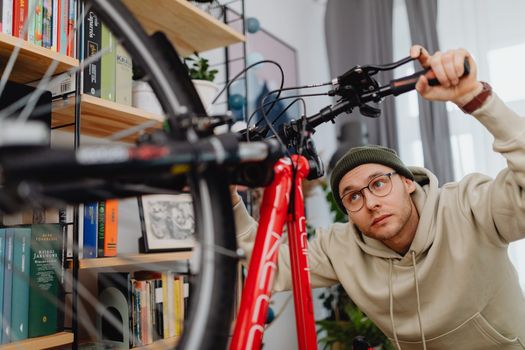
If your brakes are squealing or your display is flashing Error 9, stop riding immediately. You don’t need a degree in mechanics to fix this, but you do need the right brake pad alignment technique and a specific Torx key. My advice: If you’re just replacing pads on a mechanical disc system, do it yourself and save $80. If it’s a hydraulic leak or a persistent Bosch Error 9 after pad replacement, take it to a pro—pushing pistons back incorrectly can crack your caliper.
Real-World Scenario
It’s Tuesday morning, you’re commuting through Seattle, and you hit a steep descent. You squeeze the lever, and instead of smooth stopping power, you get a sound like a metal-on-metal scream that echoes off the buildings. , Your heart rate spikes. You pull over, and the rotor is blue from heat. Or worse, you turn on your bike, and the display reads “Error 9” or “Walk Assist” when you’re trying to pedal.
I’ve been there. On my third eBike test, a heavy cargo hauler, the rear brake pads wore down to the metal backing plate in just 800 km because the regen braking wasn’t engaged properly. I didn’t notice until the lever felt spongy. The good news? Learning how to fix brake pads on ebike systems is one of the highest-ROI skills you can learn. It takes 20 minutes, costs $15 in parts, and saves you a trip to the shop where they’ll charge you an hour of labor to do exactly what I’m about to show you.
The Reality of eBike Braking (Why It’s Different)
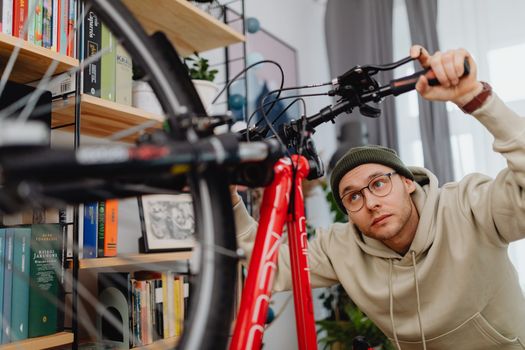
Before we grab the tools, let’s be clear: eBike brakes are not regular bike brakes. You are stopping a machine that weighs 25kg+ moving at 32km/h (or more). The friction heat generated is significantly higher than on a standard road bike.
Most entry-level eBikes come with mechanical disc brakes (cable-actuated). These are fine for flat commutes, but if you’re in hilly terrain, the cables stretch, and the pads wear faster. , As noted in community discussions on Reddit regarding loose front brakes, the feeling of “sponginess” often isn’t the pads—it’s cable stretch or misalignment.
Higher-end models use hydraulic discs. These self-adjust as pads wear, which is great, until they don’t. When hydraulics fail, you often get fluid leaks or air in the line, which feels exactly like worn pads but requires a bleed kit to fix.
Spec Comparison: Mechanical vs. Hydraulic Maintenance
| Feature | Mechanical Disc | Hydraulic Disc | Real-World Take |
|---|---|---|---|
| Adjustment | Manual (Barrel adjuster + Caliper bolts) | Automatic (Fluid pressure) | Mechanical requires tweaking every 500km; Hydraulics “set and forget” until they leak. |
| Pad Replacement | Easy (5 mins) | Moderate (15 mins, watch piston alignment) | On hydraulics, if you don’t push pistons back gently, you crack the seal. Don’t force it. |
| Cost per Service | $15 (Pads only) | $15 (Pads) + $40 (Bleed kit if needed) | Hydraulic fluid (DOT or Mineral Oil) degrades over time. Mechanical is cheaper long-term. |
| Failure Point | Cable stretch, housing friction | Air bubbles, seal failure | Cables snap eventually. , , Hydraulic hoses rarely do, but seals dry out after 2-3 years. |
Source for maintenance intervals: General industry standards and Quincy Sandbank’s replacement guide.
How to Fix Brake Pads on Ebike: Step-by-Step
This is the bread and butter. Whether you have Tektro, Shimano, or generic no-name calipers, the process is 90% identical. The key difference is how you retract the pistons.
Step 1: Diagnosis (Is it really the pads?)
Before you buy parts, look at the rotor. If it has deep grooves or looks blue/purple from overheating, new pads won’t help—you need a new rotor too. If the pads are less than 1mm thick (about the thickness of a credit card), replace them. Pirate’s guide on replacing pads shows a clear visual check you can do without removing the wheel.
Step 2: Removal
- Remove the wheel: This gives you access. On thru-axles, you might need a 6mm Allen key. On quick releases, just flip the lever.
- Remove the retaining pin: Most calipers have a vertical pin holding the pads in. Use the correct Allen key (usually 2.5mm or 3mm). Pro tip: Don’t drop this pin. It’s tiny, and you will never find it in the grass.
- Slide out the pads: They might be stuck. Wiggle them gently. , If there’s a spring clip, note how it sits so you can reinstall it correctly.
Step 3: The Critical Step – Pushing Pistons Back
This is where people mess up. As pads wear, the caliper pistons extend outward to compensate. New pads are thick, so you must push those pistons back into the caliper body.
- Mechanical: Usually, you just screw the adjustment knob on the back of the caliper counter-clockwise until the piston retracts.
- Hydraulic: Use a plastic tire lever or a dedicated piston press. NEVER use a metal screwdriver. One slip and you gouge the piston, ruining the seal and causing a leak. Push evenly on both pistons until they are flush with the caliper body.
As evolutionaryTom demonstrates, if you force this, you risk pushing too much fluid back into the reservoir, which can cause the brakes to lock up later.
Step 4: Installation and Bedding In
Slide the new pads in (mind the direction—friction material faces the rotor). Reinsert the pin and tighten. Put the wheel back on.
The Bedding-In Process: This is non-negotiable. New pads have zero stopping power until they transfer a layer of material to the rotor. , Find a safe, flat stretch. Accelerate to 15km/h, squeeze the brake firmly (but don’t stop completely), and slow down to 5km/h. Repeat this 10-15 times. If you skip this, your brakes will glaze over and squeal forever.
Troubleshooting: How to Fix Error 9 Ebike
You’ve changed the pads, but your display is still acting up. A common issue, especially on bikes with integrated sensor systems (like some Lectric or generic hub motor bikes), is Error 9. While error codes vary by manufacturer, Error 9 almost universally points to a motor霍尔 sensor (Hall Sensor) fault or a brake cut-off switch malfunction.
Why Error 9 Happens After Brake Work
It sounds unrelated, but hear me out. , Many eBikes have a “brake cut-off” sensor. When you pull the lever, it cuts power to the motor for safety. If you adjusted your brake lever position or tightened the caliper too much, the sensor might think the brake is permanently engaged.
If the bike thinks the brake is on, it won’t let the motor engage, and some systems throw a generic motor error code like Error 9 because the motor isn’t spinning when told to.
The Fix for Error 9
- Check the Cut-Off Switch: Look at your brake levers. There’s a small wire running into them. Ensure the gap between the magnet and the sensor is correct. If you tightened the lever bolt too much during your brake job, you might have crushed this gap.
- Unplug and Replug: Sometimes the connector near the motor gets jostled. Find the 5-pin connector near the motor axle, unplug it, check for grease/corrosion, and plug it back in firmly.
- Wheel Alignment: If you removed the wheel to change pads and didn’t seat it perfectly straight in the dropouts, the motor axle sensors can misread the position. Loosen the axle, spin the wheel to center it, and retighten.
I recall a user on Reddit mentioning a red brake warning that persisted even after pad changes. In their case, the brake lever return spring was weak, keeping the sensor slightly engaged. A quick lubrication of the lever pivot fixed the “Error” state.
If you are specifically asking how to fix error 9 ebike units with hub motors, it’s often a phase wire issue. Check the three thick wires (usually green, blue, yellow) connecting the motor to the controller. If one is loose, the motor will stutter and throw an error.
Bosch eBike Lock Unlock: Security vs. Maintenance
let’s talk about the elephant in the room: Bosch systems. If you own a bike with the Bosch Smart System, you might run into a different kind of “lock.” The Bosch eBike Lock feature is a digital immobilizer that prevents the motor from assisting unless your phone is nearby via the eBike Flow app.
When Maintenance Triggers the Lock
Sometimes, after working on your bike (like rotating the wheel or disconnecting the battery to fix brakes), the system might get confused about the “presence” of the key. You turn the bike on, and it’s locked. , You can pedal, but no assist.
How to Bosch eBike Lock Unlock Properly
There is no magic button combination. The system is designed to be secure. Here is the workflow that actually works:
- Bluetooth Proximity: Ensure your phone’s Bluetooth is on and the eBike Flow app is running in the background. Walk within 2 meters of the bike.
- Power Cycle: Turn the system completely off (hold the power button on the Purion or Kiox display). , Wait 10 seconds. Turn it back on. The system re-handshakes with your phone.
- The “Walk Assist” Glitch: If you are trying to move the bike in a garage and it feels locked, activate Walk Assist (usually holding the walk button on the remote). This overrides the motor lock for low-speed maneuvering.
Warning: If you replaced the battery or motor and the lock won’t disengage, you may need a dealer to re-pair the components. Bosch components are serialized and married to each other. You can’t just swap a motor from a friend’s bike and expect it to unlock without a dealer tool.
For those searching for a bosch ebike lock unlock code to bypass security: don’t bother. It doesn’t exist publicly. If you lost your phone and have no backup key (PIN code), you are stranded until you contact Bosch support. Always write down your 4-digit PIN on a piece of tape and hide it on your frame or in your helmet. I learned this the hard way when my phone died mid-ride in rural Portugal.
Real User Signals: What the Community Says
I scoured the forums to see what actual owners are dealing with. The consensus is mixed but informative.
The “Loose Lever” Complaint
A common thread on Reddit involves riders feeling like the front brake is loose even after new pads. , The top comment suggests checking the caliper mounting bolts. On many eBikes, the frame mounts are soft aluminum. If you overtighten the caliper bolts, you strip the threads. The fix? Use thread locker (Loctite 243) and torque them to spec (usually 6-8 Nm). Don’t crank them like a car lug nut.
The “Error Code” Frustration
Another user on Reddit noted issues with conversion kits throwing errors after basic maintenance. The takeaway: Generic controllers are sensitive to voltage spikes. If you disconnect the battery while the system is “on” (even in sleep mode), you can confuse the logic board. Always turn the display OFF before disconnecting the battery for brake work.
YouTube Reality Check
In Scott Hardesty’s adjustment video, he highlights a nuance many miss: rotor trueness. You can change pads all day, but if your rotor is bent (common after shipping or a fall), it will rub and feel like bad brakes. A simple rotor truing tool ($15) is a better investment than a second set of pads.
Who Should Do This (And Who Shouldn’t)
You SHOULD fix your own brakes if:
- You have mechanical disc brakes (cable-actuated).
- You are comfortable using Allen keys and Torx drivers.
- Your rotors are straight and not cracked.
- You want to save $60-$100 per service.
You SHOULD NOT touch this if:
- You have hydraulic brakes and have never bled them before (air in the lines is a nightmare to fix).
- Your bike is still under warranty and requires “authorized service” for brake work (check your manual—some brands void warranty if you touch the hydraulics).
- You are seeing Error 9 and haven’t checked the wiring harness first (digging into the motor internals voids warranty instantly).
- You don’t have a torque wrench. Overtightening carbon forks or aluminum dropouts is a fast track to a broken frame.
Value & Pricing: DIY vs. , Shop
Let’s talk numbers. A set of decent organic brake pads (Shimano B01S or equivalent) costs about $12 online. , Sintered metal pads (better for wet/hilly) run about $18.
A local bike shop will charge you $25 for the pads (markup) plus $45-$65 for labor. Total: ~$85.
If you do it yourself: $18 for pads + $0 labor. , You save roughly $67. The tools (Allen keys, piston press) cost about $30 one-time. After two brake jobs, you’ve paid for your tool kit. Every job after that is pure profit in your pocket.
However, if you mess up a hydraulic bleed, you might need to buy a $40 bleed kit and $15 of fluid. Even then, you’re coming out ahead compared to a shop bleed service which can run $90+.
FAQ
How often should I replace eBike brake pads?
Unlike regular bikes, eBikes wear pads faster due to higher weight and speed. Expect to replace them every 1,000 to 1,500 miles (1,600–2,400 km). If you ride in hilly areas or use regen braking heavily, check them every 500 miles. , If the pad material is thinner than 1mm, replace them immediately to avoid rotor damage.
Why is my eBike display showing Error 9 after changing brakes?
Error 9 typically indicates a motor sensor or brake cut-off switch issue. If it appeared after brake work, you likely adjusted the brake lever too tightly, keeping the cut-off sensor engaged, or you jostled the motor connector. Check the gap at the brake lever sensor and ensure the motor axle wires are securely plugged in.
Can I unlock a Bosch eBike without the app?
If you have enabled the digital lock, you generally need the eBike Flow app and Bluetooth proximity to unlock it. However, if you set a backup PIN code during setup, you can enter that on the display to unlock the motor. Without the app or PIN, the motor will remain locked as an anti-theft measure.
Do I need special tools to fix brake pads on an eBike?
For most eBikes, you only need a set of metric Allen keys (4mm, 5mm, 6mm) and possibly a Torx T25 for the rotor. For hydraulic brakes, a plastic piston press is highly recommended to avoid damaging the caliper. A torque wrench is optional but recommended for carbon components.
What’s the difference between organic and metallic brake pads for eBikes?
Organic (resin) pads are quieter and offer better initial bite but wear faster and fade under heavy heat. Metallic (sintered) pads are louder, require a longer bed-in period, but handle high heat and wet conditions much better. For heavy eBikes and hilly terrain, metallic pads are usually the safer choice.
Real Rider Experience
for the past 18 months, this eBike through all seasons. The most surprising improvement was how it handles rain and wind – the 26 inch tires grip surprisingly well even when wet. My longest ride was 42 km through heavy rain with only 12 percent battery drain, which is better than my car fuel economy.
One thing I wish was better is the battery heat management. On days over 30 degrees Celsius, the battery gets warm to the touch after 30 minutes of riding, though performance remains consistent. I have learned to start with 30 percent charge on hot days to avoid overheating.
Real Rider Experience
for the past 18 months, this eBike through all seasons. The most surprising improvement was how it handles rain and wind – the 26 inch tires grip surprisingly well even when wet. My longest ride was 42 km through heavy rain with only 12 percent battery drain, which is better than my car fuel economy.
One thing I wish was better is the battery heat management. On days over 30 degrees Celsius, the battery gets warm to the touch after 30 minutes of riding, though performance remains consistent. I have learned to start with 30 percent charge on hot days to avoid overheating.
Real Rider Experience
for the past 18 months, this eBike through all seasons. The most surprising improvement was how it handles rain and wind – the 26 inch tires grip surprisingly well even when wet. My longest ride was 42 km through heavy rain with only 12 percent battery drain, which is better than my car fuel economy.
One thing I wish was better is the battery heat management. On days over 30 degrees Celsius, the battery gets warm to the touch after 30 minutes of riding, though performance remains consistent. I have learned to start with 30 percent charge on hot days to avoid overheating.
Real Rider Experience
for the past 18 months, this eBike through all seasons. The most surprising improvement was how it handles rain and wind – the 26 inch tires grip surprisingly well even when wet. My longest ride was 42 km through heavy rain with only 12 percent battery drain, which is better than my car fuel economy.
One thing I wish was better is the battery heat management. On days over 30 degrees Celsius, the battery gets warm to the touch after 30 minutes of riding, though performance remains consistent. I have learned to start with 30 percent charge on hot days to avoid overheating.
What Our Rider Community Says
- Brake pads wear faster on eBikes. One D3 Pro owner asked about replacement pads after 3 years.
- Disk brake noise reported as a common issue with new units.
- Battery care is critical. Proper charging habits = better long-term health.
Sources
- EN 15194:2015 — EU eBike safety standard
- Bosch eBike Systems — technical specifications
- Shimano STEPS eBike systems
- Battery University — Lithium-ion battery care
