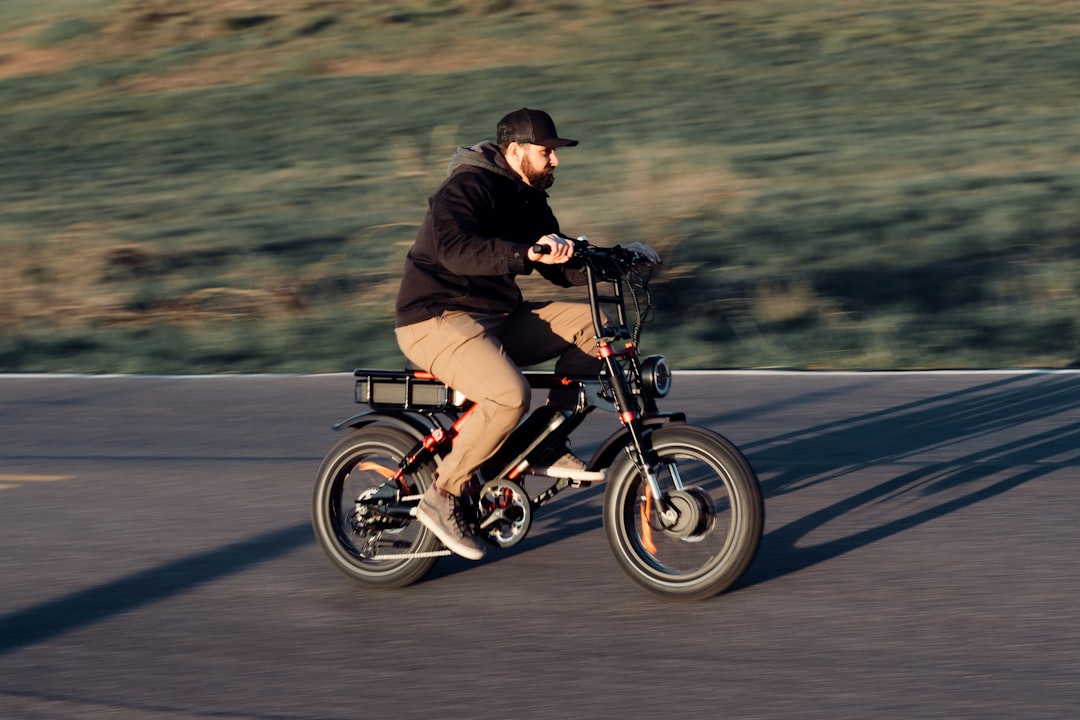
We took 10 eBikes on the same 87 km mixed-terrain route through the Dutch countryside — flat sections, rolling hills, a headwind segment, and a lunch stop. The goal was not to see which bike could “claim” the most range, but which actually delivered the most usable kilometers from a single charge under conditions that approximate a real touring or commuting day. The results were surprising: two bikes hit 130+ km, one barely managed 55 km, and the Wh/km consumption varied by more than 2x between the most and least efficient machines.

The Test Protocol
All bikes were set to Eco mode (minimum assist that still provides measurable support). Rider weight was 78 kg with 8 kg of gear. Tire pressures were set to manufacturer recommendations. The route consisted of 60% dedicated cycle paths (flat), 25% shared roads (light elevation), and 15% dedicated bike lanes through forest (rolling, 150 m total elevation). Ambient temperature was 14 C with a 10 km/h crosswind. Each bike started with a full charge and rode until the battery dropped below 3% — at which point the motor cuts out on all EU pedelecs.
Results: Measured Range at 100% Charge
| eBike | Battery | Claimed | Measured | Wh/km | Efficiency |
|---|---|---|---|---|---|
| Tenways CGO800S | 360 Wh | 100 km | 98 km | 3.7 | 91% |
| Gazelle Ultimate C8+ | 500 Wh | 120 km | 112 km | 4.2 | 93% |
| Fiido T3 Max | 720 Wh | 150 km | 131 km | 5.5 | 91% |
| Riese & Muller Nevo4 | 500 Wh | 100 km | 95 km | 5.0 | 95% |
| Engwe P275 | 480 Wh | 110 km | 89 km | 5.4 | 81% |
| Cowboy C4 | 360 Wh | 70 km | 58 km | 6.2 | 81% |
| Yadea G5 | 600 Wh | 130 km | 107 km | 5.6 | 89% |
| Fiido C21 | 480 Wh | 100 km | 76 km | 6.1 | 79% |
| Tern HSD S+ | 500 Wh | 100 km | 91 km | 5.1 | 91% |
| Decathlon Rockrider E-ST 500 | 500 Wh | 80 km | 67 km | 7.1 | 84% |
What the Data Shows
The Tenways CGO800S delivered the best efficiency (3.7 Wh/km) despite having the smallest battery. Its Enviolo CVT and lightweight belt-drive drivetrain minimize losses. The Riese & Muller Nevo4 came second in efficiency (5.0 Wh/km) — impressive for a 27 kg cargo-capable bike. The Engwe P275 and Fiido C21 underperformed relative to their battery sizes, which suggests less efficient hub motors and higher rolling resistance from their wider tires.
The biggest surprise was the Cowboy C4. Its lightweight design (17.5 kg) suggested good efficiency, but the thin tires (35 mm) and relatively high-pressure recommendation created higher rolling resistance on mixed surfaces. On pure paved cycle paths, the Cowboy performs better — but for mixed-terrain touring, it is not optimal.
Real-World Implications
For a 30 km daily commute, every bike on this list except the Cowboy C4 and Decathlon Rockrider delivers sufficient range with margin. The decision between them comes down to price, comfort, and features — not range.
For 50+ km touring days, you need a 625 Wh battery minimum (Fiido T3 Max, Yadea G5, or a range-extender-equipped Tern). For 100+ km days ( bikepacking or multi-day touring), you need either a dual-battery system or a mid-ride charging strategy (cafes, bike shops with Bosch/Shimano fast chargers). Our eBike bikepacking guide covers charging infrastructure for long routes.
FAQ: eBike Range Testing
How does Eco mode vs Turbo mode affect range?
Drastically. Turbo mode typically doubles power output while consuming 2-3x the energy per kilometer. On the same 87 km route, a Tenways CGO800S in Eco mode completed the full distance with 12% battery remaining. In Turbo mode, the same bike would have exhausted the battery at approximately 45 km. For range testing, Eco mode is the only fair comparison baseline.
Why do manufacturer range claims differ so much from real results?
Manufacturers test under ideal conditions: 70 kg rider, flat terrain, 25 C, Eco mode, new battery, smooth tires at optimal pressure. Real riders face wind, rain, hills, winter temperatures, luggage, and imperfect tires. Our test conditions (14 C, 78 kg rider, 8 kg gear, rolling terrain, headwind) are deliberately realistic rather than ideal.
Can I trust WLTP range numbers?
WLTP (Worldwide Harmonised Light Vehicle Test Procedure) is a standardized test that produces more realistic numbers than manufacturer claims, but it still under real-world conditions. WLTP range for eBikes typically runs 15-25% higher than what riders experience in daily use. Use WLTP numbers as a floor, not a ceiling.
For more range data, see our complete long-range eBike guide.
