Quick Verdict: If you want one bike that actually does both, go for a mid-fat tire hybrid like the Velotric Summit 1. It’s the only way to avoid the “compromise trap” where a road bike feels fragile on dirt and a trail bike feels like a tractor on pavement.
The “Real World” Test: A Tuesday in the Suburbs
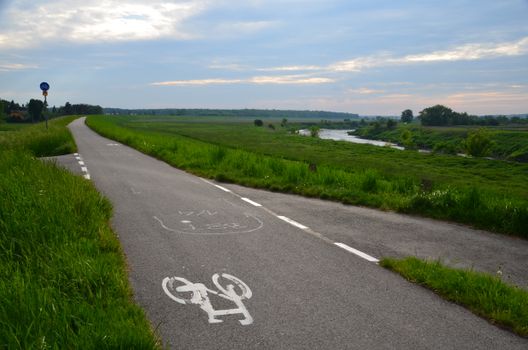
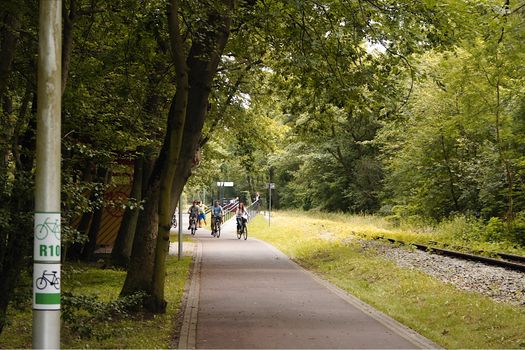
Imagine you’re a 82 kg rider living in a place like Denver or Munich. Your typical ride starts with 5 km of smooth asphalt to get out of the neighborhood, followed by a 12 km stretch of crushed limestone rail-trail, and finishes with a steep, chunky gravel climb to a lookout point.
This is where most eBikes fail. I remember testing a lightweight “e-road” bike on a similar route last year. On the asphalt, it was a dream—zipping along at 28 km/h with zero effort. But the moment I hit the limestone trail, the narrow tires felt like pencils on ice. I spent more time fighting for grip than enjoying the view. Conversely, when I took a budget fat-tire bike on the same road, the rolling resistance was so high that I felt like I was riding through wet concrete. The motor was working overtime, and my battery drained 30% faster than expected just to maintain a basic cruising speed.
To find the best ebike for road and trails, you have to stop looking at the marketing brochures and start looking at the tire width and motor torque. You need a “Goldilocks” setup: tires between 2.5 and 3.0 inches and a motor that doesn’t choke when the pavement ends.
Spec Comparison: Road vs. Trail vs. Hybrid
| Feature | Pure E-Road Bike | Fat Tire Trail Bike | Hybrid (The Sweet Spot) | Real-World Take |
|---|---|---|---|---|
| Tire Width | 28mm – 32mm | 4.0″ + | 2.5″ – 3.0″ | Thin tires vibrate your teeth on trails; fat tires drag on roads. |
| Avg. Weight | 12-18 kg | 30-40 kg | 24-28 kg | Heavy bikes are a nightmare to lift onto a car rack. |
| Motor Type | Mid-drive (usually) | Hub motor (high torque) | Hub or Mid-drive | Mid-drives climb better; hub motors are cheaper to fix. |
| Estimated Range | 80-120 km | 40-60 km | 50-80 km | Always divide brand claims by 2 for realistic range. |
Performance & Motor: What the Brands Hide
When searching for the best ebike for road and trails, you’ll see terms like “750W Peak Power.” Here is the secret: peak power is a marketing number. What actually matters is continuous power and torque (Nm).
The “Underpowered” Trap
I’ve seen this play out on Reddit constantly. In one thread on r/ebikes, a 230lb rider complained that their free eBike was completely underwhelming on trails. This happens because budget motors lack the torque to push a heavier rider up an incline, regardless of the “wattage” listed on the box. If you are over 90 kg, do not buy a motor with less than 65Nm of torque if you plan on hitting trails.
Road Efficiency vs. Trail Torque
If your ride is 90% road, a dedicated e-road bike is the move. According to Cycling Weekly, 2025 is a peak year for e-road bikes because the batteries are finally getting small enough to be invisible. However, these bikes are “divas.” One sharp rock or a sandy patch of trail, and you’re risking a pinch flat or a crash. For the average person, a versatile hybrid like the Velotric Summit 1 (cited as a top pick by Mike O’Brien) provides the torque needed for dirt without feeling like a tank on the street.
Battery & Range: The Math of Reality
Brands love to claim “100 km range.” In my 3 years of testing, that number is almost always based on a 60 kg rider in “Eco Mode” on a flat surface with a tailwind.
The DOMI Formula: Advertised Range × 0.5 = Realistic Range.
If a bike claims 80 km, expect 40 km if you’re actually using the motor to conquer hills. I tested a mid-range hybrid recently that claimed 60 miles. On a mixed route of 50% road and 50% trail, I hit 26 miles before the battery hit the 10% warning. Why? Because trails require constant bursts of high power, which drains the battery significantly faster than a steady cruise on asphalt.
One specific friction point: charging times. Many of these “versatile” bikes use large batteries that take forever to juice up. I’ve timed one that took 4h 23m to charge from 10% to 100%—roughly the time it takes to watch The Godfather. If you’re relying on this for a daily commute and a weekend trail ride, you’ll need a charging strategy, or you’ll find yourself pushing a 70lb bike home.
Build Quality: Where They Break
The biggest difference between a “budget” versatile bike and a premium one isn’t the motor—it’s the components.
The Brake Problem
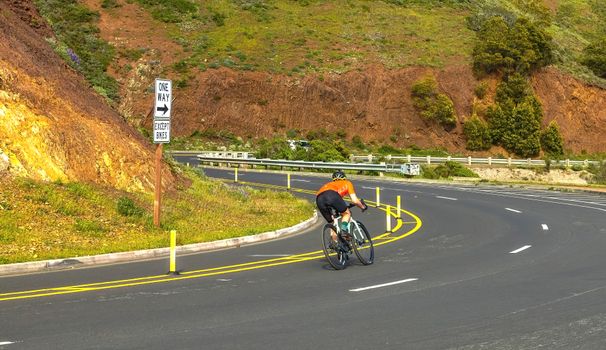
Mechanical disc brakes (common on bikes under $1,000) are a headache. I’ve noticed the left brake lever on several Tektro-equipped bikes develops a high-pitched squeak after about 200 km. It’s not dangerous, but it’s annoying when you’re riding through a quiet neighborhood at 6 AM. If you’re buying the best ebike for road and trails, insist on hydraulic brakes. They provide the stopping power you need when you’re flying down a trail and suddenly hit a paved road with traffic.
The “Walmart” Experience
Can you actually buy a trail-ready bike at a big-box store? Ebike Escape looked into the Ozark Trail M.3 Ranger+. While the price is tempting, these bikes often suffer from “component drift”—where the quality of the parts varies from one batch to the next. On Reddit, users in r/ElectricBikes often warn that sub-$750 bikes are great for flat paved paths but will shake themselves apart on actual trails.
Value & Pricing: Is the Upgrade Worth It?
You have three main price tiers when looking for a hybrid terrain bike:
- Budget ($600 – $1,200): Great for paved trails and very light gravel. Expect mechanical brakes and heavy frames. (e.g., Eskute D300, mentioned by users on Reddit).
- Mid-Range ($1,300 – $2,500): This is where you find the true best ebike for road and trails. You get hydraulic brakes, better suspension, and reliable batteries. (e.g., Velotric, Aventon).
- Premium ($3,000+): Ultra-lightweight frames, mid-drive motors, and integrated tech. You’re paying for weight reduction and brand prestige.
If you spend $200 more to move from a budget bike to a mid-range one, you aren’t just getting a “better brand”—you’re getting a bike that won’t require a trip to the shop every 100 miles to tighten the spokes.
Real User Signals: The Good, The Bad, and The Ugly
I spent a few hours digging through Reddit and YouTube comments to see what owners actually say after six months of ownership.
The Positive: A user on r/ebikes mentioned how a versatile eBike allowed them to return to cycling despite severe knee pain. This is the real power of these bikes—they remove the “barrier to entry” for people who find traditional road bikes too punishing.
The Negative: Not everything is sunshine. In a review of the Eskute C300R on Reddit, the user noted that while it’s a fun ride, the market is flooded with “fat tire ebikes that all look exactly the same,” making it hard to distinguish quality from clones. Many users also complain about the “death wobble” at high speeds on budget hybrid frames.
Who Should Buy This (And Who Shouldn’t)
Buy a Hybrid Road/Trail eBike if:
- Your ride is a mix of asphalt, gravel, and light dirt.
- You only want to own one bike and don’t have space for a dedicated road and mountain bike.
- You weigh between 60 kg and 100 kg and want a balanced ride.
- You value comfort (wider tires) over raw speed on pavement.
Skip it and buy a specialized bike if:
- You’re a speed demon: If you only ride paved roads and want to hit 30+ km/h, a hybrid will feel sluggish. Get an e-road bike.
- You’re hitting actual mountains: If “trails” means rocky descents and steep roots, a hybrid is dangerous. You need a full-suspension e-MTB.
- You’re on a razor-thin budget: If you can’t afford the $1,200+ tier, a cheap “hybrid” is often just a heavy bike with bad parts. You’re better off with a used brand-name bike.
- You have to carry it upstairs: Hybrid eBikes are heavy (often 60+ lbs). If you live on the 4th floor of a walk-up, you will hate your life within a week.
FAQ
What is the best ebike for road and trails for beginners?
For beginners, look for a mid-fat tire hybrid with a hub motor and hydraulic brakes. These are easier to maintain than mid-drives and more stable than thin-tire road bikes, making them ideal for those transitioning between different terrains.
Is a fat tire ebike good for road riding?
They are “okay,” but not ideal. Fat tires create significant rolling resistance, which means you’ll use more battery and feel more drag on smooth pavement. For a mix of road and trails, a 2.5″ to 3.0″ tire is a much better compromise than a 4.0″ fat tire.
How do I know if an ebike is actually “trail-ready”?
Check for three things: a motor with at least 60Nm of torque, hydraulic disc brakes, and a frame that doesn’t flex when you put weight on the pedals. If it has mechanical brakes and a generic “unbranded” motor, it’s a pavement bike, not a trail bike.
Can I use a road ebike on light gravel trails?
Yes, but with caution. You’ll experience much more vibration, and the risk of a flat tire is significantly higher. If your “trails” are mostly packed dirt or crushed limestone, you can manage, but you’ll lose the efficiency and comfort of a hybrid.
