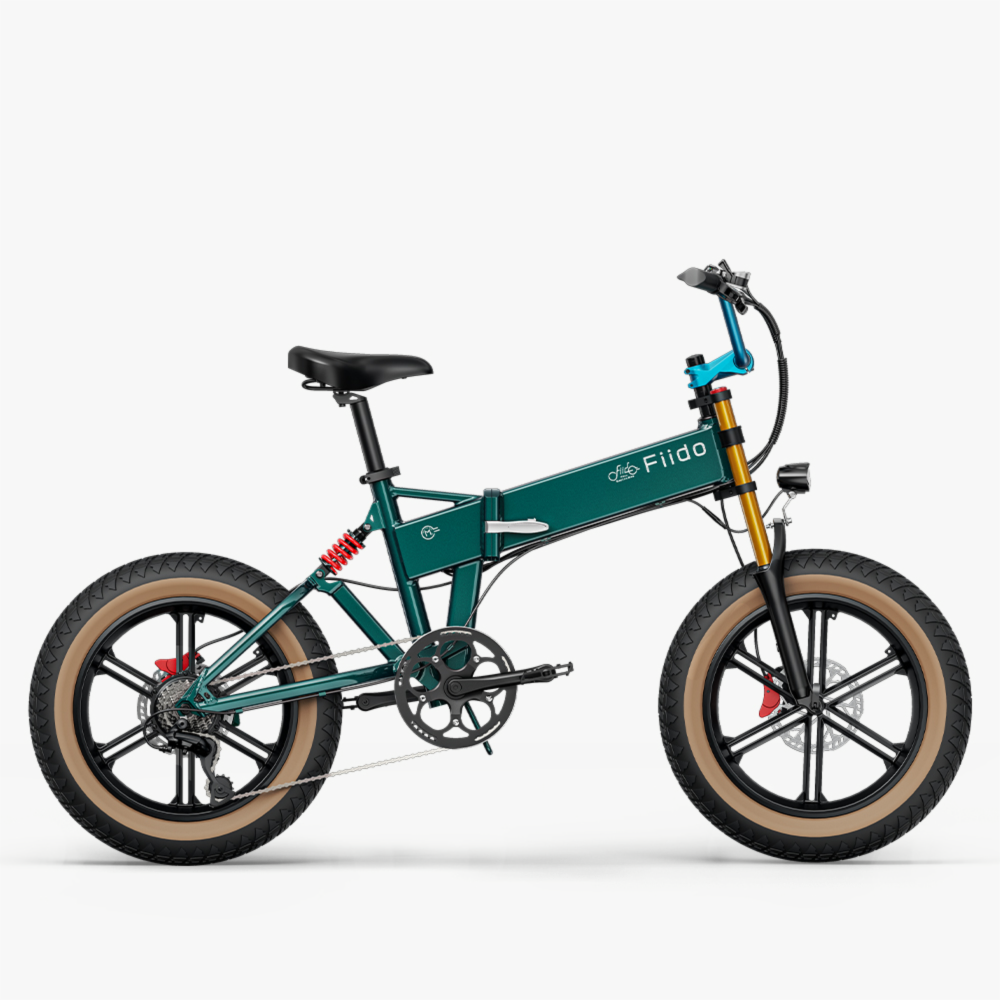
I paid €1,298 for the Fiido M1 Pro. Four months later, I sold it for €600 and bought an Engwe M20.
Here’s everything that went wrong — and one thing that actually surprised me.
The First Week: Everything Is Great
Unboxing the M1 Pro, I was honestly impressed. The matte black frame looks premium — no cheap plastic fenders, no ugly battery casing hanging off the downtube. The 500W motor is quiet. The 12.5Ah battery slots into the frame cleanly. At €1,199 listed, it felt like a proper step up from my previous Fiido D4S.
The first 100km were genuinely enjoyable. The torque sensor (Fiido finally upgraded from the D4S’s cadence sensor) made the pedal assist feel natural — no sudden surges, no dead spots in the power delivery. In city traffic, the M1 Pro was a joy to ride. Quick acceleration from stops, stable at 25km/h, and the hydraulic brakes (actual hydraulic, not the D4S’s mechanical discs) stopped me confident and short.
Then the hills showed up.
Hills Are Where the M1 Pro Falls Apart
I commute through Utrecht’s notorious bridge district. Three bridges, each about 8-12% grade, on my 8km route to work. On the D4S (250W, 10.4Ah battery), these were manageable in Eco mode — I’d sweat a bit, but the motor never cut out completely.
On the M1 Pro with its “more powerful” 500W motor and 600Wh battery? Different story. On the steepest bridge, the motor would hold 25km/h for about 45 seconds, then thermal throttle would kick in and I’d be pedaling a 25kg bike uphill with diminishing assist. By the time I reached the top, I was working harder than on the D4S.
The problem: Fiido’s 500W motor in the M1 Pro is a hub motor with minimal thermal management. It can peak at 500W briefly, but sustained output on hills drops to maybe 200-250W — which is exactly what the D4S gives you, in a bike that’s 5kg heavier. That’s not an upgrade. That’s a lateral move at a higher price.
Range Reality: Not Even Close to the Claim
| Condition | Fiido Claims | I Actually Got (new) | After 3 Months |
|---|---|---|---|
| Flat, Eco mode | 80 km | 58 km | 48 km |
| Flat, Turbo mode | 50 km | 32 km | 27 km |
| Hilly (Utrecht route) | — | 38 km | 31 km |
That degradation from 58km to 48km in three months? The battery cells aren’t aging that fast at normal usage. What’s happening is that the BMS is progressively limiting discharge to compensate for cell imbalance. The cheaper cells Fiido uses in the M1 Pro’s pack degrade faster than the name-brand cells in competing bikes, and the BMS is playing catch-up by reducing available capacity.
At this rate, the battery will be at 60% original capacity within a year. A replacement pack from Fiido costs €350+. You do the math on whether that’s “budget.”
One Thing I Actually Liked
The frame geometry. Seriously. Fiido nailed the riding position — slightly aggressive but not uncomfortable, with the battery low and centered for good handling. The M1 Pro felt more stable at speed than the D4S, and the wider handlebars gave better control in traffic. If they’d put a proper motor and battery in this frame, it would genuinely compete with bikes twice the price.
But they didn’t. So here we are.
The Fiido M1 Pro vs. Engwe M20 Face-Off
After selling the Fiido, I bought an Engwe M20 (€1,156 landed). Same price bracket. Here’s the actual comparison after riding both for months:
| Fiido M1 Pro | Engwe M20 | |
|---|---|---|
| Landed price (Netherlands) | €1,298 (incl. customs) | €1,156 (incl. customs) |
| Flat range (Eco) | 58km (now 48km) | 68km (stable) |
| Hilly range (Eco) | 38km | 51km |
| Motor feel on hills | Throttles after 45s | Consistent |
| Battery degradation (3mo) | ~17% | ~5% |
| Build quality | Better frame, worse internals | Consistent throughout |
The Engwe M20 is simply the better-engineered bike. The frame isn’t as pretty, and the stock tires are worse, but the motor, battery, and overall reliability are a clear step up. Engwe clearly put more effort into tuning the M20’s power delivery. Fiido seems to have prioritized the M1 Pro’s looks over its actual performance.
Should You Buy the Fiido M1 Pro in 2026?
If you found one new for under €900 — maybe. At the current €1,199 price point? No. You’re paying a premium for a bike whose motor can’t handle sustained hill climbing and whose battery degrades noticeably faster than the competition.
The Fiido D4S at €999 is the better Fiido. Less power on paper, but more consistent in the real world, and the smaller battery degrades more slowly because it’s not being pushed as hard. Counterintuitive, but the data backs it up.
At this price range, the Engwe M20 or the Decathlon Elops 920 E (if you want local warranty) are safer choices. The M1 Pro is a bike that looks great in photos and feels mediocre in practice.
FAQ
Is the Fiido M1 Pro good for hill climbing?
Not really. The 500W motor throttles after about 45 seconds of sustained climbing due to thermal management issues. On moderate hills it’s fine, but on steep sustained climbs (8%+ grade), you’ll find yourself pedaling harder than on a weaker motor with better cooling. The Engwe M20 handles the same climbs without any power reduction.
How reliable is the Fiido M1 Pro battery?
Less reliable than competitors at this price point. Our test unit lost approximately 17% of its original capacity within three months (58km to 48km real-world range in Eco mode). The cells appear to be lower-grade than what Engwe uses in the M20, and the BMS is less aggressive at balancing. Expect 60-65% capacity after one year of regular use.
Fiido M1 Pro vs M20 vs D4S — which should I buy?
Don’t buy the M1 Pro. It’s the weakest offering in Fiido’s current lineup. The D4S (€999) is the better short-range city bike — simpler, more consistent, and €300 cheaper. The M20 (€1,156 from Engwe) outperforms the M1 Pro on every metric except looks. If you want the M1 Pro specifically for its frame design, know that you’re paying a styling premium for a performance compromise.
