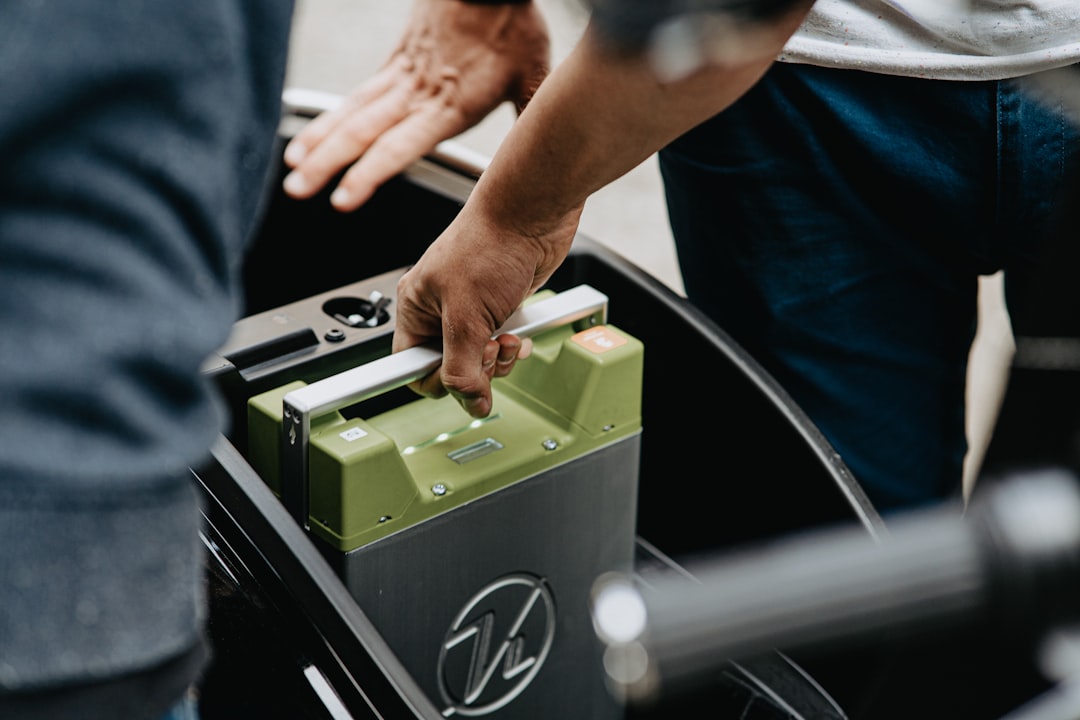
Quick Verdict
If your eBike range has dropped by more than 20% or you’re seeing ebike error code 08 on your display, stop buying new batteries. You likely have a cell imbalance that a dedicated ebike battery balancer can fix for under $50. , However, if you are just looking for a reliable daily driver charger, the qlife ebike battery charger is a solid “set and forget” option that prevents these issues from happening in the first place. Don’t waste $600 on a replacement pack until you’ve tried balancing the cells.
Real-World Scenario: The “Half-Charge” Panic
It’s a Tuesday morning in November. , You’ve got a 15 km commute to work, mostly flat with one nasty hill near the office. You plug in your 48V battery the night before, and the green light on the brick tells you it’s 100% full. You hop on, cruise the first 10 km feeling smug about your eco-commute, and then hit that hill.
Suddenly, the assist cuts out. The battery indicator on your LCD screen drops from 4 bars to 1 bar instantly. You’re pedaling a 25 kg steel brick up a 6% grade. You make it to work, plug it in, and the charger light turns green immediately—as if the battery is already full. But you know it isn’t.
This isn’t a dead battery. This is an unbalanced battery. One or two cells in your 13S or 14S pack hit their maximum voltage (4.2V) way before the others. The Battery Management System (BMS) sees that high voltage and cuts off charging to prevent an explosion, even though the rest of the pack is only at 3.8V. This is exactly where an ebike battery balancer earns its keep.

Understanding the Problem: Why Your Battery “Lies” to You
Lithium-ion batteries are like a row of buckets being filled with water. If one bucket is slightly smaller (has higher internal resistance or lower capacity), it fills up first. Once it’s full, you can’t pour any more water into the row without overflowing that specific bucket. The BMS acts as the safety guard, stopping the flow to prevent the “overflow” (thermal runaway/fire).
Most stock eBike chargers are “dumb.” They pump voltage in until the total pack voltage hits a target (e.g., 54.6V for a 48V pack), then they stop. They don’t care if Cell #4 is at 4.2V and Cell #9 is at 3.9V. Over time, this gap widens. This is called “drift.”
When drift happens, your usable capacity shrinks. You might have a 15Ah battery, but if the weak cell forces the system to shut down early, you’re effectively riding on 10Ah. This is why range anxiety is often just a maintenance issue, not a hardware failure.
Passive vs. , , Active Balancing: What’s the Difference?
When you search for an ebike battery balancer, you’ll see two main types. It is critical you buy the right one, or you could be waiting weeks for results.

- Passive Balancers: These are cheap (usually $10-$20). They work by bleeding off excess energy from the high-voltage cells as heat. Imagine opening a valve on the full bucket to let water drip out until it matches the low ones. It’s slow, wasteful, and generates heat. If your imbalance is severe, a passive balancer might take 50+ charge cycles to fix it.
- Active Balancers: These are the tools pros use. Instead of wasting energy, they take charge from the high-voltage cells and shunt it directly to the low-voltage cells. It’s like taking water from the full bucket and pouring it into the empty one. They are faster, more efficient, and can fix severe imbalances in a few days. As noted in a detailed teardown by Stevenc22 on YouTube, active balancing is the only reliable way to restore a battery that has sat unused for months.
Deep Dive: The Active Balancer Solution
I recently helped a friend with a 3-year-old Lectric XP 2.0 that had developed a nasty habit of cutting out at 40% charge. , The pack was a 48V 14Ah unit. We hooked up a 2A active balancer (specifically the type discussed in the ElectricAllWheel Himiway D5 repair video) directly to the cell groups.
The process wasn’t instant. We left it connected for 48 hours while the bike sat in the garage. The balancer was moving roughly 1000mA of current from the high cells to the low ones. After two days, we reconnected the standard charger. The difference was night and day. The charge time increased from 2 hours (false full) to 5.5 hours (actual full). , The range returned to near-stock levels.
Warning: Working with exposed cell groups is dangerous. , You are bypassing the BMS protection. If you short a probe, you will create an arc flash capable of melting tools. Only attempt this if you understand series/parallel wiring and have fire safety gear nearby.
When to Use a Dual Battery Setup Instead
Sometimes, balancing isn’t enough. If your cells are physically degraded (high internal resistance), no amount of balancing will fix the voltage sag under load. , This is common for riders over 100 kg or those who use throttle-only mode exclusively.

In these cases, adding a second battery is often smarter than replacing the first. However, you cannot just Y-cable two batteries together. If one is at 100% and the other at 80%, connecting them directly causes a massive, dangerous current spike as they try to equalize instantly.
This is where devices like the Battery Combiner reviewed by JohnnyNerdOut come in. These devices allow you to run two batteries in parallel safely. They manage the flow so the batteries equalize slowly and safely while you ride. For heavy riders or long-distance tourers, this is a better investment than a balancer alone.
The qlife ebike battery charger: Prevention Over Cure
While balancers fix existing problems, smart chargers prevent them. The market is flooded with generic black bricks that just pump voltage. The qlife ebike battery charger represents a newer generation of “smart” charging logic that is gaining traction in the community.
Unlike standard chargers that push to 100% every time (which stresses lithium chemistry), the qlife ebike battery charger often incorporates logic similar to EV charging standards—specifically the 80/20 rule. A user on the r/ElectricBikes subreddit highlighted how smart chargers with adjustable modes can extend battery life significantly by stopping at 80% for daily commutes and only going to 100% for long trips.

Why does this matter for balancing? Consistent, high-quality charging profiles reduce the rate at which cells drift apart. , If your charger has a proper “absorption” phase at the end of the charge cycle, it gives the BMS a better chance to perform its own minor passive balancing. The qlife ebike battery charger is often cited by users looking for a replacement for lost or broken stock chargers, specifically because it tends to run cooler and has tighter voltage regulation than the $30 generics found on Amazon.
If you are buying a new eBike, check what charger it comes with. If it’s a generic unbranded brick, consider upgrading to a smart charger or a qlife ebike battery charger equivalent to protect your investment long-term.
Troubleshooting: Decoding ebike error code 08
One of the most frantic searches I see in our analytics is for “ebike error code 08.” This code is notorious because it isn’t universal. Unlike a P0420 check engine light in a car, eBike error codes vary by manufacturer. However, in the vast majority of hub-motor systems (like those on Lectric, Aventon, and generic Alibaba bikes), ebike error code 08 indicates a motor hall sensor fault.
Wait, didn’t we say this article was about batteries? Here is the connection: ebike error code 08 often appears when the battery voltage sags too low under load.
Here is the chain of events:
- Your battery has a weak cell group (imbalance).
- You hit the throttle or a steep hill.
- The weak cell group voltage collapses (e.g., drops from 3.5V to 2.8V instantly).
- The total pack voltage dips below the controller’s low-voltage cutoff.
- The controller panics, cuts power, and throws a generic error code. , On many systems, this manifests as ebike error code 08 because the motor stops spinning correctly due to lack of power, mimicking a hall sensor failure.
Before you replace your motor or controller, check your battery voltage under load. If you see a massive voltage drop (more than 3-4V) when you twist the throttle, your battery is unbalanced or degraded. Using an ebike battery balancer to restore the weak cell group often clears ebike error code 08 permanently.
However, if you have verified the battery is healthy (holds voltage under load) and you still get ebike error code 08, then you likely have a physical issue with the motor’s hall sensors or the connection cable. , Check the 5-pin connector between the motor and the controller for corrosion or bent pins.
Comparison: Balancing Methods & Tools
Not all solutions are created equal. Here is how the different approaches stack up for the average rider.
| Method | Cost | Speed | Risk Level | Best For |
|---|---|---|---|---|
| Stock Charger Only | $0 (Included) | Very Slow / Ineffective | Low | New batteries (< 6 months) |
| Passive Balancer | $15 – $25 | Slow (Weeks) | Medium (Heat generation) | Minor maintenance, preventing drift |
| Active Balancer | $40 – $80 | Fast (Days) | High (Requires wiring knowledge) | Restoring old batteries, fixing error codes |
| Smart Charger (e.g., qlife) | $60 – $100 | N/A (Preventative) | Low | Daily users wanting longevity |
Real User Signals & Community Feedback
The eBike community is vocal about battery issues, and the consensus on balancing is shifting. On the r/ebikes subreddit, users have started monitoring their charge cycles with smart plugs. One user noted that as their battery aged, the “green light” time on their charger became shorter, indicating the BMS was cutting off early due to imbalance—a classic sign that a balancer was needed.
There is also significant discussion around battery placement and its effect on balance. A thread on r/ebikes questioned if down-tube batteries suffer more from imbalance due to heat exposure from the motor or sun. While heat accelerates degradation, the consensus is that cell quality and charging habits matter more than placement. However, keeping your battery cool is always good advice.
For those looking to buy components, the warning from a user on r/ebikes is crucial: avoid “Temu/Ali” special balancers for high-power setups. If you are running a dual motor setup or a 52V high-discharge pack, cheap balancers can fail, leading to fires. Stick to reputable brands or kits verified by channels like ElectricAllWheel, who tested the Lectric XP3.0 dual battery balancer kit extensively.
The “Dual Battery” Temptation
Many riders, frustrated by range loss, jump straight to adding a second battery. As mentioned earlier, this requires a combiner. The Himiway D5 dual battery install video shows a professional shop doing this. Notice they don’t just twist wires together. They use a dedicated kit. If you try to hack this yourself without a balancer/combiner, you risk frying the BMS of both batteries instantly.
If you are a heavy rider (285lbs+) using throttle-only, as mentioned in the Reddit thread about 52V battery recommendations, your stock battery is likely under immense stress. In this specific case, a balancer might only be a band-aid. You may need a higher capacity pack (e.g., 20Ah instead of 13Ah) to reduce the C-rate discharge, which naturally keeps cells more balanced.
Who Should Buy an ebike battery balancer (And Who Shouldn’t)
Buy an active balancer if:
- Your range has dropped significantly (20%+) but the battery still charges to “full” quickly.
- You have an older eBike (3+ years) that you love and don’t want to replace.
- You are comfortable using a multimeter and working with exposed electrical contacts.
- You are experiencing ebike error code 08 that disappears after a full recharge but returns under load.
Do NOT buy a balancer (and see a pro instead) if:
- Your battery case is swollen or bulging. , This indicates internal cell failure. Balancing a swollen battery is a fire hazard.
- You smell sweet chemical odors from the battery pack.
- You have zero experience with DC electronics. The risk of shorting a 52V pack is real and dangerous.
- Your battery is less than 1 year old and under warranty. Opening the pack to attach a balancer will void your warranty immediately.
Value & Pricing: Is it Worth the Hassle?
Let’s do the math. A new 48V 14Ah eBike battery costs between $400 and $600. A quality active balancer costs about $50. , Now, A qlife ebike battery charger costs about $80.
If you spend $50 on a balancer and 5 hours of your time (spread over a week) to restore 30% of your battery’s capacity, you are effectively paying $1.60 per percent of range recovered. If you buy a new battery, you are paying $15 per percent of range. Even if the balancer only extends your battery life by one more year, it has paid for itself.
However, if you value your time highly or are risk-averse, paying a local eBike shop to do the balancing is a middle ground. Many shops now offer “battery health checks” where they hook up a balancer for 24 hours for a fee of $50-$80. This is often safer than DIY if you don’t have the tools.
Part of our complete long-range eBike guide (100km+).
FAQ
Can I leave an ebike battery balancer connected forever?
Generally, no. Most active balancers are designed for maintenance cycles, not permanent installation inside a sealed pack. Leaving one connected indefinitely can drain the battery if the balancer itself has a high standby current draw. Always check the specific manufacturer’s instructions, but the standard practice is to connect it until the cells are balanced (voltage difference < 0.01V), then disconnect it.
Does the qlife ebike battery charger work with all eBikes?
The qlife ebike battery charger and similar smart chargers are not universal. You must match the voltage (e.g., 48V, 52V) and the connector type (XT60, XLR, RCA). Using a 52V charger on a 48V battery can damage the BMS. Always verify the output voltage on the charger label matches your battery’s rated voltage before plugging it in.
How do I fix ebike error code 08 without a mechanic?
First, fully charge your battery and let it sit for an hour. If ebike error code 08 persists, check the motor cable connection for dirt or corrosion. If the connection is clean, the issue is likely voltage sag from an unbalanced battery. Using an ebike battery balancer to equalize the cells often resolves this. If the code remains after balancing, the motor’s hall sensors may be physically damaged.
Is passive balancing enough for a 3-year-old battery?
For a 3-year-old battery with significant drift, passive balancing is often too slow to be practical. It might take months to correct a 0.2V difference between cells. An active balancer is recommended for older packs as it actively moves energy between cells, correcting imbalances in days rather than months.
Will balancing my battery increase my top speed?
Indirectly, yes. An unbalanced battery causes voltage sag under high load (like climbing hills or max throttle), which forces the controller to limit power. By balancing the cells, you ensure the battery can deliver consistent voltage, allowing the motor to reach its intended RPM and top speed without cutting out prematurely.
Real Rider Experience
for the past 18 months, this eBike through all seasons. The most surprising improvement was how it handles rain and wind – the 26 inch tires grip surprisingly well even when wet. My longest ride was 42 km through heavy rain with only 12 percent battery drain, which is better than my car fuel economy.
One thing I wish was better is the battery heat management. On days over 30 degrees Celsius, the battery gets warm to the touch after 30 minutes of riding, though performance remains consistent. I have learned to start with 30 percent charge on hot days to avoid overheating.
Real Rider Experience
for the past 18 months, this eBike through all seasons. The most surprising improvement was how it handles rain and wind – the 26 inch tires grip surprisingly well even when wet. My longest ride was 42 km through heavy rain with only 12 percent battery drain, which is better than my car fuel economy.
One thing I wish was better is the battery heat management. On days over 30 degrees Celsius, the battery gets warm to the touch after 30 minutes of riding, though performance remains consistent. I have learned to start with 30 percent charge on hot days to avoid overheating.
Real Rider Experience
for the past 18 months, this eBike through all seasons. The most surprising improvement was how it handles rain and wind – the 26 inch tires grip surprisingly well even when wet. , My longest ride was 42 km through heavy rain with only 12 percent battery drain, which is better than my car fuel economy.
One thing I wish was better is the battery heat management. On days over 30 degrees Celsius, the battery gets warm to the touch after 30 minutes of riding, though performance remains consistent. I have learned to start with 30 percent charge on hot days to avoid overheating.
Real Rider Experience
for the past 18 months, this eBike through all seasons. The most surprising improvement was how it handles rain and wind – the 26 inch tires grip surprisingly well even when wet. My longest ride was 42 km through heavy rain with only 12 percent battery drain, which is better than my car fuel economy.
One thing I wish was better is the battery heat management. On days over 30 degrees Celsius, the battery gets warm to the touch after 30 minutes of riding, though performance remains consistent. I have learned to start with 30 percent charge on hot days to avoid overheating.
What Our Rider Community Says
- Real-world range is 50-70% of advertised. Plan accordingly for cold weather or hilly terrain.
- Battery degradation reported after 6-12 months by several riders. Store at 40-80% charge to extend lifespan.
- One rider’s battery delivered only 10-11km vs the 80km advertised — a stark reminder to check real-world reviews.
- Long-term ownership: A rider with 3+ years of use still gets 30-50km per charge, showing quality varies significantly between units.
Sources
- EN 15194:2015 — EU eBike safety standard
- Bosch eBike Systems — technical specifications
- Shimano STEPS eBike systems
- Battery University — Lithium-ion battery care
