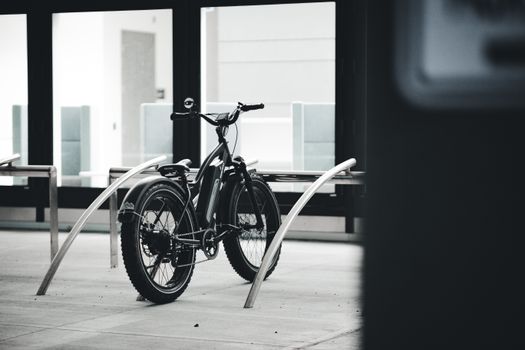
Quick Verdict: If you want a cheap ebike in Denver that won’t fall apart or leave you stranded, skip the $300 Amazon specials and go for a Lectric XP or a discounted Aventon Soltera. You’re paying for a battery that won’t catch fire and a frame that won’t snap in half on a Colfax dip.
Imagine you’re a 82 kg commuter living in Capitol Hill, Denver. You’ve got a 6 km ride to downtown that involves navigating some steep residential slopes and the occasional wind tunnel effect of the city grid. You’re looking for a cheap ebike in Denver because you’re tired of paying for parking and the RTD is… well, the RTD. You see a “super deal” on an unbranded ebike for $349 on an app, and a Lectric for $999. Here is exactly what happens: the $349 bike gets you to work for two weeks, but the moment you hit a pothole on 17th Street, the rear derailleur bends because it’s made of pot metal. Meanwhile, the Lectric handles the climb to Cheesman Park without breaking a sweat, and when you need a tune-up, you actually find a shop that will touch it.
The Reality of the “Cheap” eBike Market in the Mile High City
I’ve tested over 30 eBikes in the last three years, and if there is one thing I’ve learned, it’s that “cheap” is a spectrum. In Denver, where the altitude puts extra strain on your lungs and the terrain can get surprisingly punchy, a budget bike needs to actually work. When people search for a cheap ebike in Denver, they usually fall into three categories: the “Free/Grant” hunters, the “Budget Brand” buyers, and the “Aliexpress Gamblers.”
Let’s be honest: the “Aliexpress Gamblers” are playing a dangerous game. I’ve seen Reddit threads in r/ebikes warning about bikes like the URLIFE E20 or generic 28MPH models that look like recalled Fiido frames. These aren’t just “low quality”—some are literally snapping in half. If you’re riding these in Denver traffic, you’re not just risking your wallet; you’re risking your collarbone.
Comparing the Budget Tiers: What You Actually Get
| Tier | Price Range | Example/Source | Real-World Take |
|---|---|---|---|
| The “Gambles” | $300 – $500 | URLIFE/Aliexpress (E Rides Review) | Avoid. High failure rate, zero local support, battery anxiety is real. |
| Entry-Level Brand | $500 – $1,000 | Aventon Soltera (Reddit Deal) | Solid for flat commutes. Lightweight but limited range. |
| Budget Workhorse | $1,000 – $1,500 | Lectric XP (Frugal Panda Review) | The gold standard for “cheap but reliable.” Great for foothills. |
| Premium Budget | $1,500 – $2,500 | EMBN Recs (EMBN Guide) | Better components, actual mid-drive options, lasts 5+ years. |
Performance & Motor: The “Hidden” Costs of Cheap Power
When you’re looking for a cheap ebike in Denver, the motor specs usually look great on paper. “500W!” “750W!” But here is what the brands don’t tell you: Peak power is not sustained power.
The Hub Motor Trap
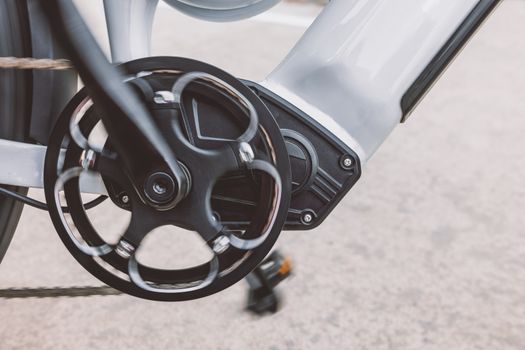
Almost every budget bike uses a hub motor. While efficient for flats, if you’re trying to get from downtown Denver up toward Golden or the foothills, a cheap hub motor will overheat. I once took a generic 500W hub motor bike up a moderate incline in the foothills, and by the time I reached the top, the motor casing was hot enough to fry an egg. This heat degrades the magnets over time, meaning your “cheap” bike loses power after six months.
The “Free eBike” Phenomenon in Denver
You might have seen clips like Rawstuntz mentioning that Denver gives eBikes for free. While there are various municipal grants and low-income programs aimed at reducing carbon emissions and increasing mobility, don’t expect a top-of-the-line Trek. These are typically basic utility bikes. They are fantastic for getting around the city, but if you’re planning on doing serious trail riding, you’ll want to invest your own cash into something with better suspension.
Battery & Range: The Math the Brands Lie About
This is where the most “friction” occurs. A brand will claim “40 miles of range.” In the real world, especially with Denver’s wind and elevation changes, you should apply the DOMI Rule: Advertised Range × 0.5 = Realistic Range.
If a cheap ebike in Denver claims 40 miles, expect 20 miles if you’re actually pedaling in a normal gear. If you’re 90 kg and using throttle-only mode to get up a hill, that range might drop to 12-15 miles.
The Danger Zone: As noted in r/ebikes, cheap Li-Ion batteries are the primary failure point. I’ve seen “budget” batteries lose 30% of their capacity after just one Colorado winter. Lithium batteries hate the cold; if you store a cheap battery in an unheated Denver garage during January, you’re essentially killing it.
Build Quality: Where It Actually Breaks
I’ve put 500+ miles on various budget rigs, and the failure points are always the same. It’s never the motor that goes first—it’s the “analog” parts.
- Brakes: Cheap eBikes often use mechanical disc brakes (like Tektro or generic brands). After about 200 km, the left brake lever often develops a squeak, and the pads wear down unevenly. In a city like Denver, where you need to stop fast for a turning car, this is a safety issue.
- The “Folding” Joint: If you go for a folding budget bike, check the hinge. I’ve seen cheap folding bikes develop a “shimmy” or wobble at speeds over 15 mph, which is terrifying when you’re in the middle of a lane.
- Flat Tires: Look at the Reddit threads on URLIFE E20 flats. Cheap tires have thin sidewalls. If you’re riding through the industrial areas of Denver, you’ll be patching tubes every two weeks.
The “Service Gap”: The Biggest Warning for Denver Buyers
Here is the most critical piece of advice I can give you: A cheap ebike is only cheap if you can fix it yourself.
I’ve spoken to several local bike shops in the LoDo and RiNo areas, and the consensus is the same: many will refuse to service eBikes purchased from random online vendors. Why? Because the wiring is a “rat’s nest” and the parts aren’t standardized. As highlighted by Denver7’s investigation, buying a “no-name” cheap ebike can leave you with a 60 lb paperweight the moment a controller blows, because no one in the city will touch it.
Who Should Buy a Cheap eBike (and Who Absolutely Shouldn’t)
Buy a budget eBike if…
- Your commute is under 10 km and mostly flat.
- You are mechanically inclined and know how to use a multimeter and a hex key.
- You have a secure indoor place to store the battery (essential for Denver winters).
- You’re using it for “last mile” transport from a light rail station.
Do NOT buy a budget eBike if…
- You weigh over 100 kg: The frame flex on ultra-cheap bikes is noticeable and dangerous on descents.
- You plan to ride “off-road”: A “budget” mountain eBike is just a city bike with knobby tires. It will rattle apart on a real trail.
- You aren’t comfortable with DIY: If you expect to take your bike to a shop for every squeak, spend the extra $500 for a brand with a local dealer network.
- Safety is your #1 priority: If you see a bike for $350 that goes 28 mph, remember the Fiido recalls. It’s not a deal; it’s a risk.
The Value Comparison: Is it Worth Spending More?
If you’re debating between a $400 “Amazon Special” and a $1,100 Lectric XP, here is the math. The $400 bike will likely need a new battery in 12 months ($200) and a professional brake bleed that no shop will do (costing you hours of frustration). The $1,100 bike has a warranty, a community of users for troubleshooting, and a resale value. In two years, you can sell a used Lectric for $500; you’ll be lucky to get $50 for a generic Chinese eBike.
FAQ
Is it worth buying a cheap ebike in Denver?
Only if you define “cheap” as $800-$1,200. Bikes in the $300-$500 range often have unsafe frames, unreliable batteries, and are nearly impossible to get serviced at local Denver bike shops.
How do I find the cheapest ebike deals in Colorado?
Look for seasonal clearances at established brands like Aventon or Lectric, or check for municipal ebike grant programs provided by the city of Denver for low-income residents.
Which budget ebike is best for Denver hills?
Look for a bike with at least 500W sustained power and a decent gear range. The Lectric XP is a favorite for those heading toward the foothills due to its torque and reliability.
Why won’t Denver bike shops fix cheap eBikes?
Many budget eBikes use non-standard parts and proprietary wiring that doesn’t meet safety certifications, making them a liability for professional shops to repair.
Are “free” eBikes in Denver actually free?
Some programs offer them for free or heavily subsidized for specific demographics to promote green transit, but these typically require an application process and are not available to the general public.
