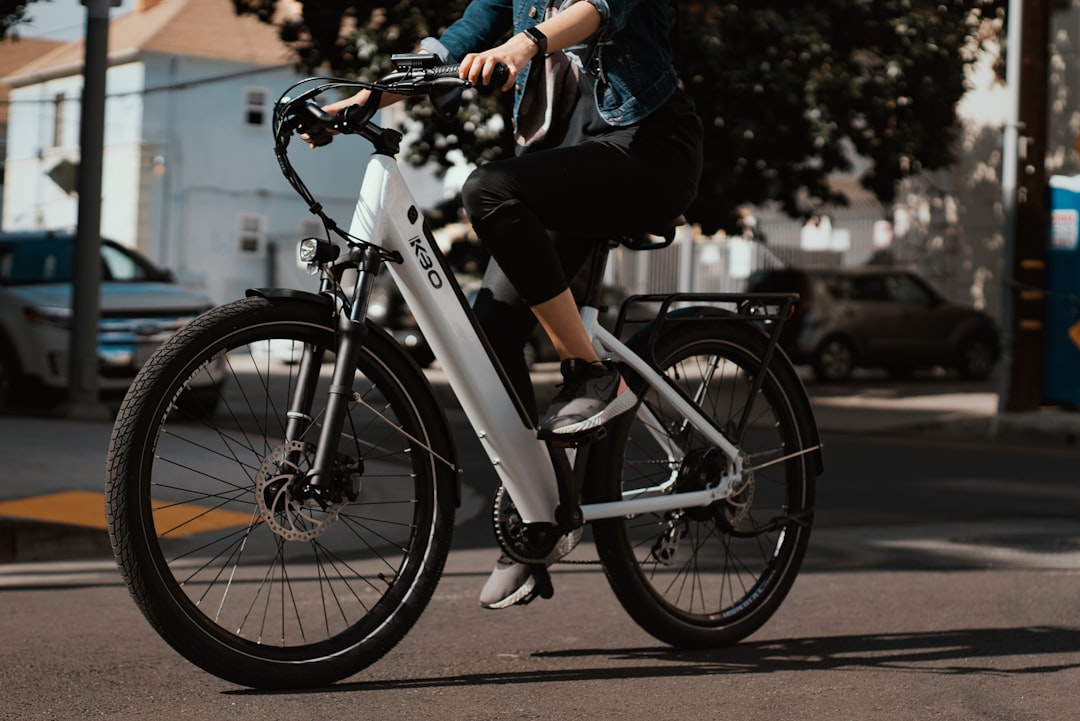
Imagine you’re a 85 kg rider in Chicago in mid-November. You’ve got a 22 km round-trip commute that involves crossing a bridge and fighting a steady 15 km/h headwind. You check your display, and it says you have 60% battery left. But as the temperature drops to 2°C, you notice the percentage plummeting faster than your mood on a Monday morning. This is the “Range Gap”—the difference between what a marketing team in a sunny office tells you and what actually happens on the road.
Over the last three years, I’ve put more than 30 eBikes through the wringer. The most common question I get isn’t about top speed or “revolutionary” frames; it’s about finding a reliable ebike long range for adults that won’t leave them stranded three miles from home. The truth is, range is a liar. It’s a variable, not a constant.

The “Real-World” Range Comparison Table
I’ve aggregated data from current market leaders and user signals to show you what you’re actually paying for. Note that “Advertised Range” is almost always calculated with a 60 kg rider on flat pavement with zero wind.
| Model | Battery Spec | Advertised Range | Real-World Take (My Estimate) | Source |
|---|---|---|---|---|
| Fiido Titan | High Capacity (not verified) | “Longest Range” | Solid for “SUV” style riding, but heavy weight kills efficiency. | Electric Revolution |
| Tesway X7 Pro | 52V 60Ah | Ultra-High | Absolute monster for delivery riders (UberEats/DoorDash). | Raspy Rides |
| EUY W-1 | Dual Battery | High | Best “budget” long-range entry point at $1299. | Chris Crossed |
| Generic Amazon Bike | Usually 48V 10-13Ah | 50-80 km | Expect 25-35 km before you’re pedaling a 30kg brick. | r/ebikes |
Performance & Motor: The Hidden Range Killers
When searching for an ebike long range for adults, most people look at the battery size (Wh) and stop there. That’s a mistake. The motor efficiency and the weight of the bike are just as important. If you put a massive battery on a frame that flexes under a 90 kg rider, you’re wasting energy.
What the brands don’t tell you
Most brands brag about “Peak Power.” For example, some high-end endurance bikes claim 9000W peak per Best5Picks. Here is the secret: Peak power is for that 3-second burst to get away from a stop sign. It does nothing for your range. In fact, the more you rely on high-peak bursts, the faster your battery voltage drops, leading to “voltage sag” where your bike feels sluggish even though the battery says 40%.
I remember testing a mid-range bike last winter where the motor sounded like a blender full of gravel every time I hit a steep incline. That mechanical friction is energy leaving your battery as heat instead of motion. If you want actual distance, look for a motor that feels smooth and a drivetrain that doesn’t require you to fight the bike.
Battery & Range: The Math of Reality
Here is the golden rule I use at DOMI eBike Guide: Advertised Range × 0.5 = Realistic Range.
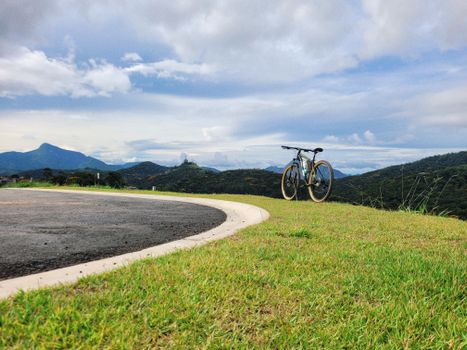
If a company tells you their ebike long range for adults can do 100 km, assume you’ll get 50 km if you’re actually using the motor to make your commute easier. Why? Because they test in a vacuum. They don’t test with a 90 kg adult, a backpack, and a headwind.
The Cold Weather Tax: ebike range in cold weather
This is where most new owners get burned. Lithium-ion batteries rely on chemical reactions that slow down significantly when it’s cold. When we talk about ebike range in cold weather, we aren’t talking about a 5% drop. In temperatures near freezing (0°C to 5°C), you can expect a 20% to 40% reduction in effective capacity.
I had a specific experience with a dual-battery setup last January. In October, I was getting 70 km per charge. By January, I was barely hitting 42 km on the exact same route. The battery isn’t “broken”—the ions are just moving like molasses. If you live in a place with real winters, you must overspec your battery. If you think you need 40 km, buy a bike that claims 80 km.
Build Quality: When “Cheap” Becomes Expensive
There is a dangerous trend on Reddit and Amazon where buyers look for an ebike long range for adults with a budget of exactly $1,000. As the community on r/ebikes rightly points out, these “round number” budgets often lead people to buy junk.

I’ve seen too many “budget” long-range bikes where the battery cells are mismatched. This leads to a “cliff effect”—your battery stays at 50% for an hour, then drops from 50% to 0% in ten minutes. That’s a sign of poor quality cells. Furthermore, cheap mechanical brakes (like the ones found on many sub-$1k bikes) develop a rhythmic squeak after about 200 km. It’s not a safety failure, but it’s an annoying reminder that you saved $200 on the wrong things.
If you’re looking for a balance of style and reliability, avoid the “moped-style” clones that look like dirt bikes but have the build quality of a toy. Instead, look for frames with integrated batteries and reinforced welds. If the brand can’t tell you who manufactured their cells (Samsung, LG, Panasonic), assume they are the cheapest generic cells available.
Value & Pricing: Is the “Steal” Actually a Deal?
Take the EUY W-1, for example. At $1299, it’s marketed as a “steal” per Chris Crossed. Compared to a premium brand that might charge $3,000 for similar range, it looks great. But you have to ask: what is the cost of ownership over 3 years?
- The $1,200 Bike: Great initial price. Battery might degrade by 30% after 500 cycles. Customer support is a Gmail address.
- The $2,500 Bike: Higher entry cost. Battery uses Grade-A cells with a 5-year warranty. Local dealer for tuning.
If you’re using your bike for work (like the Tesway X7 Pro used for DoorDash per Raspy Rides), the higher-end bike is actually cheaper because the “cost per kilometer” is lower when you don’t have to replace the battery every 18 months.

Real User Signals: The Good, The Bad, and The Ugly
I don’t just trust the spec sheets; I haunt the forums. Here is what actual owners are saying about long-range setups:
- The Skeptic: On r/ElectricBikes, users frequently warn about “too good to be true” listings and coupon drops Source. If a 60Ah battery is being sold for $500, it’s either a scam or the battery is a fire hazard.
- The Overthinker: One user on r/ElectricBikes shared a “wisdom dump,” noting that motor power is often overrated compared to the actual comfort and battery reliability.
- The Warning: “I have zero doubts this thing either A. wont run OR B. its gonna blow up the house” — This is a common sentiment on r/ebikes regarding ultra-cheap, unbranded long-range kits.
Who Should Buy a Long-Range eBike (And Who Shouldn’t)
Buy this if…
- You’re a Delivery Pro: If you’re doing 40+ km a day for UberEats, a massive battery like the Tesway X7 Pro is a tool, not a toy.
- You have “Range Anxiety”: If the thought of being at 15% battery makes you sweat, overspecing your range gives you mental peace.
- You live in a Cold Climate: Because ebike range in cold weather is so poor, you need the extra overhead to survive January.
- You’re an Adult Commuter: If your ride is 15 km+ each way, a standard 10Ah battery will leave you exhausted by Thursday.
Skip it if…
- You have to carry it upstairs: Massive batteries = massive weight. If you’re lifting your bike up three flights of stairs, a “long range” bike will become a torture device.
- You only ride 5 km: Why pay for 100 km of range if you never leave your neighborhood? You’re paying for weight you don’t need.
- You’re on a strict $500 budget: As seen in Reddit threads, people searching for 28mph and long range under $500 are usually buying “pieces of junk.” Save up or buy used.
Part of our complete long-range eBike guide (100km+).
FAQ
How do I actually increase my ebike range in cold weather?
Keep your battery indoors in a room-temperature environment until the moment you ride. If you have a removable battery, never store it in a cold garage. Additionally, using a lower assist level (PAS 1 or 2) reduces the strain on the cold cells, extending your distance.
Is a dual-battery ebike worth it for adults?
Yes, if your daily mileage exceeds 40 km. Dual batteries provide a linear increase in range without needing a single, dangerously oversized battery pack. It also allows you to swap one out while the other is still in the bike.
Sources & Further Reading:
Why does my long range ebike feel slower when the battery is low?
This is called voltage sag. As the battery depletes, it can’t push as much current to the motor. High-quality batteries (Samsung/LG) have less sag than generic cells, which is why “budget” long-range bikes feel like they’re dying long before the battery actually hits 0%.
What is the realistic range for a 500Wh battery?
For an average adult (80 kg) using a mix of PAS 2 and 3 on flat ground, expect about 40-60 km. If you are riding in cold weather or on hills, that number will likely drop to 25-35 km.
