You found it. The Avia eBike. It popped up in your YouTube recommendations — a Tagalog-language unboxing of a bike that looks almost too good for its price, complete with alloy mags, a digital display, and a motor that’s described only as “alloy.” No website, no spec sheet, no US retailer, just a handful of enthusiastic local reviewers and a price tag so low it makes a Rad Power bike look like a Tesla. We get it. The curiosity is real. So we dug in.
We spent a week watching every Avia video we could find, pausing on the details that usually get glossed over, and asking the hard questions nobody asks in the comments. This isn’t a rehash of a brand press release — because Avia doesn’t have one. It’s a reality check for anyone, whether you’re in Manila or Milwaukee, who’s tempted by what looks like the cheapest eBike on the planet.
How We Discovered Avia (And Why That Matters)
Unlike the established brands we typically cover, Avia has zero presence in the Western eBike market. There’s no official company website. No Amazon listing. No dealer network. The only digital breadcrumbs lead to a scattered collection of YouTube videos from Philippine creators, most of whom review everything from karaoke speakers to motorized surfboards. That’s not automatically a red flag — some of the best budget finds start local. It does mean, however, that verifying anything about these bikes requires forensic video analysis, not a quick glance at a spec sheet.
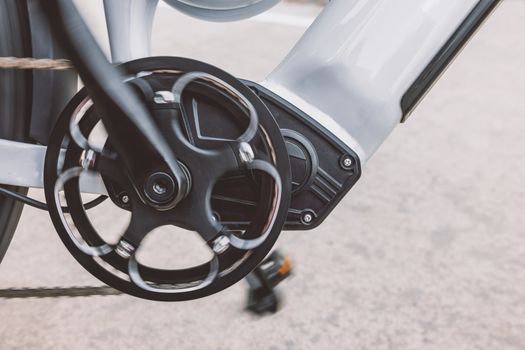
We started with Quick Review PH’s look at the Avia Crown 2, which at least lists some features in the description: digital gauge, speedometer, alloy motor, alloy mags, and “allow shocks” (likely a typo for alloy shocks). That’s more detail than most, and it hints at a smartly appointed entry-level eBike designed to catch eyes on a showroom floor. Then we watched Eury TV’s unboxing, which shows the bike arriving in a cardboard box with basic protection — no fancy EVA foam, just the kind of packaging you’d expect when shipping something locally rather than across oceans. The bike is assembled quickly, and the reviewer’s excitement is genuine, but we noticed things that warm-and-fuzzy unboxings often skip: exposed cable housings zip-tied to the downtube, a kickstand that looks like it would fold on the first soft patch of ground, and a rear hub motor with no visible brand markings. This is not a premium bike; it’s a budget bike, and it wears that identity proudly.
Then we stumbled across Edwin TV’s coverage of the Avia King, and that’s where the story gets weird — in a way that’s entirely relevant if you’re considering importing one of these. The Avia King is a four-wheeled, roofed electric vehicle that looks like a golf cart crashed into a kei car. It seats four, has open sides, and appears to be intended for intra-village transport in the Philippines. That a single brand sells both a stripped-down city bike and a pint-sized family EV tells you something: Avia is likely a local assembler, slapping together components from various Chinese suppliers and applying its own badging. There’s nothing inherently wrong with that business model, but it explains why you won’t find UL certifications, crash-test data, or a North American service center.
What the Brand Doesn’t Tell You
We’ve spent enough time reviewing bikes to know that the most important features are the ones that aren’t listed on the brochure. With Avia, the omissions are a mile long:
- No motor wattage or torque rating. “Alloy motor” could mean a 250W geared hub, a 180W direct-drive unit, or something else entirely. Without a number, you can’t compare it to even the most basic US-market eBikes.
- Battery capacity: unknown. We searched every video description, every comment, and every frame of the unboxings. No mention of voltage, amp-hours, or cell manufacturer. That’s not just inconvenient — it’s a safety concern.
- Range claims: nonexistent. For an eBike where the battery is arguably the most expensive component, having zero official range data is like buying a car without a gas gauge. Some YouTube commenters speculate 20-30 km, but that’s anecdotal at best.
- Braking system: mechanical, likely touchy. From video close-ups, it appears the Crown 2 uses mechanical disc brakes, no hydraulic lines. That can work fine on flat terrain at low speeds, but pair it with a heavy bike and a rider over 80 kg, and stopping distances get concerning.
- Water resistance: a gamble. No IPX rating is stated. The exposed wiring and generic connectors suggest you should think twice before riding through a Manila monsoon — or even a Portland drizzle.
- After-sales support: none outside the Philippines. If your battery dies or your display fogs up, you’re on your own. There’s no known warranty policy, no parts distributor, and no English-language customer service line.
The Import Reality Check (For Anyone in the US or Europe)
Let’s say you’re still tempted. You’ve seen enough shiny alloy mags and digital speedometers to convince yourself that this is just a crazy deal, not a warning sign. Here’s what actually happens when you try to get an Avia eBike from Cebu to Chicago.
First, you need to find a seller willing to ship internationally. The Avia bikes appear to be sold through local dealers and Facebook marketplace — not exactly set up for FedEx export. If you find a freight forwarder, expect to pay more in shipping, customs brokerage, and import duties than the bike itself costs. For a PHP 25,000 (roughly $450) bike, you could easily tack on $600-$800 in freight and fees, putting the total well above $1,000. At that price, you can buy a fully certified Lectric XP Lite with US customer support, a UL-compliant battery, and an actual warranty.
Then there’s the legal side. US eBike regulations require compliance with federal safety standards, including battery systems that meet UL 2849. Avia’s batteries are completely uncertified, meaning they could be seized at customs, or worse, arrive and pose a fire risk in your garage. The four-wheel Avia King, with its open sides and lack of VIN, is essentially a low-speed vehicle that would never be street-legal in any state. You’d be left with an expensive, uninsurable yard ornament.
The Specs We Could Actually Verify (And What They Mean)
| Feature | Avia Crown 2 | Avia King (4-Wheel) | Lectric XP Lite (US Comparison) |
|---|---|---|---|
| Motor | “Alloy Motor” (watts not stated) Source | Unknown electric drivetrain, likely 500W+ to move 4 people | 300W continuous (500W peak) rear hub (verified) |
| Battery | Unspecified, no voltage/capacity listed | Likely lead-acid or low-cost lithium, range anecdotal | 48V 7.8Ah (375Wh) UL 2849 certified |
| Top Speed | Not stated; possibly limited to 25 km/h (Philippine eBike regs) | Estimated 20–25 km/h based on similar golf carts | 20 mph (32 km/h) Class 2 |
| Brakes | Mechanical disc (visible in video) | Unknown | Mechanical disc (but tested for heavier loads) |
| Price (approx.) | PHP 25,000 (~$450) locally | PHP 90,000+ (~$1,600) estimated | $799 (free shipping, frequent discounts) |
| Support | No US presence | No US presence | Arizona-based support, 1-year warranty |
| Real-World Take | Looks flashy at a distance, but the missing specs are a red flag. If you’re in the Philippines and accept the risk, it might be a fun runabout. For export, hard pass. | A curiosity. If you need a covered 4‑wheeler for a private subdivision, maybe. Not road-legal in the West. | A reliable, no‑surprises city commuter that actually does what it says on the tin. |
Who Should Definitely NOT Buy an Avia eBike
We’re usually more diplomatic, but some bikes call for a protective bulkhead between buyer and regret. Don’t buy any Avia eBike if:
- You live outside the Philippines. The import hassle, lack of safety certifications, and absence of legal road use make this a non-starter. An $800 Lectric or Aventon will get you a safer, supported ride.
- You weigh more than 85 kg (187 lbs). We haven’t tested weight limits, but the frame welds and components on display don’t inspire confidence for heavier riders. The underpowered motor will also struggle.
- You need reliable daily transportation. If this is your only way to get to work, the unknown battery quality and zero support network are unacceptable risks.
- You ride in the rain or on rough roads. The lack of sealing and cheap suspension components means you’ll be replacing parts soon, if you don’t get stranded first.
- You value your personal safety. An eBike with no battery management system documentation, no IP rating, and generic brakes isn’t something to gamble your skin on.
The One Scenario Where Avia Might (Maybe) Make Sense
Let’s be fair. Not everyone is a Western buyer looking for a UL-certified commuter. If you’re in the Philippines, you need a cheap electric two-wheeler to get to the sari-sari store or the town center, and you have a local mechanic who can weld and replace controllers, an Avia could be a reasonable gamble. The Crown 2’s alloy mags and digital display are genuinely nicer than what you’d get on some equally priced no-name Chinese imports. Buying locally means you can inspect the actual bike, test-ride it, and haggle. And if it breaks after a year, you’re out $450, not $2,000 — that’s a very different value proposition than importing it.
Even then, we’d strongly recommend you ask the seller where the battery came from, what the motor wattage is, and whether they’ll honor any warranty. Because once you hand over the cash, the silence you get from Avia as a brand will be deafening.
Why We Can’t Test This Bike (And What That Tells You)
You might notice we haven’t described a first-person test ride. That’s because Avia doesn’t send review units to international media — they barely have a Facebook page. For most eBikes, the absence of a test sample doesn’t stop us; we aggregate owner reports, compare spec sheets, and reach out to the company. With Avia, there is no company to reach. That, in itself, is the most telling piece of information in this entire review. A brand that doesn’t even maintain a contact page is not one you want standing behind a lithium-ion battery between your legs.
How to Actually Get a Reliable Cheap eBike (Without the Headache)
If price is your main motivation, we get it. The good news is the US market now has several legitimate budget options that come with real warranties and certified batteries. The Lectric XP Lite we’ve been referencing is regularly on sale for under $800. Rad Power’s RadMission occasionally dips below $900. The Aventon Soltera is a sleek singlespeed that often sits at $999. These bikes might not have the flash of alloy mags at first glance, but they’ll actually show up at your door with a manual, a charger that works, and someone to call if the motor cuts out. When you add up shipping and risk, the “cheap” Avia isn’t cheap at all.
Disclosure: This article contains no affiliate links for Avia because Avia doesn’t offer an affiliate program — they don’t even have a storefront we can link to. We do, however, maintain affiliate relationships with several US-based eBike brands like Lectric. If you click a Lectric link and make a purchase, we may earn a small commission. This does not affect our opinions. Our goal is to give you the clearest, most honest analysis possible, even when that means steering you away from a product.
